Perfection helps
December 25, 2010
We don’t need perfection to enjoy the benefits of time in nature, but it helps. Fortunately, nature so often offers us just this…

We don’t need perfection to enjoy the benefits of time in nature, but it helps. Fortunately, nature so often offers us just this…
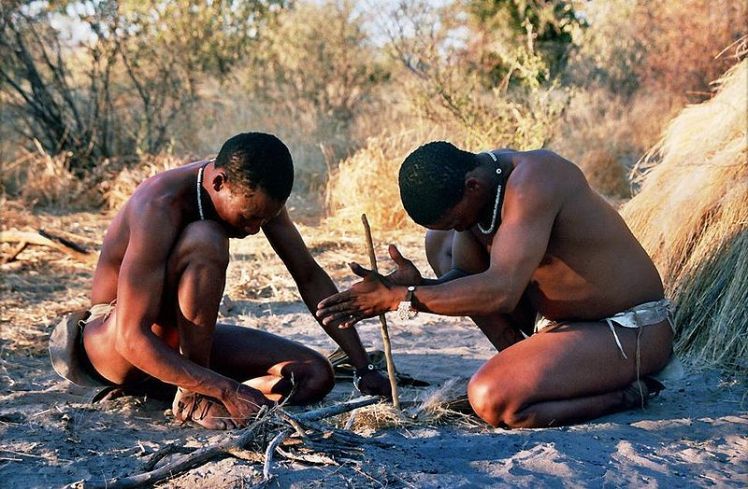
Through new genetic analysis, scientists have now confirmed interbreeding between early east-migrating Homo sapiens and Denisovans, an offshoot of Neanderthals and descendents of Homo erectus people. Through similar analysis, researchers had previously confirmed interbreeding between Neanderthals and later north and west migrating Homo sapiens. Learn more about the new findings at Siberian Fossils.
A new study by the Harvard School of Public Health raises concerns that the impact of some household chemicals on children may be significantly under-appreciated. Learn more at HSPH Child Chemical Study.

Scientists at the Belfer Institute at Dana-Farber Cancer Institute have achieved a significant breakthrough in our understanding of the aging process – by manipulating the enzyme telomerase in mice. In the new experiment, scientists genetically altered the mice so that their production of telomerase, a key component of chromosome health in animals, could be quickly turned on or off. Since chromosome health is hypothesized to strongly influence physiological aging, inhibition of the enzyme led to near immediate and rapidly accelerated aging as expected. Researchers were surprised, however, when restoration of natural telomerase levels quickly and significantly reversed these aging effects, suggesting the potential for anti-aging therapies within this line of investigation. Learn more about the new research and a likely source of future anti-aging strategies at Belfer Aging Study.

A new study led by researchers at the University of Oxford have found that people who regularly took low-dose aspirin for several years were significantly less likely to die decades later of cancerous tumors. Read more at Oxford Aspirin Cancer Prevention.

All of us in the Humananatura community wish you health and happiness at this time of the solstice.
In our tradition, one that is both old and new, we encourage gathering and celebration…to mark this special time of year and help us more fully sense the rhythm of natural life on Earth.
If you would like more info on solstice celebrations, this article provides interesting insights There Goes the Sun
Wishing you new health,
HumanaNatura

Follow HumanaNatura On Facebook and Twitter

When I was a small child, perhaps like you, one of my favorite toys was a spinning top.
There are elaborate tops, but mine was more modest: a small spindle of wood supporting a round disc. With a practiced flick of my thumb and finger, I could bring the top to life and would watch its gyrations with quiet fascination.
I soon learned that other children shared my interest in tops, and was eventually introduced to many varieties. I remember larger tops that were spun between the palms, and more exotic ones spun with a string. One of my friends had a small collection of tops, many egg-like in shape and painted with bold stripes.
It had been years since I played with a spinning top, or even thought much about them. But recently and unexpected, I began to take a new interest in tops. In fact, for the last few weeks, I have been thinking about tops more, and more deeply, than I ever would have imagined.
In this new interest, I have found that tops offer important lessons about human balance and proportion, and the steps we must take to master essential domains of our lives.
Our Natural Center
To be honest, I don’t remember how or when the image of a spinning top first came to mind, after all this time, but I do recall the general circumstances.
I was traveling with a friend last summer in the western United States. Our journey took us through many austere and beautiful landscapes, and had as its midpoint an artistic festival in the Mojave Desert, an event that is intentionally surreal and far from ordinary life.
Immediately after the festival, and for the second time in my life, I had a startling and quite poignant experience – a lasting feeling of being less than optimally centered as a person, and of being imbalanced and missing out on important positive aspects of my life potential.
As I said, this was not the first time this had happened to me. The first time was several years ago, when I was in the midst of an executive leadership program and in the hands of two very capable psychologists. This time, however, I was returning home through the wilds of Nevada and on my own.
When I say that I sensed I was not optimally centered, I mean a feeling that I was not positioned as well as I could be in my personal possibilities and daily approach to life. Both times, I had a strong new sense that I was not at my ideal point of poise or equilibrium, or state of engagement with the world, with certain attributes overemphasized and others overlooked.
In becoming aware of this new sense of my personal center, I almost immediately saw new paths to a more optimal personal state, and then quickly and quite naturally began to move myself along these paths. As suggested, this movement was to a new midpoint or center of personal gravity, one offering altered perspectives and priorities. It even engendered in me the noticeable change of voice that counselors and coaches often look for as an outer sign of inner change.
If this has re-centering happened to you – perhaps from your own out of the ordinary experiences or encounters with teachers – you know that it is a fairly profound experience and hard to describe. In its happening to me for a second time, however, I had much more awareness of what was going on, of “process” in the words of psychologists. This time, in addition to seeing specific new “content” I needed to work on and assimilate, I was able to take away two important general learnings from the experience.
One learning was that, with openness, most of us probably can achieve this new awareness and move to more optimal states of balance, and perhaps again and again. I say this because the change occurs through a remarkably clear and simple process of increasing awareness in specific ways. My second learning, coming after spending a week in a setting very different from normal life, was that so much around us in society, intentionally or unintentionally, works to keep us from this opportunity of new balance (which I’ll call our natural center). Instead, much that is around us, and even within us, encourages us to live in distorted or “eccentric” ways.
Neither of these ideas is new of course. For centuries, a variety of life philosophies have underscored the ways that unexamined social roles and ambitions can have distorting and undesirable effects on us, pulling us from the more attentive and universal states we are capable. But prescriptions for more balanced life have often lagged these descriptions, leading to imprecise and often either meager or grandiose recommendations for fuller life. Most have proved either inadequately or excessively forceful, and in any case increasing fail to resonate with and prove helpful to people in modern life.
More recently, psychologists have investigated the strong and often counterintuitive power of situational and systemic influences on us. They have demonstrated the propensity of these influences to cause life-limiting imbalance and eccentricity in us. Psychologists have also begun to uncover important strategies to mitigate limitation and imbalance, and more intentionally and universally center and align us in our lives. In practice, these strategies take the form of techniques intended to foster new awareness of ourselves and freedom to chose, leading to more effective, satisfying, and beneficial modes of living.
I have written about these science-based strategies and techniques elsewhere and will again today, but now from a new perspective and offering a simple and elegant way of thinking how they fit together. This perspective comes on the heels of the two newly-heartfelt lessons I mentioned: 1) we can become more balanced and poised through a process of centering ourselves in the fullness of our lives and possibilities, and 2) important influences around and within us work to prevent this universal or natural centering, and must be countered with intentional and creative effort.
Six Lessons to Consider
In considering these two learnings, in the poignant few days after my second “natural centering” experience, one morning the image of a spinning top unexpectedly came to mind.
I saw immediately that at least some of the steps to construct a top, and then to make it spin, are metaphors for measures we must take to better see and pursue more centered life ourselves. After reflecting for a time on the metaphor of a top, I found six key lessons for fuller and more balanced life in the simple allegory of a spinning top.
While I cannot say that there is definitive science underneath each of the six lessons just yet, all do find a place in modern psychological literature. But I fully expect that, together and as applied science, the six lessons for a reliable and even elegant process for helping ordinary people to achieve the new self-awareness that modern science suggests is waiting and the foundation of extraordinary life.
In practice, I have found that the lessons of a top can allow us to see more clearly and then move past unconscious and life-limiting distortion and eccentricity. They can lead us toward new, more desirable, and more powerful states of personal balance, attentiveness, and grace.
With this introduction, here are six lessons of a spinning top for you to consider, perhaps as you seek a fuller experience of your natural center of possibilities and the new awareness this life-changing experience can create. As you will see, the first three lessons involve optimizing a top’s structure, the second three its operation:
1. Balance – if you picture a simple spinning top, you can see that it has two basic parts. One is its vertical spindle or axis (or a tip and crown in case of a monolithic top) that enables its spinning motion. The second part of a top is a horizontal disc (or body) that provides sustaining mass. The idea or principle of balance primarily involves the top’s horizontal disc. It refers to the need to have a top’s disc or body mass centered equally on its spindle or vertical axis. Without this balancing of a top’s mass, the top will be eccentric and wobble to some degree. An unbalanced top will spin less optimally and for a shorter time than if its horizontal mass is balanced over its vertical axis (even as its wobbled and shorter-lived spinning may prove entertaining to onlookers). The first lesson of a top for us is then that we would do well to balance ourselves and our own mass as a top’s disc or body is balanced, reducing or mitigating extremes in our behaviors and outlooks, and placing ourselves more optimally between our full set of potentials. If you question whether this idea of balancing is right for you, consider three close friends, and whether any extremes in their behaviors and attitudes work to help or hinder them in their lives. Likely, you will see the power of avoiding extremes. Balancing of course embodies the perennial human wisdom of moderation in our conduct and outlooks. And while this perennial quality does not make it a scientific truth, considerable research has shown that moderated behavior does tend to make us more admired by ourselves and others, less stressed and more attentive, and more effective and beneficial in the world. Balance helps both tops and people spin more elegantly, more capably, and far longer.
2. Alignment – a top’s second lesson involves its vertical axis, whether the axis is a separate spindle or implicit in the line running between the top’s tip and crown. Alignment requires that there be a straightness or congruency in the top’s central axis. Without this alignment or continuity, the top will be hard to set in motion and then will spin erratically and soon falter. In a very similar way, our natural centering requires a specific upward alignment or conscious positioning of ourselves in time. As with a top, this alignment involves maintaining a clear and direct connection between our tip and crown – between our present state on the ground (since we physically cannot go back to our past) and our potential states in the future (knowing that we cannot see ahead perfectly in time). When we begin to observe our present life carefully, and see the potential it always contains for change and progression, important new self-awareness, an essential creative tension, and new personal alignment with the future are engendered in our lives. This new awareness and upward posture allow us to appreciate our present more deeply and the different ways our future might grow from it, affording us new freedom of movement. In seeing ourselves as we are, and as we might be, we straighten and align in time in an important and experientially powerful new way. This alignment fosters increased attentiveness of our present and brings added perspective and movement to daily life, framing our actions and encounters against a larger potential or quest for progression toward more optimal and self-chosen states. The idea of ensuring alignment in this way is at the heart of the psychologist Carl Rogers’ goal of helping people develop new “congruency” between their actual and potential self, clearing the way for more vital life and self-actualization. It is also contained in Philip Zimbardo’s recommendation of conscious holism in our time orientation – for intentionally centering ourselves between past-positive, present-pleasure, and future-constructive modes of orienting and situating in the world. The idea of promoting alignment between our present and potential is equally supported by research showing the important psychological and practical benefits of realistic self-assessment, regular goal-setting, and some amount of goal-directed action.
3. Mediation – in addition to balance and alignment, there is a third lesson in the essential structure of a top, this one involving its vertical and horizontal dimensions in concert. This lesson is the need to center a top’s body or central mass at the middle point along its vertical axis or spindle – a process I will call mediation, meaning middle-finding. Too low a position of the top’s horizontal disc or mass and the crown will go wayward and the top soon topple. Too high a body position on the top’s vertical axis and the tip will grow out of control and skid out from the precarious mass above it. Mediation is an important lesson for us all and a recurring theme in both traditional philosophy and modern psychology. Without mediation or middle-finding between our specific potential for meekness and arrogance, or self-denial and self-importance, we risk carrying our mass either too low or too high, and may not take advantage of this relatively easy and quite powerful form of natural centering in daily life. The psychologist Abraham Maslow wrote about this necessity, describing it as a need for present and self-affirming “being” and definitiveness – apart from important but essentially present and self-negating “becoming” (and which can take ascending, descending, or circular forms). Carl Rogers also picked up on this idea in his work and looked for examples of people with both elevated and depressed circles of concern. Rogers called attention to our potential for seeking to be “more” than we are or “less” than we are. He viewed both extremes as departures from having a realistic and healthy sense of self. Rogers suggested that when we seek to be more than we really are, it betrays an underlying unhappiness, leading us to harbor illusions of grandiosity, experience regular feelings of insecurity, and behave defensively. When we seek to be less than we are, by contrast, Rogers believed we open ourselves to unhealthy passivity, self-depreciation, and guilt. Each of these potential eccentric self-images can then fuel their own compounding cycles of less optimal life. They underscore the top’s lesson of mediation and our need to be ourselves – both in pursuing our natural aims and in envisioning and seeking these aims. In practice, the techniques of mediation and alignment work hand in hand, centering us in healthy and life-affirming growth, between extreme bottom or top heaviness, and encouraging us to courageously but humbly sense and seek our futures and possibilities. Alignment and mediation help us achieve an accurate, measured, and motivating sense of: a) what is less than us, b) what we are today, c) what we might become, and d) what is more than us.
4. Spin – what would a top be without a good spin, without movement? Plain or fancy, large or small, any top will simply fall to one side when not turning and wait for action. So it is with us. Like tops, we are naturally evolved for action, movement, and becoming in the world. This is the underlying reason why growth – creative, goal-directed, and beneficent action and change – so reliably increases our sense of happiness and well-being. It is also why a lack of growth, a lack of forward spin, just as reliably leads to a reduced sense of well-being and even compounding stagnation in our lives. But how is proper spin achieved? A common misconception is that change for change’s sake or action for itself is all that is needed to ensure essential forward movement. While it is true that novelty can give us short-term relief from feelings of stagnation, and can teach us about more directed forms of change, healthy long-term movement is a far more attentive and progressive process. A top teaches us that spinning requires a steady hand and a precise application of energy. In our lives, this means seeking change that is aligned with and steered toward an emerging vision of our potential. It includes setting measurable and achievable goals for the short and long term. And it involves the precise use of our energy – working toward our vision and goals in a centering between commitment and patience. A top also teaches us that its movements are best aimed at its essence, toward having the top do what it does best. A considerable body of research suggests this is an important lesson for us too. In addition to various findings that promote the idea of future directed visioning (alignment) and goal-setting, researchers at Gallup and elsewhere have found that directing this effort toward essential qualities and strengths produces action that is on average both more satisfying and more impactful. Acting in these more essential ways for us involves cultivating a clear sense of personal attributes and proportion (balance), and focusing effort at developing our natural strengths and circumstances (mediation). Downplaying weaknesses and avoiding mistakes in our actions and application of our energy can be helpful, and perhaps critical in certain situations, but on average are not substitutes for effort aimed at leveraging our strengths. We must spin therefore, pursuing specific goals and moving as we must and should, in ways that express our essence and take advantage of our unique strengths.
5. Reach – though a top must be internally balanced, aligned, and mediated if it is to spin properly, it’s important to see that the ultimate thrust or power of a spinning top is directed outward, not inside itself. This fifth lesson of tops proves essential for us, and is often at the root of why otherwise careful work at consciously-structuring our lives can fail to realize its full promise. For centuries and even today, in a variety of life philosophies, we have been encouraged to have a preoccupation with the thinking self – whether to keep it from sin, to examine it exhaustively, or to negate it. But the prolonged self-reflection that mark these dominating philosophies encourage, in word or result, human life that is inherently unnatural and pointed away from the sources of our fulfillment. As you may know, science teaches us that our long time in nature was a collective one, where our individual attention was primarily focused on others and the many the demands of life in wild nature. We are thus right to suspect that extroversion, attentiveness to relationships, and skilled engagement in our surroundings, and not isolation and self-focus, are essential and natural human attributes (and critical to our proper spinning). Though this idea often proves counterintuitive to people in modern individualistic societies, a growing body of evidence suggests it deserves far greater attention and is more accurate than many traditional description of our basic nature and needed orientation. Here, the lesson of the spinning top is to move, to live, and to become in the world. But it is also to do this in an outward reach. The top, and a great deal of research, caution us to take new care with ideas and preoccupations that turn us inside ourselves, and that we must never to confuse self-awareness with self-absorption. The centered but essential outward quality of a spinning top reminds us to check our alignment and spin – our life vision and plans – to ensure they are sufficiently externally-oriented and world-aimed. Both must recognize that a centered but “lively life” of outward focus is the route of our well-being and flourishing. They must help us steer a personal course toward a life of attentive engagement, skilled and progressive endeavor, and supportive relationships, themes I have written about elsewhere.
6. Placement – a sixth lesson that spinning tops teach us is the imperative of reasonably level ground upon which to stand. Spin a top on an incline, or on rough surface or on sand, and it will not spin well or long. For us, I believe this lesson of placement is not that our environments must be perfect – since we are evolved for a certain amount of overcoming and reliably languish when our lives are freed of struggle and prospect, Rather, it is that we should seek and create settings that are just, supportive, and humane, ones where we can act on our plans and make use of the lessons of tops (and other teachers). Our essential human surface must support our needs for progression and growth, for reciprocating society, and the active and fair balance of competing visions and actions in society. Researchers have demonstrated that open and democratic societies not only better achieve these goals, but also more reliably foster happiness and long life. With ideas in mind, finding placement means seeking, creating, and protecting human environments that foster understanding, freedom, growth, learning, reciprocity, and security. All are essential ingredients of fulfilling life and conditions that favor our human flourishing – our outward spinning and our becoming the marvelous things we can be.
Exploring Your Natural Center
I offer these six lessons of self-transformation on the heels of an extraordinary personal experience – for the second time in my life, first sensing and then moving closer to my “natural center” of possibilities. My hope is that these simple lessons will help you experience and act on your ongoing potential for new centering, and the richer sense of life and new opportunities it can create.
Both times I achieved new awareness of my center, my feelings began as a mild unease and then changed to curiosity, and then to happiness and finally gratitude. It might be best therefore to describe the experience as challenging but ultimately rewarding and beneficial. My life has certainly been altered and enriched, in subtle and not so subtle ways, each time I better sensed and explored my natural center. The fact I have had the natural centering experience more than once – each time with equal force but in very different contexts and with evolving content – suggests we can have the experience multiple times and progressively during our life.
If you would like to explore your natural center of possibilities for yourself, it is likely essential that you first open yourself to the idea that you may not be, and may never be, perfectly centered and positioned in your life. For some of us, this is an easy premise to accept, since we are aware of our flaws, but perhaps so aware that we are overwhelmed by them and do not take practical steps to alter our present state. For others of us, embracing the idea of not being optimally centered can be unsettling and even threatening, perhaps making us similarly overwhelmed and unable or unwilling to explore the causes of these feelings.
Admitting imperfection or eccentricity certainly runs contrary to popular prescriptions that we accept and live with ourselves as we are, essentially in a strategy of lowering our expectations to increase our self-esteem. But courageously humbling ourselves to our potential for progression and improvement seems a critical precondition, if we are to reliably progress and move to new possibilities. In any case, we can take heart that our eccentricities (our operating points away from our natural center) are generally created by culture and circumstance, and by our biology, rather than our conscious selves. We are not guilty of an infraction in this regard, unless we become aware of and do not use our power to change.
When you feel open to change and ready for the work of exploring your natural center, a next step is to understand that each of the six lessons of the top are dimensions of being naturally centered and important “centering” in themselves:
There may be other dimensions of natural centering than these six, but they seem like a good place to start, and perhaps are even inexhaustible sources of personal growth and progression when used regularly and persistently.
You can begin the process of natural centering yourself with the technique of balancing, personally monitoring or taking stock of your daily behavior and attitudes (including looking for unconscious personal attributes). To help in this, you might solicit candid feedback from a few friends, seeking to understand how they view you, at your best and your worst, and what they would most like to change about you. This probing can be challenging for everyone involved, but often provides unexpected insight into our extreme states and simple but unappreciated avenues for growth and progress. Whether through self-examination or feedback, or by taking personality tests or inventories, your goal in balancing should be to identify ineffective or undesirable extremes in your patterns of action and outlook.
The work of balancing often provides a surprising and piquant new awareness of ourselves, including overlooked and near immediate possibilities for progressive change. After balancing, the techniques of alignment and mediation can immediately follow. Using the information obtained in balancing, alignment involves candidly and creatively imagining your possibilities for the future and then taking stock of your life as it is today. This can take the form of lists of attributes describing you and your life as you might want them to be in the future, and you and your life today. Mediation then takes these lists and asks you to divide the items into four ascending categories: 1) items less than you, 2) items that are you today, 3) items that you want in your life, and 4) items that are more than you. The goal of mediation is to find the central or most important items for your future focus, as well as those items that will take a smaller share of your focus in the future.
As I suggested before, these lists can be worked on iteratively and progressively, and likely will change over time as you progress and see your life and the world through new eyes, so don’t worry about perfection. Solid and satisfying lists of alignment and mediation attributes are good enough at any stage, and it will usually be clear when you have achieved this level of completeness. This point is essential to keep in mind throughout all your centering efforts, since the work of centering can be challenging, requiring new effort and candor with yourself.
Accept that this work may be complicated and tentative at times, but expect it to produce unexpected insights and options for a richer place in the world too. Equally recognize that you must maintain your energy and motivation, and thus must center yourself in the right amount of considerations and tasks at any point in time and not let yourself become overwhelmed. If you adopt a strategy of persistency and progressivity, you may be surprised at the way small and cautious but sustained steps can take you to new places.
Balancing, alignment, and mediation create the structure for a more centered and powerful life, but this new structure must of course be set in motion as we have discussed. Here, the technique of spin can be used to create an action plan to bring your new self-awareness to your life. There are a number of ways to do this, but most involve organizing your ideas into intended goals and actions (which should be SMART: Specific, Measurable, Actionable, Realistic, and Time-specified). Examples might involve a general desire to acquire new skills or to eliminate a recurring behavior. Converting either of these items into a goal means stating them in roughly the following form: “by <date>, <start/stop> <item>.” As you convert your general wishes to specific goals, you may find that wishes often require multiple and sequential goals over time. For example, the objective of acquiring a new skill might be divided in the goals of investigate schools, apply, attend, and graduate, each with their own timeframe.
As you formulate your goals, I recommend that you initially group items into things you want in 1 month, 2-12 months, and 12+ months. This approach allows you to see immediately how balanced your aspirations are between the short and long-term. Also, by pursuing an item or two in the 1-month column right away, the approach can provide both momentum and early feedback and learning about your action plan and use of the centering techniques more generally.
As I said, expect your list of aspirations or objectives to change and evolve, at first and over time, especially if you go through the centering process again. After all, a more centered and powerful life is a creative and ongoing endeavor, not an eventual resting place or final destination. Because of the inevitability of change, I also recommend that you review and reconsider your action plan at least monthly for several months and then at least twice yearly after that.
When your initial and revised action plans take shape, you can bring the techniques of reach and placement to the process of plan refinement. Reach involves checking your plan to ensure that it is primarily externally-oriented and not overly self-preoccupied – aimed primarily at the fulfillment-orientated objectives of engagement, endeavor, and relationships I introduced before.
The technique of placement provides a similar check on our planned actions. Placement encourages us to attend to essential sources of support and limitation in our environment and not simply to improve ourselves in isolation. Placement involves ensuring a balance of positive change in ourselves and change in our setting, and ensuring that our environment is not one of chronic and limiting extremes. Placement does not require that we seek or create utopia, but does suggest we should take action on items that are obviously limiting to our growth (and likely, that of others). In a sense, reach and placement are complements, ensuring an outward and engaged personal orientation and then using this orientation to improve our environment so that it encourages more centered and engaged life.
Together, these six lessons of a spinning top – balance, alignment, mediation, spin, reach, and placement – provide a rich, artful, and systematic approach to personal mastery and transformation. They encourage new awareness and perhaps unexpected creativity in us, helping us to sense and then act toward the new and deeper “natural center” always waiting in our lives and environment.
I hope our discussion of tops and centering proves helpful and even life-changing for you. I wish you early and continued success in your own uncovering and pursuit of your natural center, and your use of new awareness of your center of possibilities to create progressively more vital and fulfilling life.
When you have minute, I would also encourage you to make or buy a small top as a touchstone and remembrance of our discussion today. Keep the top somewhere where you will see it regularly and spin it from time to time. Use your spinning top as a reminder that we all can better see and act from our center, and that tops can teach us much about this natural human potential.
As you take your top’s important lessons to heart, you may find that it spins you in return.
Mark Lundegren is the founder of HumanaNatura.
Tell others about HumanaNatura…encourage modern natural life & health!
Follow HumanaNatura On Facebook and Twitter
I was walking with a friend recently and our conversation turned to my recent writing on the topic of human fulfillment.
After I sketched two new articles about naturally fulfilling life, she commented that people were too focused on “having it all” to find fulfillment, since this was nearly an impossible goal and seemed to cause a lot of unhappiness along the way. I commented – as I often do and sometimes find new insight through – that it depended on what we meant with these words.
While we continued our walk, I pointed out that “having it all” can mean different things to different people, and often varies in content with time and place. My friend explained that what she had in mind was the typical suburban dream these days: a big house, a great career, an attractive and devoted spouse, imported cars, perfect kids, exotic vacations, supportive family, fun friends, and still more property.
I agreed this was a familiar list, but added that not everyone would say this was their list and maybe many more might not if they looked at the idea carefully. Still, I conceded that many people seek exactly these things today in many parts of the world, and often mistakenly assume having them will provide a lasting sense of fulfillment and satisfaction.
My conversation was a reminder that our ideas about “having it all” or being fulfilled either can be given to us or defined by us. When given to us, many conceptions of fulfillment can be shown to limit our freedom and engender behaviors that take us away from our natural happiness and vitality, rather than toward it. But when our ideas about fulfilling life are examined and defined by us, as I will explain, we have the potential today to find powerful new freedom in our lives and lead ourselves in far more vital and fulfilling directions.
In the next few minutes, I’d like to explore with you three different ways we might define “having it all” and discuss the likely context and consequences of each definition. My purpose with these examples is to give you new perspective on the goals and assumptions you bring to your life each day, and to help you more directly chart a course to life that is rich, vital, and satisfying. After reviewing the examples, we’ll turn to a specific approach you can use to put new ideas about “having it all” into practice.
Our discussion will build on the two articles I spoke with my friend about on our afternoon walk – Finding Fulfillment and Scarcity or Abundance – which you may want to review as well. The first article provides a fairly in-depth discussion of the long misunderstood and often counterintuitive nature of human fulfillment. The second reviews changing historical ideas about a full life and the important lessons this offers us about the generally unchanging nature of our fulfillment.
Both articles underscore a simple but scientifically-grounded idea of a triad of fulfilling life that I want to introduce to you as we begin our discussion. The three legs of this triad are: 1) engagement, 2) endeavor, and 3) relationships. I’ll come back to these important themes toward the end of our discussion, and suggest how they can help us envision, move toward, and even talk about fulfilling life more effectively.
Three Ways of Defining “All”
As I suggested to my friend, there are many ways we might think about and pursue the goal of “having it all” or finding fulfillment in our lives, especially if we consider the many possible variations on the dominant ways people do this in actual life.
Ideas about the proper ends or optimal goals for our lives include moral and cultural aims, meeting social and family commitments, approaches based on principles and self-discipline, dedicating ourselves to particular occupations or pursuits, pursuing pleasure and excitement, and engaging in creative or expressive life. In considering this informal and no-doubt familiar list, you are likely to conclude that most of us steer our lives in one or more of these ways and that our lives are often eclectic combinations of them, distinct and even unique to each person.
To simplify our discussion and highlight a critical insight about all personal definitions of a full life, while keeping in mind this diversity, I’d like to talk about three generalized ways we frequently define “having it all.” These examples are suggestive of dominant patterns of thought in our time and make more tangible the important distinction I have introduced – between definitions of fulfilling life that are given to us and those that are examined and defined by us.
> Conservative-traditional orientation – let’s begin our discussion of these three common ways we might define “having it all” with a general portrait of how civilized people frequently characterized a full life before modern times. In many seemingly diverse pre-modern societies, I’d like to propose that the proper aim of life was in fact actually defined in a remarkably similar overall way. This widespread pre-modern perspective is rooted in our nearly universal earlier condition of agricultural life and the constraints this life imposed on us. Its view of “having it all” almost always included a recurring compromise between religious or cultural duties encouraging collectivism and the fact and lure of unequal power and privilege in agricultural civilization. As a result, this general view of idealized life first involved a commitment to others and temperance in one’s personal conduct within the traditional social spheres of extended family, kin, village, and kingdom. In most cases, religious codes and enabling institutions evolved to support these ideals, and many relied on threats of worldly or otherworldly hardship for transgression.
At the same time, the physical reality of pre-modern life was nearly always one of unnatural inequity and profound hardship for many people, with markedly dissimilar states of life in different social classes. This important fact of traditional life across much of the world normally worked to create a specific exception to core cultural and religious ideals. While the vast majority of people worked the land and lived at subsistence levels, a small governing elite and a slightly larger enabling middle class (of priests, soldiers, instructors, and merchants) enjoyed a modestly to an entirely higher standard of living, and thus became objects of natural envy and aspiration for others. It is true that some religious codes sought to attach negative qualities to the possession of rank and power, but most pre-modern cultural systems accommodated the fact of unequal wealth and some suggested it even reflected gradations in innate individual quality. Our portrait of the ideals of traditional life must therefore include the almost universal tension that exists within these systems – between temperance and communality, and the quest for material enrichment and noble status. Given this brief portrayal of agricultural society, a generalized conservative-traditional definition of “having it all” might be said to include many or all of the following features:
Together, this set of partly concordant and partly conflicting ideals can be expected to engender an odd and ironic sense of life, rather than the integrated and fulfilling one I will suggest is possible. In the end, pre-modern life failed to resolve its central tension between communal obligation and service of elites, and its incentives to replace elites and escape its obligations. This failure is instructive for us today. It likely is the root of the recurring instability, and the open-ended ideals and conflicted sense of life, which marked this period in our history and is our pre-modern inheritance.
> Liberal-modern orientation – in our new human condition of modernity and industrial prosperity, and reflecting the liberal ideals that accompanied and may have led to industrialization, we can see a distinct new set of concepts that many use to define the proper goals for life in our time. The newness of these concepts is made quite striking when they are contrasted with the general facts and thinking of traditional life we just discussed. It is true that newer notions of “having it all” frequently are alloyed with conservative-traditional ideals, but increasingly, they operate with substantial independence from them. As my friend’s comment suggested, the prototypical liberal-modern person in our age aspires, and expects others to aspire, for material comfort, convenience, pleasure, novelty, and status. The total effect of this normalized general striving forms an entirely new form of life that was not possible, and whose essential character was not well-appreciated by its proponents, before industrialization. The goal of life for many of us today is as thus aptly summarized as life, liberty, and the pursuit of happiness, to use the words of one especially famous circle of liberal advocates writing at the dawn of the modern age.
The full result of this new and I’ll suggest generally naive general orientation, as we can see around us today, is a decidedly open-ended, generally resource-dependent, and frequently extravagant conception of the necessary elements of fulfilling life. As suggested, the list of desired items a liberal-modern might want today include an interesting and lucrative career or freedom from work, frequent and extended vacations, impressive homes and possessions, varied and interesting friends, physical fitness and a long life, an attractive and adoring spouse or series of lovers, fame and acclaim, and few responsibilities or obligations to people outside our immediate social sphere. Though we often take such goals and ambitions for granted in our time, and devote much of our time to them, we should recognize that these ideals represent an entirely new and remarkable change from earlier conceptions of a full life, and are perhaps tenable only in the new material and technological state that is our modern world.
But as with traditional conceptions of ideal life, liberal-modern notions of the elements of a full life and “having it all” contain within them their own unique contradiction, even or especially amidst the industrial abundance of our times. After all, an acceptance of the inevitability and naturalness of open-ended wanting and competitive striving amidst conditions of widespread affluence leads to the near certain prospect that even wealthiest, smartest, and most beautiful of us will face inequities and shortcomings relative to others on at least some point. For the more average of us, this unexamined contradiction proves even less auspicious, creating unnecessary conditions of frantic, chaotic, and unsettling life, rather than an alternative modern life that is more informed, chosen, and heartfelt. In our most liberal and unregulated modern nations especially, we can see this new central contradiction play itself out at many levels and in many forms.
Whether we are wealthy, middle class, or of more modest means, liberal life today has few limits and many imprecise prescriptions. “Having it all” can be as large as one’s imagination, and while only a few of us have the means to pursue this largeness, most try. And we increasingly discover that those who can and do amass large portfolios of sought-after possessions and attributes are often found with a remaining (and often only partially-unexpected) sense of further wanting. These case studies confirm for us newer ideas and increasingly well-established scientific findings that suggest our fulfillment lies elsewhere and in an entirely different conception. This science includes at least three essential conclusions about human life and our requirements for fulfilling life that are not a typical part of the liberal-modern outlook: a) an inevitability of declining positive emotions from new possessions and achievements via habituation, b) the likelihood that chronic competition is unnatural for humans, reliably unsettling people and upsetting communities, and c) many items within the liberal-modern conception of fulfilling life do not reliably lead to lasting positive emotions or a satisfying and meaningful sense of life. Given this critical but perhaps persuasive portrayal of liberal-modern definitions of “having it all,” let me propose that this new general orientation includes many or all of the following features:
As was the case with conservative-traditional views of “having it all,” I will suggest again that these liberal-modern ideals for fulfilling life are just as contradictory and poorly-conceived. Many are plainly inherited or given notions from a pre-modern world that imagined but had no direct knowledge of modern prosperity and freedom. And few of these ideals can be shown empirically to form a dependable path to personal fulfillment, even in conditions of nearly limitless material wealth and life opportunity.
> Scientific-natural orientation – if there are shortcomings contained in these two previous orientations toward fulfilling life, the traditional and the modern, one option is to blend them into a third set of ideals, taking the best of each and constructing a philosophy of life that seeks to offset their specific flaws and contradictions. As indicated before, I believe that many of us take this approach today and most of us in the industrialized world would be hard-pressed to find people who are unabashedly and entirely traditional or modern in overall orientation. One frequent direction of this eclecticism is the tendency in life today toward strident conservativeness on social matters, effectively dampening or regulating the display of good fortune and status, combined with liberalism on economic matters, affording the potential for special personal advantage amidst this outwardly leveled playing field. There is also a common reverse tendency too, one which promotes liberality on social matters and encourages new personal expression, while advancing conservativeness on economic matters. The intended result of this approach is a leveling of wealth and its use to promote greater diversity in available forms of liberal life.
As a general rule, both hybrid approaches suffer from their own ideology-rich and evidence-weak constructions, though social conservatives do seem to be happier overall based on various research findings. At best, however, these approaches engender an ill-informed individualism and often lead to simplistic and self-defeating conquests of happiness. Importantly, these typified modern approaches also now stand in startling contrast to emerging scientific findings regarding the underlying nature and requirements of human fulfillment. These newer findings suggest that the achievement of fulfilling life is a realistic and achievable aim for most people – that a new and more desirable form of “having it all” is now possible – through the progressive use new ideals rooted in scientific research, within and making use of the conditions of industrial affluence that science has brought us. As I have written about elsewhere, an increasing body of evidence suggests that fulfilling life is engendered by a relatively small and specific set of factors or life attributes, and that many of these attributes are rooted in the earlier human conditions of natural life that preceded fixed civilization. If you are interested in exploring this research, William Compton’s recent textbook on Positive Psychology offers a good introduction and provides many sources for additional study.
Given our state of modern affairs, and the dominating life orientations I have described, this emerging scientific-natural conception of “having it all” or finding fulfillment is often counter-intuitive and counter-cultural, and it has important and even life-altering implications for individuals and communities around the world. Importantly, while the emerging set of evidence-based factors of fulfilling life is small in number, they are not small in impact or formulaic in application. In fact, applying the new science of human fulfillment to our lives is real work, and creative and lifelong work at that. And we should expect this to be the case – we should expect our fulfillment always to involve a quality of creative struggle, even in a more enlightened future of better managed lives and communities. Why? Because science increasingly portrays fulfilling human life or “having it all” as a process, rather than an outcome or the end state it is frequently conceived of in traditional and modern orientations. Our fulfillment naturally involves continuing tasks and challenges, and requires ongoing personal engagement and improvisation in our lives, throughout our lives. The reason for this essential requirement of fulfilling life – for attentive engagement, skilled endeavor, and reciprocating relationships – becomes clearer when we consider that fulfilling life today is rooted in and informed by our long-evolved earlier life in wild nature. This earlier life was one where people achieved survival in essence through these three central attributes, throughout our lifespan and across our long life as a species in wild nature.
Science now shows us that for ten million years and as late as 60,000 years ago, all human life took place within small nomadic bands ranging exclusively on the plains of Africa. In this ancient human life of mobile foraging, one that took place alongside formidable animals and included extreme environmental conditions, our human survival depended upon intimacy, reciprocity, skill, and learning within our natural bands. While our later circumstances, security, and technology have all changed greatly since this natural life of equality and communality, our genes and resulting innate nature have not. Our developing natural-scientific orientation therefore proposes that we are still today subject to long-evolved and regular requirements for healthy and vital life, as are all other animals on Earth, and predicts that we will reliably descend from our natural state of fulfillment and vitality when these conditions are not present or are prevented. These generally unchanging contributors to abundant human life are being uncovered and explored in our time through modern scientific inquiry, but already have begun to frame a new general theory of human life, with enormous implications for the way we make personal choices and design our communities. This likely less familiar but increasingly evidenced natural-scientific conception of “having it all” includes:
Since these new ideals are somewhat unassuming and quietly radical, I would encourage you to spend a few minutes reviewing and reflecting on this new set of ideas about human fulfillment, ones which have remarkable implications for our lives and goals. But let me add that if this natural-scientific orientation toward “having it all” seems modest and potentially fulfilled in many ways, and even at very low levels of resources and personal wealth, you are grasping one of its central implications, and an important and even profound lesson this new orientation offers us all.
Redefining “Having It All”
I hope this discussion of varying views about human fulfillment and differing ideals for “having it all” has given you new perspective and motivation to consider your own orientation and personal aims. I also hope it has provided you an added ability and confidence to define and not simply receive conceptions of what it means to lead a rich and vital life.
If this is the case, the immediate work before you, and the recurring challenge throughout your life, is to use modern fulfillment research to make your list of personal goals and aspirations more explicit, better considered, and more to the point of achieving the things you most need. In this work, your aim is to envision and create lasting happiness and quality of life for yourself and those around you, as directly as you can, using the emerging new science of fulfilling life.
When you are ready, you can begin this important work by making or updating your list of what you most want in and for your life. This personal “having it all” list can be long or short to start, as long you are honest with yourself and include all of your current wishes, and are open to learning and insight along the way and remain flexible about adding to or subtracting from your initial list.
Once you have a working list of goals and aspirations, the next steps are to compare the items on your list with the components of fulfilling life I introduced at the end of the last section, and then to refine your list based on your comparison. This process usually takes the form of an exploration and a gradually improving set of personal goals over several weeks.
Perhaps your initial list and comparison will look something like this:
Example Initial “Having It All” List
| Goals & objectives | Alignment with natural-scientific factors | Number of Yes’s | |||||||||
| Physical safety | Shelter from harsh weather | Environment and food quality | Exercise and time outdoors | World and social engagement | Skilled work and pursuits | Supportive relationships | Learning and teaching | Helping Others | Intrinsic enjoyment of life | ||
| Great health and physical fitness | Yes | Yes | Yes | Yes | Yes | 4 | |||||
| Bulging muscles and abs of steel | 0 | ||||||||||
| Circle of close friends and family members | Yes | Yes | Yes | Yes | Yes | 5 | |||||
| A-listed with the party people | Yes | 1 | |||||||||
| The most admired person in town | 0 | ||||||||||
| Degree and career advancement | Yes | Yes | Yes | Yes | 4 | ||||||
| Reliable and stylish automobile | Yes | Yes | Yes | 4 | |||||||
| Two-seat luxury roadster | 0 | ||||||||||
| Get married and have kids | Yes | Yes | Yes | Yes | Yes | 5 | |||||
| First home near family and work | Yes | Yes | Yes | Yes | 4 | ||||||
| Large house on hill above town | 0 | ||||||||||
| Access to recreation area near home | Yes | Yes | Yes | Yes | 4 | ||||||
| Lifelong involvement in favorite sport | Yes | Yes | Yes | Yes | Yes | Yes | Yes | 6 |
As you can see from this example list of wants and desires – in which I have intentionally but perhaps not unrealistically included items with high contrast – we are apt to find that our initial “having it all” items align and do not align with the natural-scientific factors for fulfilling life I have introduced.
For simplicity, I have used a “yes or no” approach to the factors, but some items in the example list do partially align with one or more of the factors. If you would like greater precision in analyzing your early lists, you can use a “0, 1, 2” approach (where 0=no alignment with a factor, 1=partial alignment, and 2=strong alignment).
The critical point at this stage in the process of redefining “having it all” is that you are likely to find your initial lists include a mix of traditional, modern, and natural ideas about your fulfillment. As we have discussed, the first two of these orientations still can influence us considerably, but both are readily identified once we know to look for them. Each has an open-ended quality in terms of the place of wanting for material comfort and status – implicitly and antagonistically in the case of conservative-traditional thinking, and in a more express and unashamed way in the liberal-modern view.
The fact that these intuitively-based world views have this quality should not be a surprise, since as humans we likely naturally craved and on balance benefited from both higher status and novel experiences in our long life in the wild. But in the wholly new human contexts of agrarian and now industrial affluence and inequality, these native impulses can become a liability if they are not actively informed and managed. If we are not aware of and careful with these natural drives and their great potential strength, they easily can get the better of us in the unnatural context of civilized life, leading us away from our fulfillment in mistaken quests for “having it all.”
While the natural-scientific orientation points to our need to mitigate these specific failings of earlier orientations, it would be wrong to think of this emerging view as an intended response or reaction to earlier conceptions of fulfilling life. Instead, the new scientific view has its roots in the evidence-based method that marks all scientific inquiry. It is fair to say that contemporary researchers have had suspicions that earlier ideas about vital and fulfilling life where suspect, but perhaps no more so than the way that renaissance astronomers were once distrustful of the geocentric worldview that dominated in their time. In both cases, researchers sought empirical evidence and theories that fit the facts of the observable world. And in each case, the results have proven astounding, beginning new conceptions of life that overturn centuries of human intuition, belief, and error.
Though it will require adaptation to your circumstances, I trust that my example list seems realistic to our times and perhaps to your life specifically, and that the factor scores of its illustrative items suggest just how different the natural-scientific orientation is in theory and practice. In my experience, this new orientation produces a more focused, flexible, and reliable approach to our lives and the task of our fulfillment. As we have discussed, this evidence-based orientation encourages creativity, promotes engagement in the world and intrinsic enjoyment of life, and emphasizes skilled and meaningful action and the importance of relationships, while suggesting the need for only modest resources and time spent accruing personal wealth.
It may take time, but I would encourage you to work on your list of aspirations, removing and adding items as needed until your ideas about “having it all” better fit the findings of the new natural-scientific orientation. Like others, you may soon discover that your revised list proves a source of personal insight and offers a new sense of natural freedom, allowing you to focus yourself and your time in new, more flexible, and more satisfying ways.
Fulfilling Life Over Time
As your “having it all” list or life-plan reaches a point where it is reasonably satisfying and aligned with the science of fulfillment, the next steps are to re-frame the items as intended actions and then to put these actions into an overall timeframe.
There are a number of ways to organize your intended goals and actions. One way is to group items into things you want in 1-3 months, 3-12 months, and 12+ months. This approach allows you to see immediately how balanced your aspirations are between the short and long-term. And, by pursuing an item or two in the 1-3 month column, the approach can provide early feedback and learning about your developing list and use of the ideas I have introduced.
I would encourage you to begin the process of personal change with smaller items first, since these actions are often easier to accomplish, provide learning and insight into the nature of change, and may impact and inform your larger and longer-term plans. Expect your list of aspirations to change and evolve, at first and over time. After all, fulfilling life is a creative and ongoing endeavor, not a resting place or destination. Because of the inevitability of change, I recommend that you review and reconsider your goals and timeline at least monthly for several months and then at least twice yearly after that.
Our revised life-lists and the new personal orientation they reflect can prove quite powerful. They have the potential to engender change in the way we live our lives today, to alter the long course of our lives, and to affect the people we touch with our lives. A natural-scientific orientation can allow us to better appreciate the new abundance and freedom that mark our special time in history, the nearness of fulfilling life for many of us, and the importance of science and inquiry to uncovering our nature and potential in this science-led technological age.
Since you are likely to be asked about the changes underway in your life, perhaps almost immediately by family and close friends, let me end with a couple of talking points to help you discuss these far-reaching ideas in a few words. One approach is to explain the changes as moving past traditional ideas about how we should spend our time. Statements of this sort usually prove clear and intriguing to people, and may invite mutually-beneficial discussions. But they may also prove unsettling to people who are especially traditionally-minded, so do use care with whom and how exactly you make this general point.
As a follow-on to the concept of reconsidering how you spend your time, you might introduce the idea that contemporary science suggests improvements and alternatives to traditional and even many contemporary prescriptions for a happy life. This suggestion often can lead to all or part of the discussion we have had today, including the ten factors I summarized and the general outline they form of a new natural-scientific orientation toward personal fulfillment.
Since discussions of this sort can take time and often need to occur in stages, I will encourage you to initially characterize the natural-scientific orientation as one suggesting that our lives and quests for fulfillment be based on the triad of fulfilling life I introduced before: 1) engagement in the world, 2) skilled and socially beneficial endeavor, and 3) mutually supportive relationships. From these simple but important and often counter-intuitive ideas, conversations can become more detailed and specific, and perhaps be conducted over the course of long walks in nature as I do frequently.
I hope this discussion of new possibilities for “having it all” proves helpful and even life-changing for you, and wish you early and continued success in your own renewed pursuit of progressively more vital and fulfilling life.
Mark Lundegren is the founder of HumanaNatura.
Tell others about HumanaNatura…encourage modern natural life & health!
Follow HumanaNatura On Facebook and Twitter
Do you have everything you need to live a happy life? How about a fulfilling one?
Many of us feel we do not have the things we need to live in either of these ways. Across a variety of studies and surveys, a sizable number of us report that we lack one or more of the essential ingredients of a happy life, and that we see rich and fulfilling life is a distant and even unrealistic prospect.
One way of looking at these reports is to surmise that many of us express general feelings, or a persistent mood or outlook, of what is sometimes called scarcity, or insufficiency. Scarcity is either an objective state or subjective attitude that is in stark contrast to abundance, the presence and perception of richness in one’s life and larger environment. Interestingly, and as we will discuss, a smaller but significant percentage of us do report feelings of fulfillment and abundance in our lives.
And perhaps surprisingly, but critically for our discussion, these reported feelings of personal abundance often have only little to do with our objective circumstances.
Objective scarcity is fairly easy to define: it involves life conditions where we lack one or more elements essential to a happy and vital life. This can involve the most basic elements of natural human life, such as our needs for food, security, and fairness. Or it can involve conditions that fail to meet higher order human needs, including supportive relationships, opportunities for learning and growth, and social currency. In these and other cases, fairly well-understood deficiencies in our hierarchy of essential needs can be identified and measured empirically.
Feelings of scarcity are a more subtle phenomenon, however, and can be considerably independent of our objective circumstances as suggested above. A subjective sense of scarcity can be with regard to the world in general, or limited to conditions within our individual lives and social groups. Subjective scarcity is a sense that there are not enough of nature’s offerings to go around, or that these offerings are not distributed justly or predictably. Research suggests this sensibility can exist strongly despite personal or general conditions of objective abundance, or conversely, only weakly even amidst objective personal or group hardship and trial in the world.
But while feelings of scarcity can be more subtle and tenuous, they are at least as important as objective measures in creating conditions of abundance for all people. Such feelings are real and palpable within us, and can be powerful and even overwhelming in our lives. Just as when we possess a general attitude of abundance, sustained feelings or assumptions of scarcity can influence the quality of our lives and guide many of our most significant life choices. And this can be true even as these feelings and ideas remain unexamined in our lives, throughout our lives, and as they may prove objectively false, especially as they occur in the startling new human environment that is modern life today.
In fact, when we look at our individual lives and range of personal prospects more objectively, and more naturally, most of us can be shown now to have enough – and often far more than we need in the developed world – to live remarkably happy and fulfilling lives. Most of us today exist in objective conditions of actual or proximate abundance, in other words, even as we may dwell in subjective conditions of scarcity and want.
In this article, we will examine three topics related to this important theme: 1) the quite common gap today between our objective and subjective conditions of life 2) our true objective or natural needs for an intrinsically happy and fulfilling life, and 3) strategies for altering both our subjective outlook and objective circumstances, so that we may reliably move ourselves and others to an abundant state of life – life that is subjectively and objectively happier, healthier, more meaningful and progressive, and more fulfilling.
Our discussion will build on and use ideas from another, more foundational article of mine on this essential topic, entitled Finding Fulfillment. You may wish to review that article either before or after this discussion.
Scarcity and Abundance over Time
To begin to uncover our natural requirements for abundant and fulfilling human life, let’s consider a typical life, and typical ideas about abundant life, from four different perspectives.
Rather than focusing on differing views and outlooks on abundant life today, however, I’d instead like to compare our life and outlooks with those of earlier times in our history. This approach to examining alternative perspectives on abundance proves quite revealing, and offers important insights into the nature of fulfilling life, in our time and perhaps in all times.
So, in addition to outlining life and ideas about abundance in our time, I’ll offer similar portraits of how life and outlooks existed at three alternative points in our history: earlier in the industrial age, in the pre-industrial world, and in our original state in wild nature. As you will see, each of the four periods offers us a distinct picture of the typical boundaries of daily life, a unique set of met and unmet natural needs contained in this life, and particular ideals of what constitutes abundance (which, to the extent these idealized needs are or were unmet, work to trigger chronic feelings of scarcity in us):
> Life & abundance in our time – our starting point for exploring varying historical ideas about abundant life, and the deeper truths regarding human fulfillment that lies beneath this variation, is our own time. This is a good place to begin – both because we know our time well and because our current thinking forms a striking foundation with which to contrast earlier ideas of abundance. Today, we of course live in a global, Internet-based industrial society, and increasingly in a “super-sized” manner in much of the developed world. In the fully industrialized areas of the world, people of even average means often now live in larger and more elaborate homes, drive faster and more exotic cars, eat more calorie-rich and varied meals, and have more eclectic interests and experiences than ever before. We often pay dearly for this new mass luxury, however. This payment includes the trends toward longer working hours, increased indebtedness, smaller families and average household size, weaker social networks, and growing personal isolation. The newly wealthy among us fly in private jets, live in multiple locations around the world, and engage in unprecedented industrial-age effrontery and philanthropy, but still suffer many of these same modern personal ills. Common ideas about abundant life in the developed world today include:
As we can see from what should be a familiar list of aspirations from our time, current ideas of abundant life are in part a reaction to natural human needs unmet in the typical life of our era. Specifically, these include our natural human needs for free time, friendship, and freedom from anxiety. But our ideas about abundance are also in part a natural reaction to others, amidst our unnatural and advancing conditions of industrial wealth and inequality. This includes the sight, or thought, of others who enjoy greater wealth, more desirable friends and lovers, and higher status and notoriety than us. Importantly, we will see both these patterns again as we explore life in earlier epochs – but with different content specific to the epoch – and will discuss their quite important lessons for achieving abundant life, today and generally.
> Life & abundance earlier in the industrial age – if we turn our attention back to an earlier time in the industrial age, for example to the 1920s in what is now the developed world, we see similar and dissimilar patterns of life and notions of abundance, when compared to those of ours. Then, many people where in or entering the new middle-class and enjoying a higher standard of living than ever before, just as a small industrial elite was ascending in parallel and the gilded age of this time was only slightly tamped by earlier progressive-era legal and economic reforms. People increasingly lived in the emerging early suburbs of this time, especially in the United States, having migrated there from rural areas or from inner cities in the preceding decades. White-collar workers principally commuted to downtown work locations by railcar, though professional work in the new suburban towns was increasing, while blue-collar workers increasingly worked in new and larger industrial factories away from both city centers and suburban residential districts. The age of the automobile had of course begun by this time, but air travel was still comparatively rare. Though average household size was larger than today and extended families were still common, houses and apartments of this time were smaller than today on average and most families had either one car or no car at all. Common ideas about the abundant life included:
This list of aspirations, from a time just slightly before ours, is familiar and yet contains conceptions of abundance – “the good life” in the vernacular of this time – that are distinct and different than ours. The differences reflect the demands and reality of larger families, more intact traditional social networks, holdover values from earlier agricultural and nineteenth century mercantile life, and the more modest range of industrial products and consumption potential of the middle and working classes in this era. At the same time, there were considerable unmet natural needs in the typical life of this time – including needs for security, social currency, and freedom from stress – as well as significant differences in material wealth available to people. Together, these shortfalls in middle and working class life fueled new aspirations for upward mobility and a growing sense that more was needed materially for a happy life, even as this era was far more prosperous and flexible than earlier epochs for most people in the developed world.
> Life & abundance in the pre-industrial world – as we look back still earlier in time, to the many centuries of life preceding and leading up to the industrial revolution, we see a far more substantial divergence from our own time, both in the typical life of people and in common conceptions of abundance, even as key themes from industrial times are apparent. This long period of agricultural life, lasting up to 100 centuries in many parts of the world, is most notable for its generally unchanging quality, especially from a modern standpoint. Large city-states certainly rose and fall, and science and technology gradually improved, but much more of life was consistent during this extended time. In the agricultural age, there was often a dramatic two-class social structure – with a very small number of land-controlling aristocrats and monarchs possessing moderate to exorbitant wealth, and a vast majority of land-working peasants with almost no wealth or potential for social mobility. There were important (and enabling) exceptions to this two-class rule, of course, notably a bridging middle class of merchants, instructors, priests, and foot-soldiers. But the life of a typical person of this time was as a peasant. His or her existence was nearly always a subsistent one, involving daily work on the land or in the home throughout much of the year, with significant commitments of time and resources to kin, village, lord, and church. This extended and persistent form of human life was also marked by recurring food shortages, crippling epidemics and untreated diseases, ethnic and opportunistic wars, and oppressive political and theological rule. Household size was large by today’s standards, with substantial families the norm both to work the land productively and to offset much higher mortality rates, even as the typical peasant’s home was one of perhaps two or three rooms at most. Households could be expected to have small livestock by their village-based home, and perhaps a cow or ox, but ownership of a horse and/or carriage was often beyond the means of average people. In this extraordinarily different setting than our own, and the extended condition of much of the settled world before modern times, ideas about abundance varied somewhat but frequently included:
As before, these ideas of abundant life are partly a reaction to hardships and unmet needs in the life a typical woman or man, and partly to the presence and lure of an insular upper caste living in a very different material state. Since the material status of people of this time, excepting a very small number of people, was quite impoverished by today’s standards, expectations for material comfort were also often quite modest and aspirations at a level far below that enjoyed by a typical middle-class family in the developed world of our time. Focus was instead more often on the elimination or transcendence of hardship and external threats, a state of affairs we usually enjoy and often take for granted today.
> Life & abundance in our original state in nature – turning our attention back even earlier –to our long natural life before the rise of agriculture and the settled state of life we take as given today – brings into focus a pattern of human life and conceptions of abundance that are very different than those of our time and the other two epochs we have discussed. Yet, certain common themes and ideas remain, even in this more very distant backward look and far longer and more primitive mode of human life. Our time of natural life in fact spans perhaps ten million years – a period more than 50,000 times longer than our industrial age and 1,000 times that of earlier agrarian life. In this long and original human epoch, our ancestors lived in small hunter-gather bands of perhaps 30-50 people, moving continually between encampments and dwelling principally on the rugged savannas of Africa. Since our life was a mobile one and we lacked domesticated pack animals, we were naturally compelled to carry what we owned. We thus had few possessions, and instead fashioned tools and implements amidst our incessantly moving life. In this time, we were thus also material equals, even as there was role specialization and differing levels of status within our bands and kin networks. Importantly, even compared to the hardships of early civilization, our natural environment was an especially challenging one. Though life often required only four hours of work per adult each day, life on the plains of Africa required and kept us in high states of natural fitness and readiness for action. Our survival mandated strong social cohesion and cooperation within our band, for defense against both formidable herd and predatory animals, and other bands of people. Because of this imperative of cohesion, social reciprocity and intimacy were essential and actively reinforced in daily life (and by genetic selection). Since we lacked the possibility of material holdings, had only rare needs for extended daily labor to acquire food and shelter, and survival depended on social cohesion, our daily life was evolved to be a relatively free and gregarious one, even as it was naturally constrained in important ways and subject to regular threats to our safety. In this essentially classless, often joyful, and regularly precarious life before settled and acquisitive human life – which we know something of through the study of hunter-gather bands still intact at the dawn of modernity – recurring conceptions of abundant life likely included:
These conceptions of abundant life in nature are different than the other epochs discussed in an important way, reflecting the absent prospect of elevated material holdings and our generally egalitarian and communal state of human life in wild nature. This important (and still largely unappreciated) fact of natural life removes from consideration ideas of abundance related to superior or differential material status and comfort – ideas, as we have seen, that find a recurring and often powerful influence on definitions of abundance in the later epochs we discussed. At the same time, we can see that a number of our initial themes related to abundant life do carry back all the way to our long original life in wild nature (and, in fact, even back to our earlier pre-human life before this time).
These natural and recurring conceptions of abundance include physical safety, food quality, shelter, skilled pursuits, supportive relationships, learning and teaching, environmental engagement, and social enjoyment. All are suggestive of our basic human needs and natural requirements for abundant life, especially once two features of later forms of human life are striped away: 1) highly differentiated status and material inequality, and 2) the opportunity to pursue our natural needs – for example, provisioning, movement, shelter, and amusement – through novel, technologically-enabled means.
Subjective, Objective & Social Abundance
So, what does this consideration of life and prevailing ideas about abundance, today and in earlier times, teach us about abundant life, in all times? And how can this discussion guide us personally, so that we might better ensure abundant and fulfilling life today?
For me, there are many significant lessons from this exercise, offering lasting insights into the essential nature of human abundance and how we can reliably create this condition in our individual lives and times. Here are six important ideas to consider:
1. Abundance changes and doesn’t change – I mentioned before that several core or natural human needs emerge from our exercise examining life and conceptions of abundance at different points in our history. These more unchanging contributors to abundant life, and inhibitors of conditions or feelings of scarcity, include: a) physical safety, b) food quality, c) shelter of one sort or another, d) skilled pursuits relevant to an epoch, e) environmental and social engagement, f) supportive relationships, g) learning and teaching, and h) daily enjoyment of life. At the same time, we can see from our exercise that the specific ways these needs can or might be met vary considerably by circumstance or epoch. If we take skilled pursuits as an example, we can both acknowledge this unchanging need and see the potential for this natural need to be fulfilled in the varying skills of the hunter-gatherer, the farm worker, the industrial worker, and now, the information-age worker. Thus, the imperative of skilled and engaging effort in the world can be seen as a persistent facet of fulfilling human life, while allowing room for this effort to evolve over time and with environmental needs. From this insight, a specific but adaptive list of this and all our natural needs can be constructed, one that turns out to be quite modest from an industrial-age perspective. From our discussion, we must also add that subjective conceptions of abundance can also vary widely and may be frequently at odds with deeper and unchanging objective truths of human abundance. This potential gap between our subjective and objective states can lead people to frame and respond to their environment in less than optimal ways, to seek goals that are objectively superfluous or detrimental to abundant life in their time, or to experience unnecessary and painful subjective scarcity, simply because of gaps between their expectations and the facts of their life.
2. Inequality can reduce abundance – as suggested already, changes in material and social equality have a substantial impact on the nature of abundance. These effects exist partly in the realm of feeling and emotion, as our natural instincts for status, esteem, and belonging encourage us to define abundant life with regard to those possessing greater wealth and higher social standing. But these feelings have a practical and objective counterpart too. In social settings with significant inequality, real benefits and life opportunities accrue to people and families with higher wealth and social currency, while low status and material poverty can lead to conditions of low social currency, greatly reducing personal opportunity and quality of life. For example, in a society dominated by automobile transportation, people lacking an automobile may face significant impediments to achieving a satisfying life and meeting their natural needs – including more limited prospects for learning and skilled work, poorer food and shelter options, and greater exposure to threats to personal safety. Similarly, and as we can see in our history, in a society dominated by a small number of wealthy aristocrats subject to different standards of conduct, it is possible for a majority of people to lack adequate social currency and realize a far lower and intractable state of life than is possible, given available technology and resources.
3. Abundance exists in three forms – from our discussion, it is clear that abundant life exists in objective terms, even if these life conditions are not always correctly perceived or felt subjectively as personal abundance once they are achieved. We can define objective abundance as conditions that meet our natural needs for fulfilled life, but always in our specific social and technological context – that is, in response to environment and surroundings. We have enumerated these natural needs already, and also discussed how their fulfillment can change in different historical epochs and circumstances. At the same time, it is clear from our discussion that ideals of abundance beyond this objective level can exist in all epochs – via tug of status as mentioned above, but also through the lure of imagination and novel and technologically-based avenues for need fulfillment. For these reasons, creating abundant life for ourselves is partly subjective, involving more clearly understanding our true needs for fulfillment and correctly perceiving elements that support our natural needs in our present life. But abundant life is also partly objective, requiring that we structure our lives and surroundings to meet our natural needs – as in the cases of ensuring skilled endeavor that is meaningful and relevant in our time, or of acting to ensure social currency for ourselves. And finally, abundance also has a social component, requiring collective action and public investment by society to create conditions where social currency and abundant life are optimally fostered or safe-guarded. Today, this involves moving society back to and then through transition points where undesirable inequality is reduced and quality of life increases greatly for all, and to new states where abundant life can be achieved in ways that are more ecologically-sustainable and less harmful to others. Historical inequality, and its recurring patterns of both public and environmental disinvestment, offers stark testimony of our perennial need to attend to the social dimension of abundance.
4. Abundance is possible at modest consumption levels – our examination of abundance in different epochs also suggests that fulfilling life can be created at quite modest consumption or resource levels by modern standards, as long as social currency is achieved and as long as there is sufficient social investment to ensure security and the other collective dimensions of objective abundance we have discussed. In our time, such investments include ensuring food and environmental quality, encouraging sustainable and diverse community and economic development, and educational promotion and financing. Adequate public investment in these and other social and environmental contributors to abundance allows our personal concern to focus principally on meeting our objective needs for abundance and ensuring subjective attentiveness to the contributors to abundance in our life. The result is a natural meeting of the needed top-down and bottom-up drivers of general human abundance. In the next section of our discussion, I’ll propose a specific general lifestyle that can be expected to meet our natural needs and promote abundant life, in our modern epoch and perhaps in epochs to come. This lifestyle involves modest consumption levels (relative to much of the industrialized world today), but levels that are adequate to ensure social currency and the meeting of most or all of our natural needs (in our time at least). As you will see in this proposal, ensuring our personal foundation for abundant life is often far easier than we believe, especially amidst life in relatively free, equal, and prosperous social conditions, where there is wise and adequate public investment. And creatively meeting our natural needs for fulfilling life can and should be our principal focus as individuals in these conditions. Included in this is work is separating out false needs created from a subjective sense of scarcity, even as our objective needs for abundant life are readily met. False feelings of scarcity, however, should never be confused with very real concerns of unmet natural needs amidst wealth, for example owing to conditions of extreme inequality that objectively limit social currency or the adequate investment in society generally.
5. Extreme wealth today harms everyone – this may be the most controversial part of our discussion, but we should not shy away from discussing the historical and modern lesson that extreme relative wealth and highly unequal patterns of consumption work to reduce subjective, objective, and social abundance for all people. Lest I be accused of arguing against private wealth only, let me say that similar resources in the hands (and for the betterment) of cadres of public officials and political leaders is equally apt to have this effect. As counterintuitive as this idea may be at first, it is important to underscore that extreme wealth really does work to reduce overall abundance, both for those who lack wealth and even for those who possess it. There are three natural reasons for this. As we have discussed, the first is that highly unequal wealth creates objective conditions where at least some people lack sufficient social currency to flourish in a society. When especially pronounced, as in much of agrarian society before our time and in some industrial societies today, inequality can grow so extreme that great numbers of people are moved into objective scarcity and then a state of social disenfranchisement. In the world of our time, we can see that this trend can reach a tipping point, where wealth is dramatically consolidated and widespread social disinvestment occurs, despite adequate total resources in the society. The result is to reduce the opportunity of abundant life for a majority of people, necessitate oppressive social controls, and forcing life-limiting sequestration and insulation of the rich and poor. But far short of such draconian conditions, a second reason that significant unequal wealth reduces abundance is by promoting greater status-seeking behavior and encouraging consumption-based life for people who have adequate social currency and income. Conspicuous inequality, in fact, works to fuel a societal treadmill toward ever higher states of consumption and resource use in the pursuit of differentiation and feelings of subjective abundance, even to the point of causing significant social disinvestment. When this cycle appears amidst industrial society, objective abundance is soon reached and then eclipsed by personal goals and actions in service of chronic and unexamined feelings of scarcity. The result is increasingly elaborate and costly but superfluous patterns of consumption and display, ones that sidestep the fulfillment of our natural needs and ironically fail to provide subjective abundance for most people. This cycle of compounding but ultimately unsatisfying consumption and status-seeking is a now fairly well-studied industrial condition, one that has been termed “luxury fever” by behavioral economists. It unconsciously and far from optimally encourages greater focus on possession and extrinsic display, even as many natural and often simply-met needs remain unsatisfied (for example, achieving supportive relationships and reciprocal nurturing). The reliable result of this unfortunate but predictable human dynamic is a condition of chronically unfulfilled life and subjective scarcity amidst high resource use, and the companion ills of long-term ecological harm and social disinvestment. Finally, and in a very similar way, extreme wealth also generally fails to create abundance for those that possess high levels of wealth. In part, this is because they are either idle or preoccupied with the obligations of unnatural wealth and status, neither of which is apt to promote a focus on or the fulfillment of our natural and materially simple needs for abundant life. In part, it is because the very wealthy are often estranged from their general society and caught in competitive, unnatural, and unsatisfying relationships with other wealthy and status-focused people. And, in part, it is because of the selfish orientation and social disinvestment that extreme wealth fosters in the general society, in which the wealthy ultimately do live.
6. Far-reaching abundance is possible today, but requires new effort – I mentioned before that abundant life has three foundations – a subjective foundation, an objective foundation, and a social or contextual foundation. In our advanced technological society, and with our modern political institutions, we have the capability now to create social conditions where abundant life is far more widespread than it is today, and at much lower resource-use levels than are typical in our time. Using the emerging science of human fulfillment and for these reasons we have discussed, new public policies aimed at creating widespread human fulfillment and abundant life now can be pursued with expectations of eventual and quite dramatic success. As suggested, such policies should aim to: a) significantly increase the cost of luxury goods and services, and reduce extreme wealth and material inequality to objectively-stable levels, b) ensure sufficient social investment to promote sustainability, security, and provision of the other key social enablers of fulfillment we have discussed, and c) promote social currency for as many of people as possible. Policies in this direction are of course now being pursued in much of northern Europe, almost universally resulting in increased personal satisfaction, freedom, health, and longevity, as relevant scientific models predict. As we will see next, exploring a specific example of abundant life in our time, only modest material conditions are needed to achieve an extremely high-quality state of life – simultaneously promoting individual fulfillment and social and ecological sustainability – but only as long as conditions of destabilizing inequality and resulting trends towards social disenfranchisement and disinvestment are mitigated. With this perspective and new scientific models of human fulfillment in mind, I must add that pre-industrial social theories that advocated open-ended striving and pursuit material gain have proved not just incorrect, but now actively impede abundance and the optimization of our global society today. Regardless of how enlightened your own nation’s public policies may be at present, however, our example lifestyle will show that in all but the most extreme conditions of industrial society today, our attention can productively shift to a new approach to our individual lives, and to subjective and objective conditions we can control ourselves, allowing us to move directly, progressively, and rapidly to conditions of personal abundance. Let’s turn to this essential and final topic next.
Meeting Our Natural Needs Today
Leaving aside public policy considerations related to the promotion or maintenance of abundant life across our global industrial society, there are usually immediate and quite specific steps we each can take to promote more fulfilling and abundant lives for ourselves and those in our care, literally beginning today.
To illustrate this, and to help you explore your opportunities for greater abundance in your life, let’s consider the needs of a small family seeking to live in objective abundance today. For our discussion, we’ll assume the family has the archetypical nuclear structure of our time – a husband and wife, and a daughter and son. As you will see, the natural needs of this model family are quite revealing, and offer important insights for other family structures, whether larger, smaller, or less typical.
Based on our discussion of our natural human needs for abundant life, and the underlying science that supports these ideas, we can describe the essential needs of our model family of four as follows:
Natural needs of a family of four
Have I left out an essential item or two? Perhaps, but this approximate list is adequate to support the idea that all of the major elements of an abundant life can be obtained at fairly low resource levels and across most of the industrialized world today. Though the cost and specifics of these items will vary by locale and over time, a rough calculation (which assumes that both parents engage in lifelong skilled work) suggests that this lifestyle can be financed by about 1000 hours of annual work by each adult.
1000 hours of annual work is of course about half of what is typical in the industrialized world today. And it suggests a very different work schedule than is typical too – one of six hour days, four days per week, and spanning about forty weeks per year. As suggested by our discussion, this alternative approach to work is far more in keeping with our natural patterns of daily work, and far more enabling of key elements of our natural non-work life. And we can see in industrialized countries today having shorter work-weeks and more vacation time that such a work schedule can be expected to lead to much more extensive non-work activities and promote far greater subjective, objective, and social abundance (as long as material inequality is checked, and is not allowed to prevent this life pattern from having social currency or to foster runaway material wanting in society generally).
Can you see yourself in this new, industrial-age abundant lifestyle, meeting your essential materials needs in half the usual time, and then having new time to pursue the non-material needs that are as essential to our well-being and fulfillment? Though the steps to this alternative lifestyle may seem uncertain at first, or perhaps obscured by other “needs” we feel we must occupy ourselves with to maintain social standing with our peers, I suspect you can see its potential wisdom, as a model for yourself and for people more generally.
In my own experience – beginning as a typical urban affluent and then moving to this alternative lifestyle myself – I have found, unsurprisingly, that work arrangements prove the most critical consideration, even more so than the “down-shifting” in consumption that often is required (and which often proves much easier than we expect). Actually, the second top consideration usually turns out to involve the quality of our social network and the frequently needed process of adjusting our portfolio of friends and colleagues as we move into the new lifestyle. We very often find a need to de-emphasize certain peers who are not supportive of our new goals and choices, and then to put new emphasis on or find new friends who understand and share our desire for a more natural and rational approach to the challenge of achieving personal happiness and abundance today.
As you might expect, forms of work that support this decidedly less traditional lifestyle are also quite often, less traditional. But as you might not initially guess, our opportunities for these forms of work are now numerous, if not vast, especially today in our information age and wired economy. Finding new work mostly requires new creativity, planning and skill-acquisition, and ongoing personal engagement in and responsibility for one’s career. Of the many potential work options supporting this new lifestyle, many share several important characteristics:
Frequent “abundant work” characteristics
With these criteria in mind, I will encourage you to consider what new work opportunities might be available to you today, and thereby to begin to consider what more abundant life opportunities might waiting for you to create today.
In fact, if supporting this lifestyle is a concern, I will specifically challenge you to identify at least five new work options for you that meet all of the criteria, and then to decide which one(s) you will pursue. This pursuit begins by learning more about the occupation from existing practitioners, and then identifying what skills or training you need to acquire. You may ultimately decide that you want to pursue more than one option, or to combine your initial ideas in new, more interesting and fulfilling, and more valuable ways.
Moving to Abundant Life Now
Today, your life is as it is. Likely, it involves both abundance and scarcity – in the subjective, objective, and social forms. But perhaps there is more scarcity than you would like, and also an opportunity to increase subjective and objective abundance in your life, beginning today.
We are frequently advised to see the existing abundance within our lives. While this is important, especially when it involves a science-based understanding of our natural needs, I hope I have shown that truly abundant life involves more than attitude or perspective. As we have discussed, abundant human life has objective, subjective, and social dimensions that are all critically important. Ultimately, all three dimensions require our action – if new, widespread, sustaining, and progressing personal abundance is to be created in our lives and our modern world.
So, what should you do next?
To create a new, up-close, and personal perspective on your own state of abundance, you might start by listing out the essential material needs I proposed above, adjusting them as you feel is necessary for you and/or your family. Next, list your current circumstances next to each category, and then include items from your life today that have no counterpart in my proposed “essentials” list.
From there, look at the differences, highlighting the non-essential items in your life today, as well as those features of abundant life that are needed but not yet present for you. Developing an action plan (or natural life plan) then becomes a logical next step, to eliminate non-essential items and preoccupations and to bring in needed new items and life patterns. In your plan, it is always best to go line by line – calmly, pragmatically, but creatively focusing on what you will change or do, and when.
Once your action plan is drafted, I would encourage you to immediately take on one or two of the small items, to get experience and learning in both planning and the art of personal change. I would then encourage you to revisit your plan in its entirety each month, for several months, until it settles down and you are certain this is the plan you want to pursue. When your plan matures in this way, I would still encourage you to review it at least twice yearly, taking stock of your actions, their expected and unexpected impacts and lessons, and how your plan should be progressively adjusted.
In this way, you can begin to move creatively to your own unique personal expression of abundant life, beginning with small experiments in change in the short-term and moving to perhaps much larger changes in the way you live over time. As we discussed, these changes may involve altering your occupation and/or workstyle, as well as the reshuffling of some of your key relationships, and down-sizing or right-sizing your consumption patterns.
With the work of positive change, however, new and unexpected possibilities frequently present themselves to us, especially since we are apt to underestimate the power and impact of liberated free time and more informed personal choices. You may soon find a much greater ability to organize your time and choices around your most essential needs, including the nature-based triad of fulfilling human life I have written about elsewhere: 1) engagement, 2) endeavor, and 3) relationships.
Soon, and perhaps sooner than you expect, you may find yourself in a very different objective and subjective state. You may find this new state is one of much greater freedom, creativity, and control than earlier in your life. You may find a life that is more inspired, and more humbled and grounded too, and one that is far more fulfilling and lived closer to the heart than before. You may find that a life that is more play than work, even as it is work and celebrates skilled and dedicated endeavor.
You may find that you have created abundant life for yourself, in other words, and perhaps have realized that we all can have this life – that amidst industrial life, we can create conditions of widespread and self-sustaining abundance, for all people, and then even human superabundance.
Mark Lundegren is the founder of HumanaNatura.
Tell others about HumanaNatura…encourage modern natural life & health!
What is it that we need to do with our lives – to be fulfilled?
Many of us struggle with this question, and can become mired in conventional and often mistaken wisdom on this most essential of topics.
In studies, a majority of us report reasonable success at achieving general happiness, but are more reserved when asked questions that are indicative of deeper life fulfillment and personal flourishing.
This article will summarize new ideas regarding human fulfillment, taken from both modern philosophy and the new science of human fulfillment (often called positive psychology). Both turn much of conventional thinking about the process of our fulfillment on its head, and point the way to far simpler, more natural, and often quite counterintuitive ways to reliably create fulfilling conditions in our lives.
As we begin this important and perhaps life-changing discussion, let me add that the science of human fulfillment is still a developing field. But we know already from early findings that mistaken beliefs about the process of our fulfillment are widespread and deeply rooted in society, as is misunderstanding of our fulfillment’s natural foundations and requirements, and that both are principal causes of unfulfilled life when we encounter it today.
How We Misunderstand Fulfillment
An instructive example of our potential for misunderstanding the nature of our fulfillment, even among the world’s most intelligent people, involves the famous nineteenth-century philosopher Fredrick Nietzsche.
A brilliant writer, Nietzsche sensed an unfulfilling quality in early modern life and notoriously recommended that we prepare ourselves for the crossing of abysses, and for the pursuit of superhuman status, if we were to find true fulfillment as people. Nietzsche captured the attention of millions with his bold and eloquent ideas and proposals, even as they are likely almost entirely wrong.
Though Nietzsche meant his recommendations to encourage a break from earlier conceptions of the correct bounds of life, his underlying view of human fulfillment was not especially new. Many before him had similarly and paradoxically proposed that our fulfillment entails special adversity, tribulation, and elevation or estrangement from the world and others around us. As we will discuss, such proposals are in stark contrast to what increasingly is shown empirically to be the true and more natural character of our fulfillment – an endeavor involving far simpler, more modest, and more accessible life paths, ones which characteristically embody joyful and engaging human life in their travel.
In his own inimitable way, Nietzsche unintentionally joined a long tradition of historical figures, who together still dominate much of our collective thinking, sharing a similar basic notion about the task of our fulfillment. This tradition is one that Nietzsche correctly perceived as flawed and emphatically sought to reject, but in rebelling against it too strongly and losing himself in abstract ideas, fell folly to an old error in philosophy – letting the lure of personal heroics, our natural desire for differentiated status, and the ether of lofty proposals obscure a clearer and plainer view of the true and more earthly nature of fulfilling human life.
In a theme we will return to, a long and varied tradition of guidance regarding our fulfillment still exerts an enormous and unfortunate influence on people today, even as it appears today increasingly in error and at odds with our best science. This tradition extends back to the beginnings of recorded civilization and spans all our major cultures. In it, we can see a remarkably similar nexus of ideas regarding our fulfillment in works as diverse as Plato and other ancient philosophers, the writings of mystics of many cultures and periods, in our principal world religions emphasizing sin and suffering, in philosophies old and new rationalizing self-seeking and acquisitive life, and even in influential modern schools of thought and therapy.
As I will explain next, each of these seemingly diverse methods for promoting fulfilling life shares a common and what is likely be proved entirely flawed basic conception of the nature of our fulfillment. If these varied schools of thought prove beneficial to the task of fulfillment, we have good reason to believe that this is principally due either to their neglect by practitioners – meaning the adaption or subordination of their tenets to the requirements of satisfying human life in the world – or because of their efficacy at bringing practitioners together into intimate and reciprocating human community – which has been shown to form a clear component of fulfilling life.
But what is it at bottom that these many diverse systems share? In essence, it is that they propose a process for our fulfillment that focuses on the self, and that places the self in a tension with itself, or with other selves – with society or the world more generally – in one way or another. Through whatever specific course each system of fulfillment is elaborated, all of these schools of thought end by emphasizing a focus on thought. By this, I mean a focus on or preoccupation with the reflective, inward-looking, or self-conscious aspect of our subjectivity, as opposed to the world beyond the self (which turns to be a far more natural and productive approach to our fulfillment).
As part of this general tradition, I should add that these systems often include dramatic or emphatic narrative elements that elevate and frame the reflective self in a special struggle of some sort, thereby creating a strong emotional and moral appeal for their system, engaging the thinking self more deeply and encouraging practitioners to regard their reflective capacity as the correct object for their attention.
The result of this combined approach, as we can see in Nietzsche and other systematic and native philosophies, is to make our natural human capacity for intermittent reflection far more pronounced and sustained than it is in natural life, and than is needed to foster our well-being and fulfillment. In fact, the ultimate result of this general approach is to make the reflective self a barrier, rather than the natural aid it should be, to our personal and collective fulfillment.
For these reasons, the wide-ranging philosophies and approaches to life I have highlighted promote ideas about the task of human fulfillment that prove intuitively-appealing but that are essentially mistaken. Importantly, they do this in ways that are analogous to the manner in which they contain mistaken assumptions about our human history and original human nature. While this seemingly separate topic might appear ancillary to our discussion, underlying conceptions of our human origins and natural character prove central to correcting traditional prescriptions and the work of building a true science of fulfilling human life.
We have sufficient science now, and the ability to explore alternative approaches to our fulfillment through natural experiments in the world today, to suggest that human fulfillment involves a very different process than a focus on the reflective or thinking self, or on ideas that encourage sustained thought and self-reflection. Through the full and still emerging scope of modern science, we now have strong cause to believe that our fulfillment is arrived at even by an opposite process – by living, not in exaggerated reflection, but in a way that is more whole and encompassing, and that progressively integrates us, others, and the world.
If I might foreshadow my eventual recommendations, let me say now that the approach I will summarize is quite simple, in concept and even in practice, requiring mainly persistence, realism, and attentiveness, rather than heroics or leaps or tribulations. In practice, this alternative approach to fulfilling life involves a sustained and progressive enlargement of the self through the opportunity of our life, rather than the magnification of the self through self-focus or the opportunity of one or more conceptual lenses.
But because our cultural traditions in essence often emphasize magnification over enlargement, this alternative process for our fulfillment turns out to be counterintuitive for many people, even as it is remarkably simple, completely natural, supported by a growing body of science, and profoundly liberating – once the approach is understood, explored, and experienced in our lives.
A Needed Copernican Shift
If you are skeptical that human fulfillment is widely and simply misunderstood, and widely and simply available to us too, let me return to my original question – what is it that we need to do with our life to be fulfilled?
As I said before, there is substantial research to suggest that most people cannot answer this question satisfactorily today, and a growing body of work suggesting that our pre-scientific modes of responding to or framing this question are a principal cause. There is also reason to believe that the outlines of a new and reliable science of human fulfillment and flourishing are emerging in our time.
In fairness to brilliant and multi-faceted Nietzsche, who was a watershed for me when I first read him, at other points in his writings he does speak of our fulfillment lying in everyday matters, rather than in super-humanity and the traversing of chasms – writings before and even amidst his descent into egoism and its regular comrade, grandiosity. Far less famously, Nietzsche used the analogy of an ant, and asked us to consider what the natural requirements were for it to be a “good ant.”
Though humans are more complex than ants, we are less complex than galaxies and other natural phenomena, and the intuition to consider the analogy of fulfillment in other species turns out to be a quite fruitful and far-reaching one. This line of inquiry leads us back from a focus on abstract ideas and reflective thought to an outward exploration of nature and more objective considerations, and to the very different conception of our fulfillment I have introduced. I should add that his more natural view of our fulfillment does have a long if smaller and less influential tradition, including writings in the Taoist and Zen traditions, and in the work of a number of modern philosophers, beginning notably with Kant and Spinoza.
Within modern philosophy, a strong counterpoint to Nietzsche and an important and decidedly naturally-oriented practitioner is the British philosopher and mathematician Bertrand Russell, a prolific and greatly-admired genius who lived a generation after Nietzsche and took issue with nearly all of Nietzsche’s most widely-regarded proposals. In particular, Russell was a strong and quite eloquent advocate of the alternative and ultimately more humanistic approach to our fulfillment I will recommend to you.
Though less passionate than Nietzsche, among professional philosophers Russell is at least as famous and generally better regarded, and his ideas regarding the human condition point the way toward what is emerging today as a true natural science of human fulfillment – at minimum providing an important alternative hypothesis for the scientific study of fulfilling human life. As importantly, Russell’s ideas prove remarkably easy to explore and assess for ourselves in our lives, proving both unexpectedly simple and insightful, even as they are gently radical and liberating in practice.
Russell summarized his ideas regarding human fulfillment in a small but substantial book, published in the 1920s and intended for general audiences, entitled The Conquest of Happiness. I have read Conquest more than once and likely will read it more than once again. Like much of Russell’s other work, it has a measured and patient tone, and proposes a lucid, reasoned, and remarkably contrarian approach to the task of achieving fulfilling life. I will admit freely that Russell has influenced me and led me to the belief I began with – that most world’s traditional philosophies and systems of thought have gotten the task human fulfillment wrong.
I will explain Russell’s specific proposals for fulfillment in a moment, and also bring in supporting ideas about our fulfillment from other sources. Together, they will help to build what I think is a strong case for us each to move to a quite specific, more naturalized, and far more informed approach in our quest for fulfilling life (and in helping others in this task).
As I have suggested already, the alternative I will propose takes our fulfillment as a natural process and a condition rooted and widely available in natural human life. With this idea in mind, I will also propose that our fulfillment is an ongoing and lifelong process, requiring input to achieve output at all times. And I will propose that our fulfillment is achieved primarily through action in the world, rather than through the navigation of ideas and contemplation within oneself.
This alternative model for our fulfillment does involve ideas and thinking, of course, but more fundamentally it asks us to make a basic shift in our thinking – one that is akin to the essential shift in our worldview brought about by the observations of Copernicus. You will recall that it was Copernicus who showed us that the Earth was not the center of the world, but one of at least several planets revolving around one of many stars in a vast universe.
And so it is with the natural process of finding fulfillment in our lives. Simply put, we must adjust ourselves to a universe and species history that is much larger than us and our thoughts, and then find fulfilling actions and relationships in this larger reality of nature. We must enlarge ourselves through compelling outward action, rather than magnify ourselves though inward contemplation, if we are to be fulfilled
Before I can credibly argue for this new approach, however, I first need to define fulfillment for you, and in particular separate it from the more generalized and simpler threshold state that we call human happiness.
Happiness And Fulfillment
When the psychologist Mihaly Csikszentmihalyi and his team began sampling human experience in the 1970s – via a pager system that had people randomly record their immediate activity and feelings whenever their device sounded – he found something unexpected and initially counterintuitive about the effects of activity on human happiness, something that forced him to re-think and then modify his approach.
What Csikszentmihalyi discovered was that his survey questions about happiness produced a limited correlation to variations in activity. Almost regardless of what people were doing, their responses to his happiness questions had an eerie sameness or consistency about them. This unexpected finding did not imply that the people in his survey population were all equally happy of course. Some reported being decidedly and consistently unhappy, while others indicated that they were often only somewhat happy, in both cases without a strong link to activity. At the same time, a great many people reported that they were generally happy each time their pagers sounded, again without a strong correlation to their behavior.
Put another way, Csikszentmihalyi’s findings suggested that the overall patterns of happiness or average level of happiness in his survey population did not vary very much, when compared with changes in activity. This insight has since been studied and is now often explained as our naturally having a “set point” or baseline amount of life happiness that we naturally gravitate to, absent active intervention to change our lives or environment. And while our personal set points are each unique, scientists have found, as Csikszentmihalyi and his team did, that a great many of us are reasonably happy much of the time.
Does this finding surprise you? It might, since we are all barraged with proposals to promote or improve our happiness – whether through bigger houses, faster cars, trendier products and styles, becoming or begetting more attractive companions, or beginning new pastimes. Though such appeals are hardly new, they help us to develop an intuition or belief that these things really do produce added happiness, even as a great many of the proposals test our credulity.
Csikszentmihalyi’s result speaks out against this conventional wisdom that our happiness is variable in this way. It certainly surprised many researchers at the time, since they too intuitively assumed that our happiness varies significantly with activity and circumstance. But a great deal of research since then, from a variety of sources and using a variety of methods, has essentially confirmed this earlier and unexpected result. The fact is that people are about equally happy on average, in all but the most extreme external conditions and as long as certain very basic contributors to our happiness are present (freedom from pain, isolation, pointless hardship, etc).
As a now well-publicized example of this unexpected feature of our nature, billionaires have been found to be only modestly happier than people of average financial means, disqualifying wealth and possessions as a principal contributor to happiness (even as they have been and remain coveted by many today and distract us from the essentials of fulfilling life). Poor people turn out to be as nearly as happy as middle-class people, and can even be as happy as billionaires when they have strong and supportive social networks (which have been shown to increase happiness – and fulfillment). Perhaps less well-know is that paraplegics are about as happy as average people, and even as happy as lottery winners, after a period of adjustment or habituation to their injury (and for the lottery winners’ habituation to their new wealth and social standing).
These often surprising but quite consistent research results have led scientists to hypothesize that our human brains are naturally evolved to make us happy, even if they do not naturally lead us to be fulfilled amidst the new human setting that is modern life. This natural happiness hypothesis states that happier people (and presumably happier individuals from other species), living in and facing the many perils and hardships of wild nature, were more likely to have and successfully rear children, gradually shaping our genes to produce happiness-engendering brains. The psychologist Daniel Gilbert summarizes this important and wide-ranging research in his popular book, Stumbling on Happiness.
Across society today, as perhaps in all earlier epochs of civilization, we encounter some genuinely unhappy people and some not quite happy ones too, and can allow this data to skew our perceptions. We can fail to make the connection, now suggested by a good amount of research, that most of us are reasonably happy most of the time – and that we achieve this basic state of happiness essentially without regard to what we do. It is true that average happiness has been shown to vary by nation and culture, but the reasons for this variation are now fairly well understood, offering insights into the nature of our fulfillment. Importantly, many traditional ideas about happiness – especially that it involves special resources, status or conduct – have proved objectively untrue in research. And, as we will see, similar traditional ideas about the higher state we call fulfillment are in the process of suffering much the same fate under the scrutiny of scientific research.
When faced with the “problem” of ubiquitous average happiness in his sample population, Csikszentmihalyi and his researchers modified their initial questions. Instead of sampling for happiness, they instead asked about positive aspects of human experience. These included level engagement, satisfaction, and contentment, all powerful states of subjective experience that prove to be key supporting elements of human fulfillment. With this revised survey questioning regarding subjective experience during varying activities, researchers got back very different results from their pager and survey form-carrying respondents. Reporting on these questions, survey responses differed widely with activity and overall lifestyle. The problem of excessive human happiness was solved!
What Csikszentmihalyi and later researchers have found is that the higher experiential state we call human fulfillment is significantly correlated with a set of specific personal attitudes and behaviors – importantly for our discussion, attitudes and behaviors that we can extrapolate would have occurred and proved useful for human survival in wild nature.
We’ll return to this idea before the end of our discussion, but suffice it to say here that our natural human penchant for 1) exploring the world, 2) progressively developing and exercising technical skills, and 3) engaging in reciprocal and dynamic social interactions figure high on the list of “once useful and today fulfilling” human behaviors. As an important counterpoint to this idea, protracted reflection and ego-focus, the content or practical result of many traditional philosophies and religious systems, but not of our long life in wild nature, prove not to have these effects and instead are apt to produce the exact opposite state as our fulfillment – which we often describe with the words boredom, lethargy, estrangement, ennui, etc.
When I discuss this research with others, and the idea of that naturally-useful attitudes and behaviors lead to our fulfillment today in modern times, people’s reaction is often one of surprise but it really shouldn’t be, especially when we examine our own life experience and consider the evolved life of our natural ancestors. After all, pre-civilized humans lived for millions of years as skilled hunter-gatherers in small and closely-knit bands on the rugged savannahs of southern and central Africa. This form of social organization was essential for our survival, as physically vulnerable apes lacking claws and fangs, and this long mode of human life required specific skilled and social behaviors from us – behaviors increasingly shown to be the foundation of our health, and our fulfillment, today. In contrast, civilized behavioral norms are often no more than 10,000 years old, and many modern ideals for our conduct are less than 100 years.
But what is fulfillment? As I have suggested, considerable research and our own experience tells us that it is more than generalized human happiness. Based on studies of people who report high and sustained levels of fulfillment, it can be described as an active state of life, one involving engagement in the world and with others in specific ways, ways that creates a special and natural human contentment, a sense of worth or esteem, high levels of personal meaning, new creativity and feelings freedom, and sustained joy. As an active state of human life, fulfillment is increasingly viewed as a condition that gradually and perhaps proportionately increases or decreases when our natural engagement in life is increased, or diminished or prevented.
A useful way of thinking about the state we describe with the word fulfillment is to define this state by this word’s components, as a state or feeling of being “filled full.” As I said, this feeling of personal fullness or enlargement can be shown to be rooted in our actions and attitudes, and since we are gradually emptied by the passage of time (via the force of habituation), maintaining or increasing our sense of being fulfilled requires ongoing and even progressive action of certain types. With this requirement of ongoing action, however, the fulfilling life offers back a special pleasure in its attainment, setting the stage for a compounding cycle self-reinforcing and progressing growth and life engagement. We will come back to this important idea in a moment.
As we will discuss, fulfillment and fulfilling life are a process of actively and adaptively leading a healthy, vital, and natural human life, of embracing our unique individual life and place and experience in the world, and especially of enlarging ourselves though increasing harmony or alignment with the larger world beyond the self. As with our happiness, research on our fulfillment suggests that our external conditions are far less important than our daily relationship to our environment and others, as long as our surroundings do not actively impede naturally-fulfilling human behaviors and attitudes.
With this consideration of happiness and fulfillment, and the role that earlier natural life inevitably plays in each, you can perhaps begin to better see why I have suggested that schools or systems of thought that emphasize or cause self-magnifying (and even hypnotic) contemplation, reflection, and absorption in patterned thought actively work against our natural need for what we might describe as an active, skilled, improvising, and outward-facing life of people and things. All such approaches juxtapose the reflective self against the self other capacities and the external world more broadly, and impede our natural imperative of integrating ourselves with the larger environment – an imperative that proves essential to the filling of ourselves full.
All forms of highly reflective, abstracted, and self-focused life are correctly hypothesized as at odds with our natural human life and the core requirements for our natural fulfillment as humans, today and in all times. Whenever we encounter fulfilled human life, Csikszentmihalyi’s research in particular suggests that we will find a principal focus on skilled endeavor, relationships, and inquiry into the external world. His and other research suggests we will equally find the thinking self and conceptual preoccupations moved into supporting roles and make only intermittent appearances in the lives and experience of fulfilled people.
Csikszentmihalyi, in fact, found that as we enter and sustain highly fulfilling and engaging states, we live outwardly and compellingly in the “flow” of relationships, meaningful endeavors, and intimate experiences in the larger world, losing our sense the reflective self and living beyond and without it for extended times. He found that we become consumed, enlivened, and enlarged in this outward and improvising natural life in the external world – a world that inevitably lies beyond and is far larger than the very real limits of ourselves, our personal reflections, and our human concepts.
The Conquest of Fulfillment
Bertrand Russell wrote Conquest of Happiness without the benefit of newer research into human happiness and fulfillment, including contemporary investigations of our evolved human psyche and its innate structures.
But Russell did come to his work with the aid of his attentive and insightful mind, a good general knowledge of evolutionary theory and the archeological findings of his time, and a long-developed sense that people (including philosophers and theologians) often miss or pass up simple opportunities for naturally happy life in favor of seemingly more elevated personal paths – paths that may have more dramatic appeal but dependably produce conditions of lower life quality. In Conquest and elsewhere, Russell wrote about this trumping of naturally happy life as a product of convention, conception, carelessness, grandiosity, and self-deception.
In his Conquest, Russell begins with an extended discussion of the key elements of modern life that frequently and predictably leads to unhappiness. He felt these included war, exploitation, delusion, estrangement, competition, cycles of boredom and excitement, fatigue, envy, guilt, mania, and unexamined fear. He then introduces what he believed were the essential causes of lasting human happiness in modern life – engagement, affection, family and community, work and skilled endeavor, external interests, a healthy balance of effort and acceptance, and a proportionate sense of oneself overall.
It is in Russell’s extended discussion of the causes or foundations of human happiness that he explores the higher states of happiness available to us – and it is here that he includes the topic of our fulfillment. He does this, however, without using the word fulfillment or setting it apart from happiness as psychologists are more apt to today, instead treating happiness as a general human state with different degrees, depths, or expressions.
As I have suggested already, there is much to recommend in Russell’s small and seemingly diminutive book. It is wonderfully written and an opportunity for an intimate interaction with a man who will likely prove to be one of history’s great modern philosophers. Importantly and true to Russell’s overall approach to philosophy, his Conquest never rises above a gentle conversation in tone, and yet manages to challenge almost all our traditional ideas and conventions about happiness and the correct conduct of our lives. Russell even leaves the attentive reader with a new, more naturally-grounded, and deeply liberating sense of the world and one’s life within it.
In considering our potential for the conquest of both happiness and fulfillment, Russell asks us to reflect on and explore many ideas, even as his ultimate recommendation is to move beyond ideas, and all forms of overly reflective and conceptualized life, to a life that is predominantly active and engaged in the world beyond the reflective self.
In addition to this outward focus, Russell proposes that lasting happiness and fulfillment are achieved by well-directed effort and a generally patient approach to our life in the world. This patient effort includes embracing and being fortified by quiet and unstructured time as they naturally arise in the course of any life. Similarly, it includes our learning to differentiate between excitement and the more essential state of happiness (and for our discussion, fulfillment).
Another critical finding of Conquest is that happiness and fulfillment lie, not just in externally-oriented and attentively directed life, but equally between two pathological, inwardly-focused, and ultimately unsatisfying human extremes:
 HumanaNatura