Vaccines & autism de-linked

The British Medical Journal reported this week that Andrew Wakefield’s controversial 1998 research showing a link between childhood vaccinations and autism was based on fabricated and fraudulent data. Previously, researchers had been unable to reproduce the results and the medical journal Lancet had withdrawn Wakefield’s original paper in 2009. Learn more about this latest report at Vaccine-Autism Link Discredited.

Our rich human legacy

Through new genetic analysis, scientists have now confirmed interbreeding between early east-migrating Homo sapiens and Denisovans, an offshoot of Neanderthals and descendents of Homo erectus people. Through similar analysis, researchers had previously confirmed interbreeding between Neanderthals and later north and west migrating Homo sapiens. Learn more about the new findings at Siberian Fossils.

Gains in Aging Research

Scientists at the Belfer Institute at Dana-Farber Cancer Institute have achieved a significant breakthrough in our understanding of the aging process – by manipulating the enzyme telomerase in mice. In the new experiment, scientists genetically altered the mice so that their production of telomerase, a key component of chromosome health in animals, could be quickly turned on or off. Since chromosome health is hypothesized to strongly influence physiological aging, inhibition of the enzyme led to near immediate and rapidly accelerated aging as expected.  Researchers were surprised, however, when restoration of natural telomerase levels quickly and significantly reversed these aging effects, suggesting the potential for anti-aging therapies within this line of investigation. Learn more about the new research and a likely source of future anti-aging strategies at Belfer Aging Study.

Solstice greetings!

All of us in the Humananatura community wish you health and happiness at this time of the solstice.

In our tradition, one that is both old and new, we encourage gathering and celebration…to mark this special time of year and help us more fully sense the rhythm of natural life on Earth.

If you would like more info on solstice celebrations, this article provides interesting insights There Goes the Sun

Wishing you new health,

HumanaNatura

Escape From Supernormal Reality

Follow HumanaNatura On Facebook and Twitter

By Mark Lundegren

In the spirit of full disclosure, I should tell you that my somewhat dramatic title is a mild but actual example of an important and persistent health obstacle I want to discuss with you. This obstacle is a class of evolving, recurring, and sometimes quite powerful natural phenomena known by scientists as supernormal stimuli.

As their name implies, supernormal stimuli are exaggerated variations of normal environmental cues or instinct triggers, and can be found throughout wild nature. An example is the especially bold colors or markings found in certain plants and animals, each specifically evolved to produce strong responses in other animals. But this simple example hardly exhausts the wide range and enormous potential power of behavior-altering influences from supernormal stimuli.

The existence of supernormal stimuli and their powerful behavioral effects in animals has been known scientifically since at least the 1930s. More recently, a similar natural susceptibility of humans to these special triggering stimuli has been hypothesized, investigated, and confirmed.

Newer research on supernormal stimuli effects in humans offers two critical insights related to modern health and quality of life, with implications for both individuals and public policy. The first insight is that humans, when living in wild nature, are at least as vulnerable to unconscious and health-limiting supernormal stimulation as other animal species. More importantly, the second insight is that supernormal stimuli are now likely far more pervasive in the modern world, taking on new and potentially far more powerful forms, than was ever the case for our human ancestors living in our original state in nature.

Why are supernormal stimuli affecting humans increasing in scope and scale? Unlike the more constrained and only slowly-changing state of human life in nature, our modern environment is far less fettered and rapidly and widely evolving. Our dynamic new world of advanced science and technology, combined with reasonably unconstrained industrial markets and information flows, enable entirely new supernormal triggers to introduce themselves (or to be created, as with the simple example of my title) and then spread and evolve quickly in our global society. At the same time, our modern human environment has become significantly insulated from ancient natural forces that shaped us as a species, forces now absent that would naturally limit supernormally-led behaviors and perceptual changes in us.

For these important reasons, it is not an exaggeration to caution that powerful new supernormal stimuli are now swiftly emerging amidst modern life, and these generally unseen and greatly underappreciated influences and motivators increasingly surround us each day. The full result of this trend is still unclear, but there is reason for concern that a modern web of new, industrial-strength supernormal stimuli may be at least partially enveloping us in an instinctively-appealing – but controlling and health and freedom-reducing – virtual reality of sorts. If this idea seems fantastic, it perhaps underscores the special power and essentially counterintuitive nature of supernormal stimulation itself.

Understanding that these initial ideas may strike you as either alarming or incredulous, let me propose that we are all now well-advised at least to better understand what I have provocatively called the new supernormal reality around us all (though perhaps more precisely, it should be called “hypernatural reality”). And let me further propose that salient examples of behavior and perceptual-altering supernormal stimuli are as close as the content of your nearest television screen. In fact, as I will explain, they may even be contained in the screen itself.

In the discussion that follows, I will help you to better understand supernormal stimuli in principle and practice, and to perceive and examine them concretely in your life and the world around you. Then, we will consider specific strategies to promote individual and collective mitigation of supernormal influences – whenever these evolved or crafted triggers are found to have negative consequences and limit our potential for healthier, fuller, and freer life.

Beginning Our Escape

An excellent first summary of recent and still emerging research into the presence and effects of supernormal stimuli in humans, and the starting point for our discussion, is a new book, Supernormal Stimuli, by Harvard psychologist Deirdre Barrett. In it, she catalogs a wide array of modern supernormal stimuli, ranging from sex and cuteness cues to drama and electronica.

If you are familiar with evolutionary psychology, Barrett’s book will build on what you know to explore one of the most important health-related findings so far in this still developing field. If you are new to evolutionary psychology, Barrett offers a pointed introduction to the study of our evolved psyche, its natural biases and susceptibilities, and our human opportunities to use evolutionary science to create more conscious, informed, and optimal life today.

From whatever starting point you begin your investigation of the health-effects of supernormal stimulation, one important point I would make up-front is that these phenomena are definitely not “supernatural” stimuli. Whether they are episodic or ubiquitous, evolved or intentionally created, and mild or powerful, these proven influences on animals and humans are tangible natural phenomena that occur in the physical world. Supernormal stimuli are real and substantial, can be observed and examined, and involve decipherable and recognizable processes. Supernormal stimuli are not the stuff of science-fiction, even as they initially seem strange and extraordinary, but they can influence us in ways that are potent, counterintuitive, and almost surreal. 

On this point, scholars in past decades struggled for a compelling theory or model to explain how humans of the future could be unwittingly pulled into technologically-based virtual realities, and progressively distorted and then dominated by tem. But research into supernormal stimuli offers a compelling mechanism for just this possibility, and provides an understanding of how such co-option might reliably operate in practice.  Already, early research suggests that powerful new supernormal stimuli strongly limit healthy balance and progression in specific areas of modern life and society today, and that these stimuli are be self-evolving in ways that could further limit our ability to optimally perceive and act in the world.

Fortunately, and as we will discuss, mitigation of this trend and reversal of current supernormal influences is possible as well. The same research that has uncovered supernormal threats and trends in modern society also suggests that we have the ability, individually or collectively, to overcome or circumvent supernormal stimuli when they appear. As suggested, this counterbalancing is accomplished through new and deliberate effort to observe and understand the manifestations and effects of supernormal stimuli. Since all supernormal stimuli, whether old or new, involve observable processes, with new awareness and care we can mitigate the immediate risks they pose and take care to forestall their seeming long-term natural trend – toward modern, technologically-based life increasingly immersed in unhealthy and externally-created sensations, perceptions, and behaviors.

These new efforts at optimizing our individual and collective health and quality of life require us to use the modern science and technology that have helped to create new supernormal influences around us. To begin this important task, for both our individual lives and global society, let’s consider Barrett’s summary of emerging research into supernormal stimuli in humans and then the opportunities she highlights to use specific research-based techniques to expose and defuse unintended supernormal influences on us.

Discovery of Supernormal Stimuli

Early in Supernormal Stimuli, Barrett reminds us of the psychologist William James’ suggestion that, at least in some respects, the task of psychology and work of progressive self-awareness is a process of making “the ordinary seem strange.”

In saying this, James underscored the need for psychologists, and people working at self-development, to overcome the force of habituation in daily life and thereby to create new capacity to see our world and psyche in more objective and insightful ways. In the case of supernormal stimuli – which are generally unseen even as they reach deep into our natural psyche to influence us – this advice proves indispensable.

By opening ourselves to the idea that the ordinary around us may in truth be strange and original, we begin to reframe our surroundings for the needed work of uncovering, examining, and responding to hidden features and unappreciated influences. This reframing specifically encourages us to consider the possibility of harmful effects from powerful supernormal stimuli known already to exist in the natural world. It permits us to look for unseen limitations on our perspective and behavior, limitations old and new that may be subtly woven into the fabric of traditional and modern life. And it helps us better examine and feel our oldest and strongest natural instincts, and to consider that they may serve as a back-door of sorts for unexpected biases to enter our lives and society– as today’s relatively free conditions and rapidly-evolving knowledge and technology foster new pathways for undesirable and unconscious effects on us all.

Many elements of modern human life are truly new and even astonishing from a natural or historical perspective (as examples, air travel and airwave communication), but most find rapid and fairly ubiquitous acceptance soon after they emerge. Wholly novel developments in our surroundings, in fact, are regularly and often quickly assimilated and taken as given by our ancient human brains. Though perhaps startling or curiosities to us at first, these new items routinely lose their novelty through the force of habituation and become accepted by a human nature often poorly adapted for life in a rapidly-changing environment. In this process, yesterday’s innovations often become today’s norms and reset us in a new physiological zero.

According to Barrett’s account, supernormal stimuli were first discovered and explored scientifically in the 1930s by the biologist and eventual Nobel Laureate Niko Tinbergen and his colleague Konrad Lorenz. Their important discovery began humbly enough and yet led to a profound new insight into the workings of the evolved natural world, one that scientists are still grappling with today. In summer fieldwork in Greenland, Tinbergen observed that nesting terns would retrieve nearby eggs of different shapes and sizes (their own eggs and the eggs of other birds) with different degrees of intensity, sometimes more strenuously gathering the eggs of other bird species.

This initial observation led to pioneering research and findings that remain a source of productive inquiry. Tinbergen first demonstrated that various species of birds would reliably prefer to sit on artificial eggs to their own natural eggs, if the artificial eggs included certain “supernormal” characteristics or cues tailored to a specific species. A species of songbirds, for example, would forgo their normally small, pale-blue eggs for the opportunity to care for slightly larger plaster eggs, if the plaster eggs were colored a brighter shade of blue and speckled vividly with black.

Similar research obtained comparable findings for a number of bird species and then for behaviors outside of egg-tending. Certain species of geese, for example, were found to prefer retrieving volleyballs to their native eggs. Later, artificial baby chicks that were slightly larger and that had redder beaks than normal were found to be preferred by parent birds to their own living chicks. And male barn swallows, with their breasts darkened by paint, were shown to receive a greater share of female interest than would otherwise be the case.

Subsequent studies of these phenomena soon expanded beyond bird species. Tinbergen and others found a similar ability to influence animal behavior through various supernormal stimuli in fish and insects, and then in mammals. Soon, the fashioning of these special stimuli was shown to be more than the work of a few scientists shuttered away in laboratories – nature and evolutionary dynamics were found to regularly produce supernormal stimuli as an adaptive strategy for a variety of host species.

As a case study in natural supernormal stimulation, Barrett highlights the reproductive strategy of the cuckoo bird, which has evolved to lay and leave behind a single egg in the nests of slightly smaller birds and to produce hatchlings that are larger and more attractive (through their size and redder beaks) to their adoptive parents. Barrett also introduces research showing that some species of orchids have evolved flowers that are more sexually attractive to male wasps than female wasps, via the use of specific visual cues, co-opting normal male wasp mating behavior to increase orchid pollination and gene transmission (at some cost to target wasp populations).

As suggested, Barrett points to the now many known examples of natural supernormal stimulation in animals, indicating that these stimuli are both a widespread and powerful class of natural phenomena and an inevitable consequence of evolutionary forces acting amidst complexity. Included in this finding is the conclusion that supernormal stimuli influence human populations too, in nature and especially now – in our modern, rapidly-evolving, and increasingly artificial and technological setting apart from nature.

Supernormal Stimuli in Principle

We can define supernormal stimuli simply enough, even as these phenomena are anything but simple, and even as they prove strange and unexpected when we find them working on us.

Distilling down the somewhat technically-oriented Wikipedia definition, a supernormal stimulus can be thought of as an exaggerated version of a natural stimulus or cue that takes advantage of an existing instinct or tendency in an animal, especially a new stimulus that elicits a response more strongly than the normal stimulus for which the instinct originally evolved.

The theory of supernormal stimulation explains and predicts the irresistible lure of bigger and brighter eggs, or of darker and redder mates and adversaries in some animal species. It offers a means to make sense of widespread animal preferences for larger and cuter hatchlings and babies. It offers a foundation to understand at least some of the natural emergence of bold and exotic attributes and behaviors in plants and animals (even as predation threats counter this trend and encourage greater anonymity and camouflage).

Supernormal stimuli can explain the intoxicating power of at least some naturally and artificially evolved scents and tastes. The influence of supernormal triggers is likely a driving mechanism behind bigger and more curvaceous flowers, both in nature and at floral shops. And supernormal stimuli are almost certainly behind the ubiquitous trend of industrial-age restaurants and supermarkets offering ever sweeter, fattier, and saltier foods, even as these natural and instinctively-pleasing triggers work to our near-universal detriment.

In all cases where supernormal stimulation in animals and humans can be demonstrated, this co-opting of natural instincts involves harnessing long-evolved, normally-useful, and often far stronger unconscious drives than we may understand – drives that we may be more apt to rationalize than realize when they occur in us. In fact, it is the unexpected and unappreciated strength of our supernormally-triggered natural instincts that makes unnaturally free humans so vulnerable to both evolved supernormal stimulation and intentional supernormal manipulation. In modern times, both can cause us to be led unknowingly and undesirably by new and potent influences in the industrial environment.

In saying this, we should also highlight that the threat of extreme supernormal manipulation has been present in our species for a significant time, notably since the advent of formal language, and may even have been a driver of our long-increasing brain size – providing selection advantages for people better able to observe and counter undesirable or manipulative instinct triggers. As we will see, this important idea and natural capability may prove both true for people living in our natural past and valuable for people living today.

Barrett writes that when supernormal stimuli are at work, we have the potential to be undone by whatever we most strongly desire – by the content of our most firmly established personal habits and by the strong universal pull of our oldest natural instincts, intuitions, and human emotions. All that it really takes is for us to give into these things, to live comfortably with our habits, and to “go with the flow” of unexamined impulses, intuitions, and prerogatives.

What could be an easier way to live, and a potentially more dangerous and unhealthy one too, especially in a modern world newly-filled with powerful and unprecedented technology, resources, knowledge, and freedom?

Supernormal Stimuli in Humans

As suggested before, animals and people living in wild nature will almost inevitably encounter supernormal stimuli amidst the long course of their evolution. Over thousands or millions of years, exaggerated versions of natural anatomical features or behaviors will randomly appear in many species of plants and animals.

Some of these variations in a host will prove especially activating to the instincts of others, whether animals of the same species or another, promoting changes in the behavior of the target animal. And some of the host attributes will prove not just compelling to a target animal, but also will directly or indirectly result in increased gene transmission for their host plant or animal and thus be reinforced. These special cases of random attribute variations prove, for a time at least: 1) supernormally stimulating to a target and 2) useful to the enabling genes of the host.

In this way, a species of insects or birds might evolve markings that make them appear more sexually attractive to potential mates or more fearsome to potential predators. Certain fruits might evolve to become unusually bright, sweet, or large, encouraging an increased scattering of their seeds.  Antlers and plumages might grow to supernormally stimulate mates and rivals. In fact, a great many natural variations of this kind are possible, though always subject to specific and discernable environmental limits. Why? Because all attributes are subject to a variety of natural constraints, such as predation pressures, climactic variability, maintaining sexual or social currency, and even the natural mechanics and design of the host species.

The natural evolutionary development of supernormal stimuli is thus inevitable, given sufficient time and environmental complexity, but this development is also always constrained, since it is a time-consuming process and real evolutionary work, and always subject to various and changing environmental demands. And any successful new supernormal stimulus in nature is likely to become normalized in the life of its target species, either through success, ubiquity, and then counter-adaptation, or as other demands and constraints on the host or target force an optimization of the permissible size, shape, color, scent, flamboyance, and power of any exaggerated characteristic or stimulus.

As suggested, people today live in a human-influenced environment that is increasingly freed from many of the natural evolutionary constraints on supernormal stimuli affecting or potentially affecting our species. This trend began with our use of simple technology, increased with the agrarian revolution and rise of Neolithic life ten thousand years ago, and has become especially pronounced with the historic and sudden ascent of scientific knowledge and industrial technology in the last five hundred years. We are now far freer as a species, in principle at least, to fashion our world in less constrained and more instinct-pleasing ways (and in more chosen and rational ones too). We now can introduce new technologies and act on far-reaching ideas in ways not possible before our time, and potentially can evolve our environment and behavioral patterns far more rapidly than we ever could in natural conditions.

For identical reasons, the release of humans from earlier natural constraints is also a release of potential supernormal stimuli affecting humans. Prospective new stimuli targeting our instincts have been similarly freed by science and technology to evolve or be fashioned in new and unnatural ways, and have been made similarly less constrained by natural limits on their number and impact on their human targets. After all, supernormal stimuli, like any other anatomical or behavioral attribute, need only be functional in a species and environment to advance. There is no unchanging standard for or limit on their viability, diversity, or novelty – other than the speed in which they can emerge and exploit niches in a larger environment.

Two critical questions result from this important insight regarding the potential for a modern proliferation of new supernormal stimuli. First, is a radically-accelerated evolution of supernormal stimuli targeting people now underway? And second, is any demonstrable increase in supernormal stimulation actually impacting us, particularly in negative and undesirable ways? The research Barrett summarizes, while preliminary and encouraging of further analysis, makes a compelling case that the answer to both questions is an emphatic yes.

Perhaps the best way to begin to explore and consider the likely scale and impact of emerging new supernormal stimuli around us – powerful new environmental cues already at work on our psyche and lives today – is to consider the essential facts of our earlier and long-evolved life in wild nature. With this earlier natural life in mind, we need only subtract out the key features of this earlier life from the world around us now, producing a relief of what is new around us and potentially containing modern supernormal stimuli.  As I have suggested, this exercise recasts our modern world in a new and quite striking light. It moves us beyond our daily intuitions and makes our ordinary world seem immediately and genuinely strange – very strange, indeed.

Let’s take a moment to consider these essential facts of earlier natural human life – facts we must pull away from life as it is today, to reveal our modern world in less-familiar, insight-engendering, and potentially stimuli-exposing ways.  If we define the natural human world as our general environment and pattern of life from the emergence of clearly identifiable foraging hominids almost ten million years ago down to our precipitous move to agricultural and then acquisitive life – on the occasion of the agrarian revolution and first large-scale human settlements ten thousand years ago – natural human life can be said to have the following essential features and attributes:

  • The development of natural human life (and our evolved instinctual drives) began as part of the larger emergence of more cooperative mammalian life on Earth, a process which started roughly 200 million years before the first humans, and was heavily influenced by the highly social, communicative, and inquisitive life patterns of our tree-dwelling primate ancestors, who first emerged about 50 million years ago
  • In wild nature, the ancestors of all modern humans lived and evolved exclusively on the savannahs of Africa – for at least five million years and perhaps for as many as ten million years – in small mobile and foraging bands of perhaps 20-50 people
  • Our natural human population density in this time averaged less than one person per square kilometer, and there were no fixed settlements until perhaps 30,000 years ago
  • In this time, our human ancestors gathered and hunted socially for our existence, relying on one another and the use of gradually evolving but increasingly complex tools, language, and intelligence for success
  • Our human ancestors were regularly threatened by large and formidable animals, and at least occasionally by other people
  • Social cohesion was essential for survival throughout this time, and social engagement for cohesion, since there was no individual life possible apart from our hunter-gatherer band
  • Responding to short-term threats and opportunities was critical to our survival in wild nature, but planning for the future was not, and our brains evolved in concert with these natural needs
  • Language, learning, and astuteness reliably provided survival advantages, as did social and emotional engagement and reciprocity

Let me leave this abbreviated summary of the science of natural human life at this level, but also encourage you to consider and imagine what our natural life was like then – and what our normal range of environmental and social stimuli were – as our ancestors moved in small bands across the vast, rugged, and dangerous African savannah over an equally vast period of five or ten million years.

If you would like help in this visioning exercise, a quote that Barrett uses in her book might help.  It comes from the evolutionary psychologists Leda Cosmides and John Tooby, who previously wrote, “Each of our ancestors was, in effect, on a camping trip that lasted an entire lifetime, and this way of life endured for most of the last ten million years.”

Supernormal Stimuli in Modern Life

Given this general portrait of natural human life and the environment that formed our species and instincts, the modern world around us today can be juxtaposed and seen as the decidedly unprecedented, extraordinary, and increasingly strange and unconstrained new human setting that it is in objective fact.

Our relatively free and greatly-changing technological-scientific state also can be seen as a setting ripe with opportunities for new personal lures and entrapments, for the unconscious and intentional harnessing of our instincts and predispositions in novel ways, and for strange and powerful alterations of our natural outlooks and behaviors. These influences can include compelling new norms for our daily patterns of life, innovative social artifacts and trends, sexual and status symbols, and other artificial cues that trigger latent motivations and behaviors.

As I have suggested, an essential premise in this natural reorientation or reframing of our times is not just the observation that modern life is very different and more complex than that of earlier and natural forms of human life. It is equally that modern cultural and technological evolution is inherently far more rapid and uninhibited than in the past, less subject to the constraints of natural evolution, and much freer to engender new social artifacts on a much wider scale and at a much more rapid rate than in our past. As with genes in nature, new social and technological developments must still find adequate resources and not engender negative instincts or cause an immediate environmental or species collapse to propagate. Now, however, they can propagate in bold and striking new ways.

For this reason, new supernormal stimuli are all now poised to evolve rapidly, unnaturally, and therefore perhaps counter-intuitively, with fewer of the earlier limits and constraints that kept us and our environmental influences in natural bounds. This set of facts also implies that people and social artifacts of our time are more able to evolve principally based on cultural, commercial, and intellectual (sometimes called memetic) success – in ways only tangentially-grounded in genetic success and thus in ways far more difficult before our time.

After ten thousand years of rapidly evolving acquisitive life, scientific knowledge, and human technology since the agrarian revolution – 0.1% of a ten million year natural human legacy – and just over 100 years since the industrial revolution, our modern human setting surely is correctly and productively recast as strange, radically-altered, and broadly supernormal in itself.

Whether we live in an urban center of tall buildings and busy cafes, in any of the many growing mall-studded suburbs of the industrial world, or in the wired and often only outwardly natural life of exurbia, our human life today is far from the lifelong “camping trip” of our natural ancestors and the ten million-years that shaped our inherited instincts. That we often take our unprecedented life today as normal and ordinary only makes the strangeness of our times and workings of our natural psyche more poignant, revealing important limits to our native intuition and the unintentional freedom we may be giving potential new supernormal stimuli today.

With new perspective, we can see that entirely new modern stimuli are many and increasing, and that at least some already successfully compete for our time, attention, and affections. In Barrett’s compiled research, some of these new stimuli have been shown to significantly influence our orientation, attitudes, and behavior – all essential and early measures of the power and potential impact of supernormal stimulation in our lives.

By re-grounding us in the natural life and essential instincts of our ancestors, and offering the lens of new research into the seemingly ordinary (but more objectively strange) new world of ours, Barrett commendably helps us begin to explore and escape from important, overlooked, and health and life-limiting stimuli already in our midst. With these goals in mind, let me highlight some of the key modern supernormal influences summarized or suggested by Barrett’s work:

  • Sexual stimuli – given our discussion, it hardly can be surprising that our sexual instincts, and, as we will discuss next, our parenting instincts, are believed susceptible to and now effectively exploited by new supernormal stimuli in industrial society. After all, our sexual instincts are among our strongest drives and central to our natural fitness, and perhaps second only to our most basic survival instincts (which we will discuss as well). In the century-old milieu of industrial society, new sexual stimuli and express appeals to our sexual instincts are of course everywhere – woven into the content of our media and advertising, forming the main elements of fashion and other product designs, and throughout the overtly sexual material of pornography and romance novels. New sexual stimuli are even arguably contained in the lure of recreational drugs, and their promise of ecstatic sensation. An essential question, as with all other newly-created or discovered supernormal stimuli, is whether this stimulation influences us, first appreciably and then negatively. Judging by the success and share of our attention by products, media, and lifestyles using sexual cues to influence our interest in them, and their frequent displacement of socially-oriented and health-promoting alternatives, one would have to conclude yes on both counts. Barrett presents important research and behavioral statistics to support this idea.
  • Cuteness – it may be that adult beauty is in the eye of the beholder and involves attributes subject to significant cultural and situational influences, but infantile cuteness is far more universal, shown to be common not only across human cultures but across a variety of species as well. Barrett documents now well-established research demonstrating the cross-cultural and even cross-species nature of cuteness, highlighting specific anatomical and behavioral elements that many animal species have been shown to find “cute” – that is, uncontrollably appealing (supernormally stimulating) to our natural parenting instincts and very likely to influence our attitudes and behaviors. Barrett’s presentation includes a remarkable discussion of cases of infant human adoption by parents of other species, including human babies raised by wolves and monkeys, and the role that the powerful supernormal stimulant of cuteness is hypothesized to play in driving such startling and decidedly unnatural behaviors. Harkening back to the cuckoo bird relying on the special cuteness of her egg and hatchling to enable it to reach adulthood in an adoptive family, Barrett makes a strong case that universal cuteness attributes are widely-evolved and highly influential as supernormal stimuli, both in nature and in human society today. As with the case of sexual stimulation, specific and evolving appeals to cuteness in modern humans can be seen exercising a growing influence on our attitudes and behavior. This includes areas ranging from the content of our media to political life and from marketing and advertising campaigns to philanthropy. Barrett points to areas where cuteness stimuli are now co-evolved or intentionally bundled with sexual stimuli to make people, places, and things especially irresistible to us, objectively influencing and altering our attitudes and behavior. Barrett even suggests that, as we are increasingly released from selection constraints by progressing and insulating civilization and technology, we may even now be actively but unknowingly breeding ourselves to become progressively cuter as a species, though potentially at the long-term expense of other aspects of natural genetic robustness.
  • Threats & security appeals – when it comes to modern super-sized houses and cars, and also armies and armaments, do you ever wonder why for many of us enough is often never enough and we perpetually seek more of these things? Possessions and security symbols that from a distance or earlier time seem compelling and more than adequate – to ensure strong feelings of safety and well-being – often are perceived as inadequate once we are in possession of them.  If you guessed that supernormal stimuli are at work in this seeming irrationality, and help to explain our apparently unending thirst for bulky and sharp things that create or signal precaution, Barrett outlines considerable research to back your thinking.  She presents findings suggesting that we naturally seek out and magnify threats and aggression in our modern environment, unintentionally creating supernormal stimuli (and supernormal behavior) ourselves. She highlights research regarding the now well-established natural asymmetry between interpersonal intent and perception, a facet of our nature that biases us toward inferences of unintended aggressiveness. Barrett also discusses the evolved and manipulative use of threat cues to influence decision-making or market political and commercial agendas in modern society. Her conclusion is that many of us are now strongly, irrationally and even recklessly led by supernormal stimuli into unnecessary security-seeking and threat-mitigating attitudes and behaviors – an unconscious pattern of action that ironically escalates tensions with others, reducing rather than increasing our true level of security, and circularly stimulates further security-seeking behavior by all involved. After all, now well-established analysis shows that people living in the developed world today are objectively on the order of 100 times safer than in pre-industrial societies (principally through rise of modern policing and criminal justice systems), but a great many of us fail to report feeling this fact in our lives. Because of our strong natural security instincts, and the selection or deliberate presentation of threat stimuli in the environment (watch ten minutes of televised or streamed news programming if you need examples), we predictably and regrettably work to surround ourselves with unnecessary and threat-signaling security symbols. As Barrett discusses, this behavior is often vastly disproportionate to and misaligned with our objective state of security and an area ripe for new public policy concern. Until this problem is better recognized and then mitigated, we are likely to continue to find ourselves seeking ever newer and more elaborate security blankets, ones that are only modestly reassuring to us from inside while proving unintentionally menacing (supernormally stimulating) to those outside. Our short-term fate, at least, will be to unconsciously fuel compounding cycles of threat signals, riding on the back of instinctive biases toward threat identification and response.
  • Rank & status symbols – related to our desire for security and for sex, and oddly left unexamined in Barrett’s book, is our long-examined and well-evidenced natural desire for status. Our strong natural instinct for social standing and esteem within our clan and band – a phenomenon observable in all human settings – results in our all-to-human susceptibility to stimulation and manipulation by lures of elevated rank and possession of status symbols in modern times. It is true that gated communities and imposing homes, arresting possessions large and small, an army’s desire to shock and awe, and even displays of selflessness and courage might be explained in part as responses to supernormally-activated security instincts. But for me, and perhaps other students of this topic, a range of stimuli broader than security triggers are needed if these contemporary human phenomena are to be fully and predictively explained. After all, if security were solely at the root of these specific examples of human acquisitiveness, many of these items would be far more functionally-oriented and perhaps more overtly bellicose than they usually are, and far less combined with features designed to signal status and taste – and to excite the esteem and envy of others. Of course, though communication of high social status might make attack less likely and increase security, both now and in natural life, the ostentatious display of unequal wealth in society surely must increase its probability to some degree. As such, many of our modern forms of display must be viewed as behavior that is either patently irrationally (which is doubtful) or significantly appealing to natural instincts and supernormal cues other than those involving security and threat mitigation. If we reconsider our long life on the plains of Africa, it is clear that status within and between humans bands had functional dimensions. We are right at least to suspect that strong status-seeking instincts are still with us, and subject to new expression through supernormal triggers. In nature, recognized superiority in hunting and gathering, war-craft, problem-solving, social adroitness and moral rightness, and even music and story-telling surely afforded both immediate personal and long-term genetic advantages to our natural ancestors. We should thus expect that we are naturally and perhaps strongly inclined to seek there and other forms of status, and that we are naturally susceptible to influence by supernormal rank and status symbols. Today, of course, symbols of status are everywhere and appear to substantially influence our behavior, and in ways that are often unconscious, rationalized, and far from optimal, as various studies of irrational acquisitiveness reveal. While differences in human rank and status in nature were more modest and highly nuanced, owing to material equality in earlier foraging life, in industrial society there is now the possibility of greatly divergent status and vast new outlets available to committed seekers of ever higher status. Indeed, at least one writer has characterized modern corporate life as “an obstacle course for the status conscious.” We are thus well-advised to look for significant supernormal stimuli and life-altering influences in the trappings of rank and the pursuit of status symbols in our lives and communities.
  • Morality & purity appeals – only briefly discussed in Barrett’s book, perhaps because of only still limited research in this area, is the potential for various supernormal stimuli related to our moral and purity instincts, which might be viewed as a form of supernormal stimulation related to status and security appeals. Barrett does include discussion of our frequent tendency to moralize and rationalize our attitudes and behaviors (whether supernormally stimulated or not), especially within our culture or “pseudo-species,” but does directly not take on the idea that many ethical, cultural, and religious appeals for moral conduct and personal and community purity may, in themselves, be evolved or crafted supernormal stimuli targeting our moral intuitions and survival emotions. Special calls to action and selfless behavior – including urgent appeals to personal uprightness, patriotism, the upholding of value systems and principles of fairness, moral correctness and physical cleanliness, assisting less fortunate members of social groups, and even promoting environmental integrity – may aim, at least in part, at instinctive moral triggers in us and ultimately may be shown to be forms of supernormal stimulation. That moral and purity appeals at least periodically influence us seems hard to deny, leading to a variety of behaviors. Some prove universally good and laudable, some are well-intentioned but objectively far from optimal, and some are decidedly undesirable and even immoral. This divergent pattern of effect suggests an only partly rational process and that manipulation of instinctive triggers and susceptibilities is at work. This particular class of supernormal stimuli may prove subtle and more difficult to initially extricate and examine, but perhaps can be uncovered by subjecting instances of moral or moralized behavior to objective testing. By this, I mean seeking transparency of intentions and actual effects, the impact and relative optimality of behavior against alternatives, and the implicit or explicit assumptions and framing used to invoke moral behavior. Where moral action is shown in this way to be poorly conceived or ambiguously connected to effects, the influence of unexamined moral and purity emotions, and then triggering supernormal stimuli, will perhaps be found at their foundation.
  • Drama & entertainment – in her book, Barrett offers an extended and eloquent discussion of the vast artificial dramas that now fill and supernormally stimulate many of our lives, and that have been shown to tether and occlude life alternatives for many modern people. While no doubt true, we must also make note that these materials are primarily variations on dramatic themes which have stimulated our psyche to some degree since before the first human words were spoken. Now, however, the sources, extent, and volume of manufactured drama in our world today go far beyond that of natural life and earlier civilized conditions (even those of a century ago). Barrett points to our greatly increased exposure to supernormal drama through theatre, cinema, performing arts, television, and internet, stimulation that includes large portions of our modern news media and intellectual dialogue. Common to all these contemporary sources of supernormal drama are clear and highly repetitive patterns of artificial stimulation, invoking natural human instincts and emotions related to romance, social interaction, adventure, threat resolution, games and play, and gossip. While some of this content is arguably of a heightened caliber, enriching or informing us and creating new human understanding, a great deal more of the produced drama around us today fails to ascend to this level and is merely space-filling and mind-occupying content, evolved or designed to supernormally stimulate and command more and more hours of our lives each year. Such material has been shown to frequently and actively keep us from important life opportunities, including our stated goals, as individuals and a society. Judged solely by the amount of time we on average spend consuming what are artificially-created and inconsequential dramas in our lives today, this particular area of supernormal stimuli seems among the most obvious and easy to discern, and a key area from which to begin movement and progression out of supernormal reality and passive patterns of life. If you suspect supernormal stimuli are reaching and limiting you in this way, you can start by simply switching off your television or other media, feeling and observation carefully your perhaps strong feelings of separation, and then watching the impact of this freed time and attention on your life over the course of a week or more.
  • Television, internet & electronica – leaving aside the content of both the established and emerging electronic media that increasingly fill our time and lives, Barrett summarizes important research suggesting that electronic media on their own are perhaps a quite powerful new form of supernormal stimulant – emitting patterned visual and auditory sensations that, with ongoing tuning for appeal by producers, can quickly consume our attention, pull us from essential dimensions of healthy and socially-engaged life, and even manipulate our brains, discernibly clouding our thoughts and emotions. The total effect of our exposure to these devises may be to make us less adaptive and naturally well, though the quality of streaming media no doubt will prove an influential factor (in addition to quantity of exposure). Barrett takes us through brain scan, and cognitive and behavioral research regarding the effects of television and computer use that is at least unsettling and even alarming. It encourages us to reconsider the unnatural existence and likely mind-altering and supernormal nature of all electronic media in our lives, and what its optimal role might be. As people continue to increase time spent interacting with electronic devises – adding to and not replacing television with internet and electronic game use for example – another important and quite express opportunity to examine and recalibrate the place of supernormal stimuli in our lives presents itself.
  • Intriguing problems – Barrett discusses at length the place of problem-solving opportunities as a particular class of supernormal stimuli in modern life, harnessing our natural instinct to resolve predicaments on the African savannah to drive impassioned explorations of both beneficial and arcane topics in the arts and sciences – whether involving nuclear physics, genetic engineering, or poetics. Of special note is what I think is Barrett’s correct and cautionary observation, relevant to governments and funding organizations of all sorts, that many pressing and quality of life-impacting problems of our time may go unattended to today, simply because they are not intriguing or compelling enough to our most brilliant scientists and academics (compared with other supernormally stimulating and status-enhancing problems available to them). This second class of problems are typically those that are prized within specific fields of study, but often are valuable only when judged according to internal and self-referential criteria evolved within the discipline, and thus predictably often having limited practical application in the world at large. This now fairly ubiquitous trend toward insularity, impracticality, and focus on intrigue in modern academia may also be linked to supernormal stimuli driving unnatural and unhealthy desire for career security, but in any case offers an important window into the general nature and overall impact of supernormal stimuli in our lives and society. Many of these stimuli appear to work to pull us from essential and more functional aspects of human life and work in favor of endeavor that unconsciously and dysfunctionally seeks to resolve artificial and irrelevant, but more immediate and compelling, prompts and triggers of our natural instincts. In the case of our most brilliant intellectuals, this may be a far lower overall contribution to the advancement of human welfare and understanding than is possible.
  • Calorie-rich foods – if our discussion of supernormal stimuli in modern life so far still leaves you unconvinced that we are collectively surrounded by newly-evolved and potentially very powerful instinct-triggering cues – and that the cumulative effect of this industrial-age stimulation may be a new mind-altering and life-curtailing supernormal reality – I would encourage you to at least look at our ever-increasing collective waistline. Barrett, in fact, previously wrote an entire book exclusively in on the presence of supernormal stimuli in our modern food supply and the deleterious effects these stimuli are now having on our health. To put our modern food crisis in context, we again need only consider our long human life of foraging on the African savannah and our dominant food supply for the last five million years or more – edible shoots and roots, lean game and fish, nuts and seeds, and fruits, especially tart berries growing on the plains and away from heavy forest cover. We of course enjoyed and still enjoy these foods, but have never required special instincts to pursue them. On the other hand, calorie-rich and gene-advancing sweets, fats, and salts were hard for us to come by in the wild, and we evolved special instincts to pursue foods containing these compounds with special relish. Fast-forward a few thousand years from our life in wild nature and we find ourselves now surrounded by fast-food – by a ready supply of sugar and salt and fat-rich foods that were previously rare for us and that we are naturally evolved to crave – with disastrous results for our health and demanding urgent individual and public health action. Notable in this section of Barrett’s book is her observation that free market forces and industrial technology have quickly and perhaps largely unconsciously co-evolved to produce quite similar and highly appealing low-cost junk foods across a range of venues in the last few decades. This fact pattern underscores the speed and precision with which supernormal stimuli of all sorts might evolve whenever well-aligned with strong human instincts and unfettered by natural or imposed constraints. The easily-observable, quite specific, and patently unhealthy trend toward junk food suggests a need for equal vigilance, and personal and societal care, in many other areas of our lives – care with modern junk sex, junk cuteness, junk security, junk status, junk morality, junk drama, and junk problems.

Escaping Unhealthy Stimuli

As we better understand the origin, scope, and potential power of supernormal stimuli, we of course begin essential steps to increase our daily awareness of these stimuli and to reduce their unconscious and undesirable effects in our lives and society.

In an important sense, we initiate a needed process of natural renewal and self-assertion in the face of the rapid and unprecedented human transformation that marks our modern age. We begin to move from the artificially-stimulated and unconsciously-led forms of “junk life” that are reasonably common in our times to more freely-chosen, more-objectively optimal, and more humane life. We become healthier, and perhaps in new and unprecedented ways, taking advantage of and yet rising above our inheritance.

Escaping supernormal stimuli ultimately involves and requires new awareness, responsibility, and choice by individuals and communities. While this is real work, the choice to be more aware of our times and escape the attraction of new unconscious influences it contains is ours to make. The benefits of this effort can be enormous differences in our quality of life, and in the course and tenor of our global society and even our species.

If we are each subject to varying degrees of supernormal stimulation and have at least some natural susceptibility to these stimuli, all of us seeking healthy and progressive life can begin a process of better perceiving these stimuli in our lives and replacing their negative and unintended influences with more informed and chosen attitudes and behaviors. We can begin our escape from supernormal reality. To do this, we can and must use the same tools of science that make this strange new form of human life possible – but now to create new awareness of ourselves and the seemingly ordinary modern environment around us.

An experienced psychologist, Barrett offers us help in this critical process, first by explaining supernormal stimuli and how they can affect us, and then by outlining specific research-based strategies to reduce the impact of newly-appreciated supernormal stimulation in our lives. These strategies begin from the idea that all influential stimuli ultimately play to our instincts – to specific and long-evolved activation or pleasure centers in our brain. Scientists have confirmed this important idea by examining a variety of stimuli, and resulting brain activations and outward behaviors, using both high-tech instruments and some revealing but not so high-tech experiments.

An essential insight in brain-activation research is the finding that very different stimuli – whether supernormal or otherwise – can produce nearly identical physical responses in the activation and pleasure zones of the brains of different people.  Different things, in other words, can make different people equally excited, focused, angry, or happy.  While this is an intuitive idea, it is a common misconception to attribute these differences to innate or character differences within people. Correcting this misperception, in fact, proves critical to understanding how our general orientation and affections are formed, and to mastering unintended supernormal stimulation.

As Barrett points out, considerable research shows us that widely different stimuli can produce comparable activation and pleasure in different people, primarily through the force of repetition and familiarity itself – that is, through the processes of habituation and fixation. With these terms, I mean the active structuring of our brains, by our brains, to view a specific set of stimuli, behaviors, or patterns of life as exciting and pleasurable, and thus to potentially become increasingly pre-occupied with them. While there is significant research showing that innate differences do exist in the brains and temperaments of people, the force of habitation (that is, repeated exposure to and familiarity with specific stimuli) appears to be a more powerful determinant of our personal preoccupations and sources of daily happiness.

This model of active stimuli-mapping and happiness-making by the brain – of individual habituation to and fixation on whatever available pleasure-inducing environmental stimuli are available – explains why so many things in life are “an acquired taste,” whether broccoli, in-laws, or film noir. Brain habituation and stimuli fixation explains why billionaires and people of average means are about equally content with their lives and prospects. And it explains the quite counterintuitive but now well-established fact that new lottery winners and recent quadriplegics on average experience about equal amounts of daily happiness and pleasure (after a few months of habituation and stimuli-seeking within their new circumstances and environment).

This important research leads to the conclusion that daily happiness and simple pleasure in life is organically created, rather than exactingly constructed, and offers two important lessons related to the mastery of our natural instincts and the new supernormal stimuli they are likely to encounter in modern life.

One lesson is that recurring supernormal stimuli have the potential to quickly and unconsciously re-pattern and co-opt our brains to seek and derive pleasure from them. While this may be true of “normal” stimuli as well, supernormal cues appear to have a special and more potent ability to co-opt our brain and control behavioral patterns in this way. Without our realizing it, supernormal stimuli can interact powerfully with our brain to cause us to find and cultivate happiness from their specific content – in effect, pushing away other stimuli and behaviors and co-opting us in proportion to the relative strength with which the supernormal stimulant unconsciously triggers our instinctual affections.

Through the force of supernormal stimulation and the natural process of neurological mapping by our brain, we can thus become unconsciously subject to dominating pleasures in (and feel separation pains from) many otherwise entirely exotic life experiences. Such pleasures might include arbitrary styles of dress we have become accustomed to and that trigger our sexual or security instincts, the vagaries of a mercurial but highly engaging co-worker, ambling sitcoms that provide a familiar ebb and flow of dramatic tension and resolution, or the sweet and fatty but unhealthy smell of hamburgers and french-fries. Left undirected, our evolved brains will automatically and unintentionally tend to make these and other unnatural but instinct-triggering pleasures an increasing part of our lives and the sources of daily happiness, displacing alternatives that are healthier and even preferable to us (if we could chose objectively and without unconscious natural biases).

A second lesson about active happiness-making by our brains is that we can change. Through new awareness and specific circumvention strategies, we can “re-remap” our brains and alter the ways we make pleasure and happiness in our daily lives. Research shows that just as our instincts and brains can cause us to slip accidentally into unhealthy and dysfunctional pleasures and fixations, we can also more consciously choose and re-habituate ourselves in new life patterns. In fact, we can be confident that we will soon enjoy our newly-chosen behaviors, as we repeat new behaviors and steadily increase our distance from and lessen the pull of even strong habituated stimuli in our lives.

We can steer clear of fatty foods, addictive drugs, dangerous relationships, or the painful pull of status symbols of others. It may be unsettling at first, but many have done and soon report equal happiness from healthier and more chosen patterns of life.

Out of the Modern Labyrinth

Barrett suggests several specific strategies for countering supernormal stimulation and other undesirable patterns of habituation in our lives, and for re-making the way we live in more chosen, more optimal, and healthier ways.

The strategies are supported by extensive research and can be expected to reliably succeed, if we use them in a sustained and attentive way. None of the techniques are complicated, but all do require honesty with ourselves and a commitment to sustained action. And they suggest a universal modern need for us all to commit to envision and pursue life beyond the things that immediately stimulate us and, personally and collectively, to quest for fuller, more engaged, and more conscious life:

  • Goal-setting – though Barrett focuses primarily on the how of pursuing new attention and focus beyond entrapping stimuli in our lives, rather than the what of might be included in our goals and life visions, implicit in her recommendations for leading a consciously-chosen life is that we become quite clear about what we want and do not want in our life. There are many sources of information on the process of goal-setting and here I will say simply, regardless of who and where you are: know where you want to stand, make a list, have a plan. In seeking new clarity on what you want in your life, you may find that you struggle with certain areas of your goals and personal vision, and perhaps will discover through this struggle that supernormal stimuli are at work – clouding your feelings and orientation, influencing your thinking and judgments, altering your daily behavior and opportunities, and limiting your growth and life trajectory.
  • Rapid change – Barrett points to important and somewhat counterintuitive research concluding that we should pursue fairly rapid change – whenever we move from any “as is” state of our life to the next more consciously-chosen “to be” stage. This strategy involves freeing ourselves from whatever stimuli and fixations currently and pleasurably plague us, and moving as swiftly as we can to the new life patterns that we want for ourselves and thus must establish and habituate to in our lives. This advice is rooted in the idea that we and our brains will quickly and naturally re-map to enjoy our changed circumstances with repetition and new familiarity, and that this re-mapping will also greatly lessen the pleasure and pull of old habits and stimuli if they are quickly, completely, and consistently purged from our lives. The strategy of rapid change allows us to leverage the strong natural bias of our brains toward a happy state and to use its processes to actively redirect it pleasure centers to enjoy new life patterns and surroundings – consciously-chosen instead of externally-stimulated ones. I would add that the work of rapid and significant change equally allows us to more expertly master the process of deliberate personal growth and is thus useful and desirable in itself. After all, with change and arrival at a new life pattern, additional opportunities for further improved life will inevitably present themselves, and we can and should prepare ourselves today to pursue these opportunities tomorrow.
  • Cognitive therapy – as we all can see in others and yet sometimes fail to fully acknowledge in ourselves, how we intend to behave and how we actually do behave often can be two very different states. But when we can see such “intention-action” gaps for ourselves, we make what was unconscious more conscious, creating new awareness and opportunities for change, and frequently revealing unseen influences and stimuli in our lives. Barrett highlights research showing that tools from the field of cognitive therapy work well to reveal and narrow the gap between what we want and what we do, and between what we perceive and what actually is. Though there are several techniques we might use in this effort, one in particular is representative and I have found it to be quite effective – list-making. As Barrett discusses, the making of fairly detailed lists or reports on our actual behavior can lead to important insights into the unseen ways we behave and do not behave. Lists can reveal the unseen stimuli and triggered instincts that may be operating unconsciously in our lives. For example, a list of what we actually ate in a day may be at odds with what we intended to eat, possibly leading to insights into what foods and events triggered this departure from our goals. A desire to reduce senseless shopping can confront a weekly review of store receipts, perhaps with a close friend for added objectivity, creating new awareness of our behavior and new capacity to re-pattern ourselves away from unintended (and perhaps unconsciously-triggered) acquisitiveness. Similarly, reviewing our browser’s list of the websites we visit, and estimating the time spent on each, may lead us to question and begin to consciously redesign the role and place of electronica in our lives. List-making, in a variety of forms and used to gain insight into a variety of areas of our lives, can be an important tool to make the invisible visible, our behavior more chosen, and often, the seemingly ordinary truer and more strange.
  • Hypnosis – a fourth strategy Barrett encourages us to consider for overcoming strong effects from supernormal stimuli is hypnosis (by a licensed psychologist or psychotherapist). While hypnosis in itself may not drive long-term changes in our lives or make our lives more chosen, research indicates that hypnotic suggestions can make runaway or entrenched stimulus-response cycles in our lives immediately less pleasurable and compelling, helping us to create new reflective space and ability to make the transition to more chosen life patterns and the superior personal habits and preoccupations we want.

I suspect I have given you much to consider, and hope our extended discussion of critical research into natural and modern supernormal stimuli creates new paths and opportunities for added health and freedom in your life, and in the lives of others in your care. Let me end our discussion as Barrett does, in her valuable and thought-provoking book, by encouraging you to “get off the plaster egg” and to begin to examine your behavior and goals more deeply, and what is driving both of these things, beginning today.

I will recommend Barrett’s Supernormal Stimuli to you, as long as the time that it takes to locate and read her book does not delay you from starting the work of seeing and acting on what may be a great many unconscious, wholly artificial, and powerful life-limiting stimuli or instinct-triggers in your life already. Whether in the form of fatty foods or comforting possessions or in hours adrift in televised or streaming melodrama, your personal work to escape from and live beyond unexamined and supernormally-stimulated reality can and should begin right away.

You can start this process of self-discovery and progression anywhere you want, but you must begin. If I might help you in this task of beginning, I would suggest that you start with the most obvious and indefensible instances of “life on autopilot” you have today. This work of examining behaviors and checking for unconscious attitudes and choices is done, quite easily and insightfully, simply by asking ourselves “Why am I ___________?” for any behavior or attitude in your life that is unexamined, troubling to you or others, or objectively unhealthy. In time, this self-questioning can expand to touch the totality of your life and personal choices.

In this way, Barrett encourages us to grow beyond a life of listening to our instincts. She challenges us to exercise our will, to seek new awareness, and to chose and pursue the life we really want. She suggests that we more deliberately use the top part of our large brains and not be used by the middle parts of them, or by the brains of others who intentionally or haplessly manipulate us with attractive traps of the kinds we have discussed. “In a world increasingly designed to stimulate hunger, sexual arousal, and acquisitiveness,” she reminds us, “chasing the supernormal is a losing game.”

With relatively unrestrained industrial and information markets now using modern science and technology to rapidly and ceaseless evolve – principally seeking financial rather than genetic fitness – we all must now take new responsibility for our individual lives and support more enlightened public policies to regulate unhealthy social practices. We must actively pursue and encourage new understanding of ourselves and the world, and use science to escape and not be held by the growing and enshrouding supernormal reality that is our modern environment – perhaps the eventual fate of any insular and unmanaged, but adequately-resourced and rapidly-evolving technological society.

To do both these things, we must first see, then see through, and finally defy the supernormal stimuli around us. And we must take on new stimuli as they inevitably arise in an advanced technological society, using science and the counterforce of informed choice and policy. Only in this way can we find our way through the strange and yet ordinary labyrinth of competing and compelling distractions, security threats and status appeals, and pointless dramas that can occupy us in this new world of ours. Ours is indeed a brave new world of industrial-strength stimuli that actively shape our brains and unconsciously distort our attitudes, assumptions, and behaviors – if we allow it.

Instead, we can chose the lives we live and want to live, shape the environment we already actively create with our technology and individual and collective choices, and grow freer and more aware, as individuals and a species suddenly alive in an advanced scientific and technological society.

Mark Lundegren is the founder of HumanaNatura.

Tell others about HumanaNatura…encourage modern natural life & health!  

About Time

Follow HumanaNatura On Facebook and Twitter

By Mark Lundegren

Are you in a committed and satisfying relationship – with time?

You know time, that ever-present companion we each have in our lives. Time, that precious and sometimes capricious intimate we all share our days with, who can frustrate us at the worst possible moments and yet leave us wanting more.

Because of this universal fact of time for us all, and the necessity of life with and within time, it is of course is one of our most important topics. Issues related to time are discussed in conversation and literature as much as any other, although quite often without a satisfying result or clear improvement for the future.

In our collective time, there are a great many books published about time. There are even widely-recognized time gurus. A notable insight at this point is that much of this time talk is about time management, about helping us live more efficiently and to get more out of the time we have.

It is here, however, in this primary modern focus on time management, that a fundamental problem lies in the mastery of our personal relationship with time. When discussions of time are confined solely to its efficient use, we often take the time we have as it is, and our outlook on or relationship to time as a given. But our relationship with time is not static and given. It is alterable and improvable, with the potential for important impacts on our quality of life. Different people and different cultures, in fact, experience or relate to time in very different and life-altering ways

When I talk about our relationship with time, a definition is in order. What I mean simply is our underlying and often unconscious approach to or outlook on time itself, and the goals, expectations, and frames of reference we bring to our time each day. As I suggested, we often take our outlook on time as given and universal, but this proves far from the case when individual and cultural time perspectives are examined scientifically (or even more intimately on our own).

Because of this frequent and critical error in understanding that our relationship to time can and often does change in different settings, many formal and informal discussions of time fail to uncover and help us consider our essential approach to time – the way we live within time, and the way that time lives within us – with enormous quality of life implications. We are apt to miss seeing and managing for ourselves a much more important and basic truth of our life within time. This underlying truth is that time can vary considerably in quality, even as it is utterly constant in quantity, as we personally vary our approach to time and the ways and ranges in which we relate to time (that is, as we vary we approach and relate to our lives).

In recent years, important new research has revealed that the quality of our relationship with time is far more central to our well-being and the quality of our lives than the efficient management of time, and that our personal relationship to our own time is both more far-reaching and more specific than most people realize. I am not suggesting inefficiency, but that there is more when thinking about time management (and even that efficiency considerations involve a specific outlook on time – one of at least seven available to us).

A new school of psychologists and researcher, in fact, now increasingly advance the idea that we should see time as the medium in which we live, one that is fluid and alterable by subjective perception and cognition, and one that is at least as important to our health as the more obvious medium of space.

In this growing new body of research, our personal and cultural relationships with time have been recast as having powerful and clearly discernable effects on our outlooks and choices, on the course of our lives and communities and overall quality of life, and on the quality of our long-term relationship with time itself (as time perspectives shape and are actively shaped by our choices and patterns of life). In this new research, our learned or habituated approaches to time are seen as having the potential to create self-reinforcing and unconsciously repeating patterns of life for us all, personal and cultural patterns that may be less flexible, less healthy, and less optimal than we are capable.

In this new and more insightful thinking about time, which I will call Time Perspective Theory (TPT), our most critical time-related imperative is not efficient time management, but instead effective time-relationship management (really effective self-management, in this case involving our approach to time). In TPT, primary emphasis is placed on improving our awareness of our relationship with or orientation toward time, and our individual and collective choices about how we approach and orient ourselves in time, rather than simply more densely or expertly packing our time with goal-directed activity.

Introducing The Time Paradox

I’d like to spend a few minutes – just a small amount of your time – introducing you to an important new book that summarizes much of this developing time-related research and thinking, a book that may well change the way you wake up in the morning and think about the world all day. Put more specifically, it is a book that is likely to change your relationship with and awareness of time, and how you manage the relationship with time you already and inevitably have, perhaps making this relationship and your life an improved, more committed, and far healthier one.

The book I want to introduce is The Time Paradox by Stanford University’s Philip Zimbardo and his colleague John Boyd. As I said, this book summarizes significant new time-related research and why this TPT research now recommends greatly-altered and life-enhancing thinking about time. As important, The Time Paradox presents a specific new way of approaching or changing our relationship with time, helping us to better see and consider how we each situate ourselves in time, and how our lives and experience of time are subtly and not so subtly influenced by our underlying perspective on time.

As suggested, Zimbardo and Boyd’s excellent summary of TPT goes well beyond more familiar ideas about time management and time efficiency. It explores the deeper and more subtle relationship with time that we all have – our time perspective. And it shows how successful and conscious time re-orientation can be achieved and lead to new health and quality of life. Foreshadowing their discussion of and conclusions about TPT and its application in our lives and communities, Zimbardo and Boyd write early in their book, “Moderate attitudes toward the past, the present, and the future are indicative of health, while extreme attitudes are indicative of biases that lead predictability to unhealthy patterns of living.”

I hope TPT and an improved personal relationship with time sound intriguing. Perhaps you are beginning to wonder about the nature of your own relationship with time, how something so seemingly amorphous can be defined or described, and if your time relationship is a committed, optimal, and healthy one? If so, let’s explore a few key ideas from The Time Paradox to see if they make you think about and relate to your time in new, healthier, and more satisfying ways.

Your Relationship With Time

I’d like to re-phrase my earlier question about time, to make it more concrete and specific, and more revealing about your personal relationship with time. Instead of asking you about your relationship to time in general, my rephrased question is this: What is your relationship with time at this moment, during the specific moment of time that is occurring now?

Let me encourage you to stop reading and examine time as it is occurs in the present. Observe your attitude in or orientation toward this moment. Examine what you thinking about or expecting from this specific segment of time. Consider if this perspective is typical or unusual for you.

Perhaps your attitude or perspective will be overly influenced by the fact that you are or were reading or listening to this text. To test this, take a short walk. Look at the thoughts and feelings that immediately come to mind as you move away from the experience of reading or listening. It may be worthwhile to consider if your reaction to or content in the moment is primarily memories, reactions to your immediate surroundings, or thoughts or feelings about the future?

Based on your initial answers, would you say that the moment you examined was a means to something, or an end in itself? Was the moment for something, did it have a point, or was it for itself, its own point? What choices and actions did the material of or your perspective on this moment bias you toward? Did you feel a need to act, or to compare the moment with another, or were you content to observe and be in the moment? And what alternative thoughts and feelings might this specific relationship with a moment of time have kept you from, or even not allowed you to see?

However you respond to or think about these questions, you can perhaps see that our relationship to time is quite specific, and quite personal, in any moment. We many not pay special attention to this momentary nature of time very often, but this does not mean that each of our moments are not each full of specific content and specific outlooks on time (and thus of unconscious ones).

If it seemed hard to answer or even frame for yourself the questions I have asked, the good news is that TPT offers a way to quickly and easily assess your momentary and overall experience of time. Importantly, if my questions were initially difficult, awkward, and counterintuitive, this is perhaps strongly suggestive that powerful new learning and personal awareness wait for you in TPT.

With this exercise of examining our experience of a moment of our own time, let me again underscore a critical finding of TPT, which you will now perhaps begin to better appreciate: we are apt to intuitively and unconsciously treat our overall outlook on or relationship to time as a generalized or neutral phenomenon, but this is always a mistake. In any moment, we each bring a specific perspective or pattern of perspective to our time, just as time brings specific events or patterns of events to our lives. Our relationship to time is always specific and never a non-entity.

As the probing a particular moment begins to reveal, our relationship to time is (and can be demonstrated by researchers to be) specific, variable and patterned, and ultimately, largely controllable by conscious choice and self-awareness. While our personal relationship to time may be shaped by forces outside us that we often cannot immediately perceive – genes, physiology, society, community, family, and situational influences – we can explore and learn from our time relationship today and then optimize our relationship to time for tomorrow.

If you are unsure about your ability to better see and then shape you time perspective, consider that we all were born in the present, as babies without memory or the capacity for planning, and this initial relationship to time has changed dramatically for us all. Many of us, in fact, spend much of our time in thoughts and feelings regarding the past and future, and often struggle to be truly in the present as adults. Others of us, however, may have retained much of this earlier ability to live in momentary time, and may struggle to access past and future time for our benefit.

Before continuing our discussion, I would encourage you to map your own dominant pattern of time orientation or general time relationship. You can do this in just a few minutes via a short online survey, called the Zimbardo Time Perspective inventory (ZTPI), available at http://www.thetimeparadox.com/surveys/.

The ZTPI survey will give you important feedback on your personal time relationship, before we turn to a discussion of our potential for altered time orientations. It will also introduce you to the specific time orientations we discuss. When you take the ZTPI, be sure to cut and save your results at the end of the survey, so you can refer to them later.

My own results for the ZTPI are as follows:

(1=low – 5=high scale) Actual Suggested
Past-negative 2.80 1.95
Past-positive 3.33 4.60
Present-hedonistic 2.73 3.90
Present-fatalistic 1.89 1.50
Future 4.23 4.00

As you can see, according to the research and findings underlying the ZTPI, I personally need to work to reduce “past-negative” relating to time, while reorienting my time relationship more toward “past-positive” and “present-hedonism” orientations. I already have a desirable high future time orientation, which, like other strong or unmanaged time perspectives, brings with it distinct advantages and disadvantages, which we will discuss next.

Seven Time Relationships

Zimbardo and Boyd spend the first part of their book introducing the idea that our time orientation can and does vary. This variation can occur in different situations and over the course of our lives, and is strongly influenced by culture and experience. Variation and patterning in our time orientation, in turn, can have profound influences on our short-term outlook and choices, and long-term patterns and quality of life. They underscore their discussion of this idea with now reasonably famous research from the 1970s by the social psychologists John Darley and Dan Batson.

Darley and Batson designed and conducted a simple but quite ingenious experiment to test time orientation and its effects on behavior. One group of subjects was set-up to be time-pressured, by telling them they were late for an important appointment, and this group generally did not stop (90% of the group) to help a person obviously incapacitated in an alleyway that they encountered alone on their way to the appointment. Another group was set-up to be time-flexible, by telling them they had plenty of time but should proceed to the appointment. A majority of this group did stop to help the incapacitated person in the alley (who was part of the experiment and acted credibly and consistently in all cases).

While these findings may not seem especially surprising, I have to add that all of the subjects in the study were Princeton University seminary students (religious scholars) en route to deliver a formal presentation on the parable of the Good Samaritan. It’s true! Even among people committed to a life of human service and on their way to deliver a talk on the importance of helping others, time orientation proved a strong predictor of eventual behavior. This early research began to establish both the potential for specific forms of variability in and extreme importance of our time relationship.

Later TPT research has included many variations on this theme and has also gone well beyond simple unconscious situational effects on time perspective and resulting behavior. The research has shown that our time relationship is largely acquired and often actively reinforced through culture, environment, and prior patterns of choice, and that our time perspective can be consciously altered to be made more flexible and optimal – improving health, effectiveness, and quality life. 

Zimbardo and Boyd write, “We believe that your individual attitude to time is largely learned, and that you generally relate to time in an unconscious, subjective manner – and that, as you become more conscious to your attitude toward time, you can change your perspective for the better.”

The main body of The Time Paradox is an extended discussion of seven possible general orientations toward time, ones that we can either unconsciously or knowingly adopt, and which Zimbardo and Boyd believe prove a “good indicator of psychological and emotional health.”  As you may have learned already by taking the ZTPI and reviewing the accompanying online materials, their seven time perspectives are:

1. Past-negative – time focused on negative or painful memories

2. Post-positive – time focused on positive or pleasant memories

3. Present-fatalistic – time focused on and passively accepting the present

4. Present-hedonist – time focused on and actively seeking pleasure in the present

5. Present-holistic – time intentionally or self-consciously focused on the present

6. Future – time focused on planning or acting for the future, or imagining the future

7. Transcendental – time focused on life after death or on the world apart from the self

As mentioned before, each of these seven time perspectives is viewed as primarily learned and situational. In their book, Zimbardo and Boyd spend considerable time describing how these time orientations are actively encouraged and discouraged by family, schooling, peers, social class, and life experiences.

After describing the origins and key attributes of the seven time orientations, Zimbardo and Boyd focus on three of the orientations, to highlight the general and most important ways our time orientation can influence, or be made to influence, the quality of our outlook, choices, and actions:

Past-positive – this time orientation has been shown to make us: less aggressive, less anxious, more conscientious, more creative, less depressed, more emotionally stable, have higher energy, friendlier, happier, more reward oriented, have more self-esteem, and less shy

Present-hedonism – is a time orientation that has been shown to make us: more aggressive, more depressive, have more energy, exercise more, gamble more, be less conscientious, less emotionally stable, have less concern for consequences, have less ego and impulse control, more novelty-seeking, have less preference for consistency, more sensual, less studious, more creative, happier, more likely to lie and steal, and less shy

Future – this time orientation has been demonstrated to make us: less aggressive, less depressed, have more energy, less prone to drug and alcohol use, more contentious, more open, more concerned for consequences, have more ego and impulse control, more novelty-seeking, have more preference for consistency, more reward dependent, have more self-esteem, less sensual, less anxious, have higher grades in school, study more, more creative, and less likely to lie

Functional Vs. Dysfunctional Time Relationships

As you can see from this brief summary of the past-positive, present-hedonism, and future time perspectives, each of these time orientations has distinct advantages and disadvantages (as do the other four time perspectives outlined above). For example, a past-positive perspective allows us to tap positive memories for lessons and emotional strength, but alone can make us resistive to new ideas and even can disconnect us from the facts and unfiltered experience of the present around us.

In a similar way, a singular present-hedonism orientation can help us to enjoy and be creative in the moment, but if unmitigated, can lead us to forget past lessons and to disinvest in our future prospects (in the extreme leading to destructive hedonistic cycles, where momentary pleasures are emphasized amidst a life dominated by self-created pain and suffering, through inadequate attention to future consequences – think drug use and other addictions).

Likewise, a dominating future orientation helps us plan for and achieve goals in the future, and more objectively assess the consequences of present actions, but can make us insensitive to the past and unable to optimally enjoy the moment-to-moment nature and pleasures of our lives (in extreme cases, leading to accomplished and prosperous but empty lives full of dysfunctional relationships – think of the life of a strident workaholic you know).

But even with these specific, predictable, and thus controllable disadvantages, all three of these time perspectives are considered highly functional by Zimbardo and Boyd, and by other TPT researchers. Why? Because each time perspective offers at least some of the essential dimensions of a healthy and successful life, and specifically because the three perspectives can be combined or blended together to mitigate the downsides of each perspective alone – creating a flexible, robust, and far more optimal personal time relationship that balances the past, present, and future.

On the other hand, two of the seven time perspectives – past-negative and present-fatalistic – are seen by Zimbardo and Boyd as uniquely dysfunctional, containing high costs and few benefits to further our health and quality of life. They thus strongly encourage efforts to consciously downplay these time perspectives as they occur in our lives and recommend that we work to re-orient ourselves if we spend considerable personal or community time in these perspectives. By contrast, the final two of the seven time perspectives – present-holistic and transcendental – can have been shown to have many positive benefits, though their cultivation is not a principal topic of Zimbardo and Boyd’s book.

The idea that we can have and should either increase or downplay certain time perspectives in our lives offers at least three important insights for us all. First, it helps us to move from the difficulty of giving shape and finding a functional way of thinking about our momentary life experience, helping us to see our experience and time relationship in new and actionable ways, and affording us new self-awareness and potential for choice.

Secondly, the discovery that can move between at least seven general time perspectives allows us to test to see if individuals and communities are subject to patterning and habituation in specific time relationships, and then to test the relative merits of different time patterns (it turns out that individual and cultural patterning is the rule, not the exception). Third, these patterns of time orientation, or what we might call time-typing, allow us to determine that the seven time perspectives are principally learned and acculturated, and then that our time programming can be overridden (for better or worse).

A considerable body of research now demonstrates this third point. For example, children of professional parents have been shown to be more actively taught to forgo momentary pleasures for future goals and are more future-oriented than working class children. Working class children are instead more apt to be encouraged to live in the present (and thereby unintentionally and sub-optimally to disinvest in their future) and to grow up with a more dominant present-hedonist or present-fatalist time perspective.

The results of these class differences prove striking and result in two very different and self-reinforcing life trajectories that generally work to maintain class position and reinforce unhealthy social stratification.

Optimizing Our Time Relationship

Overall, the TPT research presented by Zimbardo and Boyd points to the need for most or all of us to actively attend to and re-balance our time perspective, at least across the past-positive, present-hedonistic, and future orientations – taking what is best from each perspective and avoiding the unique and sometimes quite significant downsides each perspective equally affords in isolation.

Zimbardo and Boyd specifically suggest specific goals for optimizing our time allocation in five of the time orientations, encouraging conscious management of our time relationship, a focus on situational flexibility, and care with the potential for excesses with any one time orientation. The result of this effort, I suspect, simultaneously serves to move us toward the present-holistic and transcendental perspectives as well.

As you can see online when taking the ZTPI survey, Zimbardo and Boyd’s specific time relationship recommendations are:

Past-negative – low

Present-fatalistic – low

Post-positive – high

Present-hedonist – moderately high

Future – moderately high

Whether the pressing topic in our lives is money, career, love, happiness, or politics, Zimbardo and Boyd present compelling research and ideas to suggest that their proposal for this more optimal, flexible, and integrated time relationship is far more likely to serve us in our lives, and to serve others and even whole societies.

To achieve this more ideal time-state, Zimbardo and Boyd offer a number of strategies for better seeing our personal and cultural time orientation, and for finding new footing in those functional time orientations that are less pervasive or developed for us personally. These strategies include:

Moderating Future Intensity – lessen commitments, remove unimportant goals from our to-do lists, give more time and attention to others

Moderating Present Intensity – seek moderation, consider consequences, embrace boredom/explore seemingly empty time, plan for tomorrow

Strengthening Past Positive – observe traditions, reach out to old friends, put out pictures of past happy times

Re-orienting Ourselves Beginning Today

To begin to better understand and optimize our time orientation, once we understand the basic findings and models of TPT, we really need only begin.

We can begin to be more attentive to the things that occupy our thoughts and feelings, and to watch for patterns of choice and action that pay special and perhaps excessive homage to the past, present, or future. We can look for moments when we are caught in the past-negative perspective or in feelings of impotence or indifference in our lives (the present-fatalist perspective). As our unique personal and perhaps specific cultural patterns become clearer to us, we then can begin the process of creating a new and healthier relationship with time.

As our need for specific changes and the opportunity for re-balancing in our time relationship become apparent and compelling, an exercise from The Time Paradox can prove quite helpful in exploring and cultivating our weakest functional time perspective(s). To do the exercise, you simply need a piece of paper or an open word file. When you are ready, in quick succession fill the page with 10-20 entries, each beginning with the same words: I was (to increase past-positive focus), I am (for new present-hedonistic focus), or I will be (for added future focus).

Normally quite future-oriented, I have found the “I was” and “I am” exercises remarkable, one opening up forgotten past positive memories that immediately re-energized my present, and the other greatly expanding my attention to and awareness of the sharp and piquant world that is around us in every moment.

Let me end, as Zimbardo and Boyd do, by encouraging you to take control of your time and life in new ways. They write that “today is the day of reckoning for each of us,” that you should “use your time as you would like others to use theirs,” and that we each can and must “re-claim yesterday, enjoy today, and master tomorrow.”

As their research and the research they present suggests, this seems not just sensible advice, but a path to new world and self-awareness, to new health and quality of life for you and others in your life, and to a new and better relationship with ever-present and ever-precious time.

Mark Lundegren is the founder of HumanaNatura.

Tell others about HumanaNatura…encourage modern natural life & health!
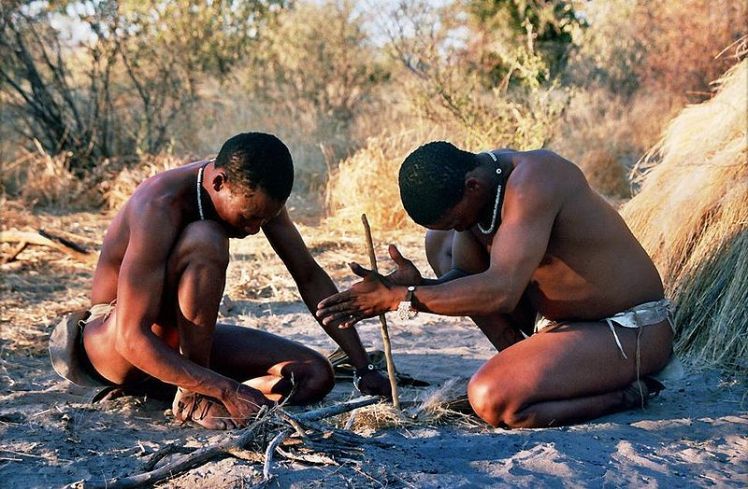
The Natural Slate

Follow HumanaNatura On Facebook and Twitter

By Mark Lundegren

Do you think there is a good case that our human nature is highly evolved, and quite specific and even predictable in its tendencies? 

Many people object to this idea, since it implies that our individual personality and general nature is substantially given to us by our genes, rather than by our culture or our own choosing. Some, including prominent philosophers and psychologists, prefer to think of us born more or less as a “blank slate” upon which either much writing or choice is possible. A list of these thinkers is far-ranging and brings together people who agreed on little else. It includes Locke, Marx, Skinner, Rogers, and others working in their traditions.

But there is insufficient evidence to support this extreme idea of a blank slate. Studies of identical twins, for example, suggest that at least half of personality is inherited and perhaps even more. Instead of a blank slate, I would like to discuss with you the new science of our nature and the idea that we are born with as a “natural slate.” This natural slate – a tabula natura rather than a tabula rasa – implies considerable biological structure at birth, and both vulnerability to situational influences and capability of learning and self-directed change throughout our lives.

If we accept the idea of a natural slate, I will caution you up front that we must live with certain consequences. If our inherited or innate human nature is strong and definitive, it must influence us and may override our conscious intentions and personal choices in important ways. It may even compel us to question the true degrees of freedom we have in the world, and whether our intentions and choices area always as conscious and personal as we hope and would like them to be.

Should our ancient genes be powerful determinants of personality, as some scientists now suspect, we must then endeavor to become far more attentive of them, individually and collectively, and look for unintended biases and false preconceptions they may bring to our modern lives and society. If our minds are naturally strong – if our minds have minds of their own, with their own prerogatives long-evolved in nature – we must consider the ways these prerogatives may intrude into our lives and articulate themselves in our personal and general environment. We must consider equally that they may do just this when we least expect or want such intrusions, or in ways that are hard for us to accurately see or sense.

These considerations are important and now more than academic, since scientific inquiry into our human nature is trending toward the conclusion that our genes are strong and personality mostly received. This research increasingly suggests that our conscious self and processes for making evaluative choice might be recast as relative latecomers, and even lightweights. It compels us to consider that we may only be in partial control of our internal environment (as is more obviously the case in our attempts to control our external environment). Our genetic and natural predispositions, in turn, might be seen more accurately as universal and unchanging – or at least naturally resistive to change and uninformed intervention – and contributing to an inevitable human condition or range of conditions.

In short, a strong biological nature means that we each may be less free than we might want to believe, or even than we may be actively encouraged by our minds to believe. If our human nature continues to prove strong under scientific scrutiny and investigative techniques, we will be compelled to reconsider past ideas about our basic nature and natural potentials, and the facts and demands of this nature in our plans and actions for the future.

For all these important reasons, you can perhaps begin to see why the new science of our human nature and individual personality – conducted in a variety of fields, including sociobiology and evolutionary psychology – has proven so controversial. This formal inquiry promises to overturn centuries of thinking and dominant modern notions of our human condition. It surely will upset established scholarly positions in this area and accelerate the long shift in the center of gravity of our universities toward the natural sciences. And today, this new science simply leaves us wondering anew who and what we really are.

Problems with the Blank Slate

An excellent introduction to the developing science of our evolved human nature, and now rapidly changing ideas about the role and influence of nature and nurture on personality and society, is the psychologist Steven Pinker’s insightful and thorough book, The Blank Slate – The Modern Denial of Human Nature.

In his book, the inspiration for my title and our discussion, Pinker draws on a number of sources – notably the scientists E.O. Wilson, Robert Trivers, Richard Dawkins, and John Maynard Smith – to produce a relatively complete and thought-provoking summary of the recent science of our human nature. His central conclusions: 1) we have a strong human nature, 2) we are subject to important constraints by this nature in our individual choices and social policies, and 3) scientific study and examination of our nature has and surely will make us wiser and our condition improved.

As a counterpoint to these ideas, opponents of a strong human biology assert that our original, evolved human nature is weaker than some now propose. They argue there is considerable evidence our innate nature can be reliably overridden. This shaping of our nature can be accomplished by learning and new awareness, through the force of culture and context, by designed incentives and disincentives, or simply through personal will and resolve.

Such ideas are quite common today, in popular and academic culture. Together, they form a contemporary consensus, or intuition, about the nature of our human nature. This consensus is, in some regards, a reaction to earlier and more conservative thinking before modern times. This conservativism includes traditional and medieval notions that saw our condition as more static and which may have helped to inhibit progressive thinking and change for centuries. The idea of a weaker and more malleable biological nature is of course the basis of much of modernism and many modern social movements – in philosophy, politics, economics, sociology, psychology, and the arts.

But if we hold a view that sees our innate nature as more changeable, we must also live with another set of consequences and imperatives. Most notable among these is the idea that careful control of society and fairly activist social engineering must be an overriding public imperative, whether through government, ideology, or both. This must be true if we are seen more as a making of our culture and environment than our biology, and thus naturally subject to fairly wide varieties of fortunate and inopportune states as individuals and groups.

Another consequence of viewing people as substantially shapeable, and thus individually less substantial, is the pervasive modern idea that all or most standards and values should be viewed as relative and even arbitrary – and changeable with the times, our needs, and our ideals. As we can see in our era, this thinking promotes certain amounts of both chronic nihilism and idealism. It encourages experimentation, accepts skepticism as a position rather than a mode of inquiry, and invites artistic license and the deconstruction of form. It elevates contempt as a mark of learning, and accepts or expects reasonable contempt for existing society, roles, authority, law, and order.

This second idea is of course in contradiction with the first, but both are clear hallmarks of modernity and pillars of our contemporary outlook. We are a people of law and lawlessness. We are eclectic and contemptuous, but seek authenticity and meaning. We assert our independence amidst obvious dependence – on technology, organization, and our neighbors. That these two ideas are present in us and contradictory seems hard to deny. That they are the source of chronic discord and disaffection in our times strikes me as an interesting hypothesis. That their generally unexamined coexistence in us offers a profound insight into our basic nature goes to the heart of our discussion today.

The contemporary idea of human malleability – often expressed by the proposal I mentioned that we are each a “blank slate” to some degree – continues in our time with considerable force, even as it is wrought with this central contradiction. Blank slate thinking at least in part draws its impetus and strength from the facts of the dramatic change which have come with industrialization and the rise of modern life. Now, however, this new but aging conception of our nature must share space with still newer ideas, as well as some resurrected older ones, which sees our biology playing a larger and more unified role in human affairs than was more recently thought.

Beyond new scientific evidence we will discuss – suggesting a strong human nature and genetic basis of personality – contemporary blank slate thinking must contend with the obvious failure of a great number of modern social initiatives premised on the idea of pliability in our human character and larger condition. Such social engineering failures range from criminal justice reforms to urban renewal efforts. They include educational initiatives and new approaches to the management of the economy and alleviation of poverty. And they include the attempted wholesale reshaping and control of society that was the aim of Marxism.

The persistent failure of social initiatives based on the idea of a weak or readily-shapeable human nature suggests a seeming intractability of this nature, or at least a modern misunderstanding or mismanagement of it. With hindsight, we can moreover begin to see that our social environment in the developed world did not change as rapidly in many regards during the twentieth century as it did in the previous two centuries.

Modern European and North Americans of the 1920s are familiar to their counterparts today, despite radical changes in technology and social content since then. But we are both markedly different from people who lived before modern times – in the many centuries before an important new social architecture and progressive initiatives that marked the start of the modern age, even as they were crafted largely from a more innatist or “strong nature” perspective on our human condition than is typical today.

With this extended introduction of the ongoing controversy and key fault lines surrounding the debate about the strength of our biological nature, including genetic determinants of personality and their effects on our social environment, I would like to explore the scientific findings fueling this controversy, using Pinker’s book as a principal resource. As we will discuss, the emerging science of our human nature offers important new insights and opportunities for fuller life, and perhaps for far greater individual and community health and well-being.

As I have suggested, this science asserts, first and foremost, that we are not blank slates, but rather natural ones. It proposes that we are slates formed over great expanses of geological time, and shaped by the pressure of specific functional requirements. It asserts that we are etched with considerable markings and will reveal intricate troughs and ridges, once upwelled from the earth and exposed to light.

This newer view emerges from a much finer and more precise examination of our nature than ever before, and suggests equally finer and more precise care with ourselves and our technological society.

The Science of Our Nature

During my introduction, you may have wondered if our discussion was leading to the old “nature versus nurture” debate. It of course is, but with the new twist of recent scientific findings. Your initial reaction may be that this debate does not end – does not come to definitive and actionable conclusions. I would ask you to suspend for the next few minutes this common assumption, an increasingly anachronistic one given new advances in our understanding.

In fact, as the debate about the influences of nature and nurture in our lives has moved from the humanities and professorial lecterns to the natural sciences, laboratories, and computers, a great deal of progress has been made to resolve it. Today, thanks in part to CAT scanners, statistical modeling, and database analysis (for example, the study of the comparative personalities of twins I mentioned before) we are much closer to an evidence-based and reasonably clear understanding the relative roles of nature and nurture in shaping our personalities. This new understanding is leading not just to an identification of where specific influences lie and how they work, but also has begun a new grappling with the often startling conclusions and implications of this emerging science for individual life and public policy.

In the Blank Slate, Pinker goes well beyond simply summarizing recent empirical findings. He provides a careful and perceptive analysis of the personal and social implications of this new scientific probing of our nature and the sources of personality. Notable in this regard is his research-based outline of the essential requirements and limitations that our innate nature places on us, discussion of successful and unsuccessful efforts to work with our human nature to alter our human condition (recently and in our slightly more distant past), and indication of likely future opportunities to improve society – given science that suggests both a strong innate nature and potential strategies for improved human nurture.

Pinker commences his book much as I have begun our discussion today, with a survey of modern questions concerning our biological nature and the implications of its scientific study. This survey includes discussion of popular fears and academic controversies, ones that find, or sometimes foster, unsettling new ideas in the empirical study of our human nature, limitations, and biases. The ultimate fear, of course, is that science will conclude we are wholly determined by our biology and inimical to change, and that many of our social ills are inevitable, leaving less room for either faith-based or humanistic initiatives (both of which ironically use scientifically-derived technology to promote their causes and often encourage the scientific management of society).

Pinker’s survey and analysis of emerging research into human personality ultimately casts popular fears as generally misplaced, and most academic controversies as unjustified and even irrational (except as they further the interests and careers of established theorists). Beginning principally in the second half of his book – after a review of current and what are today often quite counterintuitive scientific findings regarding our human nature – Pinker offers an extended discussion of the implications of these findings for important areas of contemporary life, and by implication, for human life more generally.

In this discussion, Pinker highlights important new social opportunities suggested by scientific research into our nature. These include steps to: 1) improve politics, 2) reduce violence, 3) promote equality, 4) better nurture our children, and 5) strengthen the arts. In each case, he shows how we are perhaps more limited in certain ways than we intuitively and commonly realize, but also living amidst important opportunities to work around the natural personal and social limitations we do face, and create better and more informed conditions for ourselves and others.

As I have suggested, his specific prescriptions for change in contemporary human life often run contrary to current and recent thinking, and to many traditional ideas and ideals, even as they suggest opportunities for new positive change in many or most areas of modern life and society. For this reason, I would strongly recommend Pinker’s Blank Slate to my readers wanting a better grounding in current evolutionary science and its investigation of personality. His book will also provide insights to people interested in uses of this research to better understand our nature and enhance our lives and well-being today. It also provides important suggestions on ways the science of our nature is likely to help people craft more optimal social policies and improve conditions for the future.

I would also recommend Pinker’s book, and the discussion that follows here, to two other categories of readers who sometimes find their way to my writing. If you share in the common view today that sees all things in nature as an unmitigated good, you may be operating within a new and increasingly pervasive contemporary condition called the “naturalistic fallacy” and might use Pinker’s writing to gain a more complete view of the state of nature and its evolutionary processes.

Similarly, if you have adopted and advocate a “go with the flow” approach to contemporary life, also a new and popular social product of our relatively prosperous and secure times (and the hard and often unflowing work of many people), you might find Pinker’s book both instructive and cautionary. In this vein, Pinker offers new insights into important limitations our innate nature places on us, and the opportunities that a more attentive, scientifically-informed, and carefully-chosen life creates for us – whether in our individual lives, communities, or global society – versus strategies of convenient and opportunistic improvisation.

Three Revealing Questions

To begin a more detailed discussion of the modern science of our human nature, we might ask three questions. These questions probe and frame the scientific investigation and new findings regarding our nature, including the controversies they create for some people today and the rethinking of our current state of life they encourage for us all.

1. First, is there a problem?

As a first question, we simply might ask: why there is so much resistance to the idea of a strong human nature?  I have already introduced the explanation – a dominating biological nature implies a weaker conscious self, one that is more in service of and controlled by the imperatives of our biological nature, and in turn less free either to lead itself or to follow ideals. This consequence must be increasingly true to the extent that our human nature and innate personality is found to be more fixed and forceful in our lives.

Pinker argues that this fear of “determinism” – attitudes and behaviors dictated by our biology – is unfounded. Regardless of how we might advance arguments for or against the existence of free will, and thus for or against determinism, there is no logical reason that a reasonably free conscious self could not have evolved in nature (and good reason to think this is precisely the case). Such an autonomous self could, and likely does in humans and other advanced animals, possess a set of executive algorithms designed to assess and question the rest of the brains predilections, as wells as the predilections of other brains.

More to the point, there is nothing in modern cognitive science, neuroscience, genetics, or evolutionary psychology that that suggests that we cannot maintain personal responsibility for our actions. These fields are well along at concluding we are sentient and intelligent beings and can reasonably understand the probabilistic impacts (costs and benefits) of our actions in both physical and moral terms. Importantly, findings suggesting a strong but sure-sighted and intelligent nature may even posit us as freer than constructs proposing a more malleable character, since this treats us as less susceptible arbitrary and limiting environmental influences and manipulative conditioning – whether by totalitarian regimes, commercial interests, or devious psychologists.

Despite these basic and quite fatal failings of deterministic thinking, Pinker identifies three groups of people, and quite strange bedfellows, that are especially resistant to the idea of a strong biological human nature. In the extreme, each even fiercely opposes and finds morally repugnant the making of our human nature an object of scientific inquiry:

  • Activists – the first group encompasses social activists in and out of academia, intelligent people that one might think would be committed to freedom of inquiry and would themselves want to inquire deeply into the science of our nature and its applications for promoting social progress. (This is in fact beginning now, but is lagging the pace of science and represents a generational change in attitudes about the scientific study of humans). Pinker traces quite strident actions on the part of some in university life to undermine or prevent empirical research into our human nature, and discusses their concerns that innatist thinking could engender new conservativism and regressive social policies – worries that explain but scarcely excuse their sometimes vitriolic and distorted attacks on scientists working in this field (and the general decline of discourse between the arts and sciences over the last thirty years).
  • Romantics – a second and related group of people resistant to human nature science is perhaps less radicalized than the first, but is equally concerned about scientific inquiry into our human nature and the direction and purport of its findings. This second group are the many people today, in and out of academia, who harbor romantic ideals about wild nature and whose thinking (feeling really) is increasingly eroded by new scientific findings about nature in general and our human nature in particular. Probably few of us are not at least partly in this camp, since many of us moderns admire the natural world – though through the historically new perspective of relative modern affluence and tranquility. But we each risk letting what may be our innate “biophillia” (evolved love of nature) get the better of us, when we admire nature from a gauzy distance and comfortable urban lives, and do not seek more objective understanding of its empirical truth. As suggested before, the naturalistic fallacy of seeing nature, and our original human nature, as universally good is a common error of our time, and even an important barrier to progressivity in our individual lives and fuller understanding of our species opportunities for the future.
  • Traditionalists – a third and less related group, but equally opposed to or suspicious of the scientific study of our nature, are of course social and religious conservatives – who often believe in and base their cosmology on the existence of an incorporeal soul within us and invariant moral code above us. These conservatives correctly understand that modern sociobiology, neurobiology, evolutionary psychology, and other scientific investigations of humans, if successful, will eventually leave no room for metaphysics or the existence of an incorporeal soul. But often, unfortunately, they incorrectly assume this work also will leave no place for moral and familiar sentiments either, and thus frequently believe that immorality, and even nihilism, will result without our having souls apart from nature – especially ones that face the prospect of eternal reward or suffering if they stray from traditional lines in the sand. As we will discuss, this instinct is not wholly without merit. Modern scientific findings do suggest that reliable pleasures and pains do strongly influence human behavior, but also that this set of incentives can be administered by progressive and secular society as easily as a theocracy, and perhaps more optimally and adaptively.

2. How strong is the pushback?

Based on this discussion of the key fault lines in the controversies over the study of our human nature, we might ask a follow-on question to the first: is the resistance to the science of our human nature really that strong?  Based on Pinker’s compilation of the sustained and fairly extensive attacks on the scientific study of our nature over the last two decades or more, and the popular dismissal of now established findings that one encounters in daily life, I think we have to say yes, and perhaps unconditionally so.

Each of these three groups has strong moral or philosophical concerns or fears about progressing inquiry into our basic nature, or strong material interests in or positive affections toward a current or earlier status quo. Whether intentionally or not, the effect of their fears and efforts is to promote a largely pre-scientific and ambiguous understanding of our nature, and the upholding of social structures and norms that have their origins in the Bronze Age.

As Pinker describes, the diversity of practical efforts against the new science of our nature, and the strength of popular consensus dismissing its findings, is remarkable. We can see it in the actions of radical professors and others with self-defining intellectual positions and entrenched interests at odds with the unfolding findings of science. Opposition appears in the work and views of reformers and citizens with strong ideas and emotions about nature and conservation – many despairing our industrial and seemingly denigrated times. And we of course see opposition from religious leaders and their followers upholding older systems of valuation and social control.

The stakes are high for all these people, at least in the short run. At stake for them is personal order and conceptual familiarity. And the truth is that the conclusions that will be drawn from the scientific inquiry into our nature, in our time, are likely to shake the world as we know it, and then shape society and impact the social order for centuries after our time. But all are limited in seeing only risks and disruptions in traditional ideas and modern order, and not new opportunities for human progress waiting.

3. Is the resistance well-founded?

As a third and final question to help advance our discussion, let me simply ask: are those who fear the scientific study of our biological and genetic influences, and resist its emerging findings really so wrong?  Here again, I think the answer is resoundingly affirmative. The many reasons why this is so forms the bulk of Pinker’s book, a compelling mixture of summary and analysis of the growing body of scientific evidence in favor of a new, more natural, and more detailed view of our human nature.

The careful review of the emerging science of our nature that Pinker offers us undercuts entrenched and quite pervasive modern and traditional thinking. This includes ideas of people existing as blank slates at birth and living as relatively malleable beings throughout childhood and even much of our life, with the resulting imperative of top-down social or religious initiatives to condition us optimally. The new science of our nature and its growing findings equally undercut more general  or popular objections to this study, concerns that findings of a strong human nature – our having a strong evolutionary endowment and a “natural slate” within us, instead of a blank or incorporeal one – leads inevitably to inequality, imperfectability, determinism, or even nihilism.

As I will summarize next, Pinker presents the actual science of our human nature to date and shows convincingly that objective study does not lead in any of these directions. Instead, this science has begun to offer us a new and much clearer portrait of us, one with a distinctly human face. Far from being distorted and grotesque, this new human portrait is one that is both familiar but far more contoured and detailed than in earlier conceptions. For this reason, we have good reason to suspect that the science of our nature will offer a new window on ourselves – one that is startling, more balanced, and perhaps containing opportunities for fuller life

Looking at the emerging science, my belief is that this science is unmasking and more deeply revealing the all-too-human nature we know already – and do not know well enough or are deceived about – in profound and ultimately liberating new ways.

Uncovering Our “Natural Slate”

To help us understand why all this is so – why we are not blank slates by nature, why a strong biological nature does not lead to and even may prevent chaos or tyranny, and why a more informed sense of our nature can engender new life opportunities and a more progressive society – Pinker asks us to consider the locus for all this fear and controversy, the functioning human brain.

Our human brain of course has been demonstrated as the seat of our human nature and individual personality, however strong or weak this biological nature may be. If you are skeptical of this idea, as some are in the classes of people I mentioned before, consider the long and widely demonstrated fact that injury or manipulation of our brain diminishes or alters our nature and personality – modifying our self and its discernable patterns of perception, emotion, and cognition. If you would like a specific example of this phenomenon, search for information on the natural experiment in brain and personality alteration that is the case of “Phineas Cage.”

Though some might like to see our brains and the selves they engender as reasonably blank and readily influenced (as “silly putty” as Pinker suggests in a wry moment), and thus in need of considerable programming to ensure sociability or optimality, a number of objective facts suggest otherwise:

  • Telling complexity – the human brain is enormously complex and highly organized, with many specialized areas providing quite specific functional capabilities – including perception of subtle social cues, moral feeling and empathetic intuition, and logical and other forms of reasoning – to a degree that is far beyond what would be needed if the brain’s primary role was restricted to processing environmental learning.
  • Vast scale & scope– the innate circuitry of the human brain is not just complex but staggeringly intricate as well, with an astonishing three dimensional architecture comprised of over three billion chemical bases in our genes, and containing roughly one hundred billion neurons making one hundred trillion connections with one another.
  • Systematic & highly evolved– while complex, our human brain is also highly systematic and an extension and evolution of the smaller brains of simpler animals, each sharing a common cognitive approach that emphasizes information gathering, calculation, and cognitive feedback (as Pinker points out, three pillars of the new “computational theory of mind” that explains the workings of the self far better than proposals of blankness and also implies a reasonably strong innate structure in our brains).
  • Physical variations matter– extensive experimentation has confirmed that differently shaped or weighted brains operate differently and result in “differently shaped” selves – with varying individual personalities, and patterns of thinking and feeling – just as genetic variations influence our brain structure and produce variations in our attitudes and behaviors.
  • Newborns are not blank– science has now documented clear basic natural functioning of the brain before and after birth, independent of our circumstances, and a common developmental progression in all healthy children across all cultures. As suggested before, extensive cross-cultural surveys show that at least fifty percent of personality traits of identical twins are shared, regardless of whether the twins are raised together or apart. This provides a strong indication of the minimum extent of our innate biological nature, especially when we consider that at least some of the remaining half of personality is attributable to natural variations in either gene expression or brain development during fetal gestation, sources of individual personality that are essentially independent of environment.
  • Cultures are similar– though we may romanticize about cultures other than our own or of the past, new cultural data and new studies of old data suggest that cultures are more similar than previously thought or assumed, differing primarily in level of technology and political development, suggesting a strong innateness to human life and character. Pinker summarizes research showing that all cultures share important critical features and people in them make use of similar evolved human capacities essential to social equanimity: 1) knowledge gathering and sharing in remarkably specific areas, 2) ability to read the goals and intents of others and to learn from them, 3) capacities to ensure reciprocity and identify social dereliction, and 4) methods to ensure transparency and resolve conflict. Scientists studying human nature increasingly hold the view that cultures are more similar than dissimilar, and that cultural variations are readily explained and rightly seen as a singular, culture-forming human nature placed in varying settings. Indeed, the rapid formation of culture and familiar human order in natural experiments involving sudden new groupings of diverse sets of people, without time or opportunity for significant conditioning, provide compelling support for this view.
  • Languages are similar – our human capacity for language, Pinker’s professional specialty, offers another revealing window into our natural character, and suggests a common and quite significant innate circuitry in this critical component of our human brains. After all, all human languages utilize the same parts of the brain and engender similar brain activity, and all languages reduce to a very small number of common patterns of thought (a far smaller number of patterns than one would expect if language was primarily a cultural artifact or conditioned process).

 I should close this part of our discussion by adding that Pinker mentions more formal objections to these emerging scientific findings and their generally “innatist” direction, coming from within the scientific community itself, or by educated people using the facts of science to argue for a weaker view of our human nature. Pinker explains and addresses three principal scientifically-oriented objections in wide, but gradually shrinking, circulation today.

One objection to the idea of a natural slate is that we do not have enough genes to create the functioning human mind (“mind” here meaning the operating self, as opposed simply to the physical structure of the brain). Proponents of this view often point to the fact that we have only about double the number of genes as much simpler animals, and reason that this is not enough encoded information to create our human nature. People who raise this objection normally do not specify what number of genes would be needed to create the human mind, and of course implicitly assume that genes are additive and not multiplicative (that they work more like 50+50=100 than 50×50=2500).

A second objection from within or around the scientific community is the hypothesis that the adult human brain can be explained as a conditioned “neural network” (as an interlinked and self-connecting organic database) requiring only limited innate circuitry (especially, the ability to make probabilistic connections between data objects). Pinker points out how this objection overlooks the fact that extensive experimentation with computer-based learning networks has failed to generate artificial intelligence of sufficient complexity and precision to mimic human or animal brain functioning. In all cases, learning networks must be augmented by specific capabilities to resolve ambiguity, categorize objects, and compute implicit relationships – precisely the functional areas of our brain now posited as innate by scientists.

The third objection suggests that our human brain is quite plastic at the neurological level, even if it is more fixed anatomically and physiologically. This line of reasoning often calls attention to stroke victims and others with damaged brains or senses that have learned to “re-wire” their brains to work around their disability and function more normally. Pinker suggests that a closer analysis of these cases leads to a more limited and cautious view of plasticity, and that the replacement functioning often suffers from shortcomings that are predicted by scientific findings and theories of natural brain specialization. He suggests that we good cause to see the brain as more fixed than malleable, with even simple autonomic processes we may take for granted requiring complex innate circuitry and highly evolved biological functioning (for example, separating objects from a field or differentiating colors).

Evolution and our Nature

If we have intricate, complex, and relatively specialized brains, ones subject to consistent patterns of development and expressing recurring human behaviors across cultures, and substantial empirical data to suspect we are evolved with a reasonably strong basic nature (much like other animals), what are the implications for us today? 

What can modern cognitive science, neuroscience, genetics, sociobiology, and evolutionary psychology tell us about ourselves and our human condition that we don’t know already?  What errors do they point to in either traditional or modern conceptions of our nature? And how, especially, can these disciplines help us to live more happily and adaptively today, and avoid repeating the mistakes of our past or making entirely new ones in the future?

There is little doubt for many that enduring answers to these critical questions lie in science’s ability to more deeply understand our place in the world and to elaborate a general theory of human flourishing. I think it is fair to say that for most scientists, Pinker included, such a theory must include and may even be founded on evolutionary theory. This implies an uncovering of essential evolutionary principles related to all social animals like human beings, and then production of a general theory of our human nature and human potentials based on this natural foundation. Since I don’t know the extent of your knowledge of the science of evolutionary dynamics, let me lay out a few important ideas, and then turn to the principal findings that Pinker summarizes for us, spanning the new fields I mentioned investigating our natural slate.

Likely, you know already that evolution implies a “survival of the fittest.” In Charles Darwin’s time, this phrase grew out of a recognition that the attributes of individual members of a plant or animal species naturally vary randomly to some degree. Darwin’s insight was that sometimes the changes provide survival and reproductive advantages to the individual plant or animal that possesses them, encouraging the variation to spread in the species (i.e. by “natural selection”). Sometimes, random natural variability has no effect on survival and reproduction rates, causing the attribute to potentially linger or drift in the species. But often, significant attribute variations have negative effects on survival and reproduction, and thereby naturally curtail their own transmission within a species.

Today, this is still the basic view of the evolutionary processes that underlie all life, except that we now know that attribute variation is based primarily on genetic variation (genes were discovered after Darwin’s time) and that evolution is principally a process of genetic variation and selection. I make this statement, even as scientists now theorize that cultural attributes and learning are subject to a similar potential natural variation and environmental selection through social and cognitive dynamics (and thus can be reinforced without genetic encoding). An example of this is driving on the right or left side of a roadway – such practices random and arbitrary, and are reinforced without genetic changes, simply because variation from cultural norms proves either too difficult cognitively or too dangerous in practical terms.

Natural evolution itself is a long, vast, and continual process of usually small random variations in each new individual of each species, some helpful but most not, in the acid test that is the challenge of survival and reproduction in nature. This slow and intricate process occurs over remarkably large periods of time, in timeframes that test our natural human intuition (and that thus suggest innate qualities of our intuition). For perspective, watching paint peel is a far more dynamic and action-packed drama than observing biological evolution, with paint peeling on the order of 10,000,000 times more rapidly than the historical evolution of single-cell bacteria into modern humans.

But since there is nearly endless time in the life of a middling star like our sun and any life-enabling planets it may harbor, even the inhumanly slow and random walk of natural evolution can lead to vast and compounding states of change and development, producing life-forms and interdependent ecosystems of remarkable variety and complexity. If you would like another intuitive analogy to get a better sense of the potential for small compounding changes to create vast works of biology over long stretches of time, imagine putting one cent in a bank and leaving it there for, say, a billion years, to grow at a modest interest rate and (perhaps unrealistically) assuming no bank charges. Can you guess the result?  I’ll give you a hint: my popular spreadsheet program could not manage the number.

With this short description of the inner workings of evolution in mind, we can surmise next that our genes and evolution itself are blind actors on the stage of nature. Genes and nature broadly are unintelligent, unemotional, and amoral (meaning not moral, rather than immoral), just like our insensible cent deposited in a primordial bank vault. Simply because of the character of natural chemistry in our universe and the force of physical complexity, our genes are inherently subject to randomness and variation. They don’t “mean” to vary – they just do, naturally, much in the way that throws of dice just vary. Genes can neither steer nor judge themselves anymore than our small coin can in a bank vault. Living entities can become more “red in tooth and claw,” to quote Tennyson, or more loving and nurturing, in the spirit of Rogers, if these attributes are naturally selected – if the attributes are reproduced more quickly in a particular species or in nature more broadly relative to converse attributes.

In spite of evolved life’s potential for blind baseness, scientists now theorize that as the natural world (or any evolving system) becomes more highly evolved, it naturally begins to favor or be internally biased toward strategies of greater cooperation or reciprocity, even as this course is again a blind phenomenon of random variation and natural selection. This phenomenon is driven by the fact that, after many rounds of reproduction and selection, many or most of the system’s more competitive (and less organized and objectively efficient) positions become “taken” and dominated by established players or species, who are then naturally-selected to specialize to hold these positions quite effectively.

Newer players in the progress of evolution thus must adopt new and often more inventive strategies if they are to displace established players and extract resources from the fabric of the existing ecosystem in large measure. This natural fact of life is a truth of all evolving systems and can be seen at work in the seemingly diverse cases of newcomers seeking to displace large eagles from commanding roosts, finding sunlight in a valley of redwoods, adopting new words for novel life experiences, or unseating a dominant software company.

In a way that is not yet appreciated by many people, simple natural selection thus trends not just toward organic complexity, but to higher states of ecological cooperation and social organization as well. But if the production of genes that enable cooperation (movement to greater complexity, efficiency, and self-organization) is a natural evolutionary trend, it is not a sign of wisdom or intelligent design in nature. Instead, this development is rooted in the nature of complexity itself and the opportunities that naturally emerge and persist for more complex and harmonious forms of order, once simpler (and collectively less efficient) species and ecological structures are widespread in an evolving system. Importantly, I might add that this natural tendency applies both to systems in wild nature and to our society, and that the rise of more efficient, cooperative, and adaptive social structures should be the true meaning of the phrase “Social Darwinism”

On this point, I would also add that people today often believe or fear that to understand nature and life in this new way, as an evolving but undirected system, is to rob it of its majesty and full scope. Many believe that a blindly evolved nature is inevitably smaller and less inspiring than a consciously created one. While this may be personally true for some people, I would point out that many of our most insightful scientists are also quite spiritual in their outlook, and that our evolving universe can be seen as awe-inspiring in its vast scope, breathtaking in remarkable scale, and mysterious and even demanding our reverence and humility at bottom. These facts encourage us to see the remaining and even increasing wonder contained in this new scientific understanding of nature, and suggests that newer secular and older sacred views of the world are reconcilable or synthesizable into a new whole. My own personal experience is that these two views involve different capacities of our brains, and that we can and even must toggle between them to craft a complete and fully human view of nature and our place in it.

Between the extremes of baseness and harmony, natural evolution and our chemical genes work in extraordinary ways, producing a counterintuitive richness of processes and outcomes. The specific actions of genes and the practical basis of evolution are more easily visualized, even as they result in astonishingly complexity, in the case of plants. Through the random and sightless genetic variations we have discussed, amidst the added sightlessness that is the fate of a plant, an individual plant seed might be created, for example, that leads to leaves that are slightly larger or darker or more acrid than its neighbors of the same species.

This “mutated” plant will then make what seeds it can through sexual reproduction, with its new mutation in tow for better or worse. Its life course will naturally promote its variation in its ecosystem, and perhaps offer still newer variations in the genes of its seeds. Ultimately, all such changed seeds will be either more, equally, or less successful in nature, and the gene pool of the species will be biased in the direction of this individual’s mutated genes, or not.

Animal reproduction works in similar, if more complex, ways. But before considering animal and human evolution, it is important to point out that even in the seemingly simple and senseless case of plant evolution, we can expect and do see clear natural strategies emerge from random genetic variation and the implicit competition of plant genes that results in the environment. In addition to the more straightforward tactics of enhanced species size, robustness, and growth rates, plant genes in fact naturally evolve to follow at least five evolutionary strategies:

1.      Parasitism – relying on another plant to aid reproduction, as in the case of vines

2.      Pre-emption – the rapid blocking of sunlight or alteration of soil conditions to keep away other plants, as in the case of many species of trees

3.      Cooperation –  as when stands of a plant species block incursions of other species or when multiple plant species alter a local climate for their shared benefit

4.      Synergism – when plants rely on one another or occupy complementary niches to ensure conditions favorable to them, as in the case of forest stratification

5.      Condition-dependent behaviors – frequently seen in variable climates and terrains, when plants take different forms, for example, in rainy or dry conditions or at different altitudes

Again, all these seemingly thoughtful attributes and behaviors can be fully explained as the result of randomly evolved, naturally or blindly selected, and genetically encoded attributes of the plants involved. Together, these actions of plants, acting without brains or senses, provide important insights into the natural potentials contained in all evolved forms, and initial guidance for the range of human attitudes and behaviors we might expect to find in our midst today.

Let’s now move from the more straightforward evolutionary dynamics of plants to that of animals and humans. Once evolution creates animals – with their senses and brains, and fins and feet – genetic selection and natural exploration of these same species strategies gets a bit more complicated, especially if the animal lives socially among its own kind during all or most of its life as humans do. With animals, and especially with strongly social animals, the genes and resulting attributes that are selected through reproduction, though still blind and senseless themselves, are often at work in a much more complex environment and subject to far more varied selection pressures and reproductive opportunities.

In the case of natural selection involving animals, including complex social animals like humans, the wind and rain are still present and the climate still changes, and animal offspring are subject to many of the same essential perils of nature as plants. But now, in order for animal genes to be replicated, they must contend with other evolutionary constraints. In addition ensuring genes that cause pollination and seed scattering, animal genes and attributes will be favored that help individuals to get food and protect them from aggression, and that often keenly sensing and at least slightly discerning mates will find attractive. Eventually, for the reasons we have discussed, animal genes will be further selected that reliably foster the success and harmony of cooperative social groups, circularly resulting in attributes that the individual and group will naturally evolve to hold in high esteem.

Given these considerations, we should expect and do in fact find through scientific inquiry that many of the evolutionary strategies employed by plants mentioned above also occur in animal species. We of course find that the evolutionary variables in animals contributing to these strategies are more numerous, and that the strategies themselves are more nuanced.  Instead of adding to the complexity of our discussion, however, I would like to simplify it, and prepare you to consider the important implications of evolutionary theory for a nature-based outlook on human life and our human nature.

Across all animal species, the genetic and behavioral strategies we have discussed, plus variations and others we might include, can be reduced productively to the idea that animals act with regard to our own species in one or more of three essential ways:  1) socially or cooperatively, 2) opportunistically or competitively, and 3) anti-socially or parasitically. Through science, we can see each of these intra-species strategies or approaches throughout the natural world, with examples from many species. We also can see these strategies in our human condition, today and in our history and across cultures.

As animal and human behavior is studied, we further observe that social animals, and humans specifically, are usually specially adapted or equipped by evolution to carry out one or more of the strategies within the distinctive setting that is their social environment. For example, animals adopting anti-social behaviors make use of action patterns evolved to maximize stealth and prevent detection. Animals acting cooperatively, on the other hand, are evolved to do so visibly, to enhance status and encourage reciprocity. Thus, in examining the expression of these three strategies, we find that context and situational forces often mater a great deal. In particular, the specific factors of transparency, equality, and reciprocity often determine the timing and general dominance of the behaviors within a social species.

Through the force of natural selection – the environmental testing of blind, randomly-varying, and opportunistically self-reinforcing genes – individual members of animal species are gradually constructed to act in one or more of these general ways within its own species. Perhaps surprisingly, animals generally can even be expected (absent self-understanding) to unconsciously favor one of the three social behaviors over the other two, in proportion to the likelihood that the behavior has led to the advancement of its species genes over the course of its recent evolutionary history.

To summarize this part of our discussion, these three natural modes of social conduct can be restated as the following potential modes of intra-species behavior:

  • Cooperate and foster the species – acting in either absolute or reciprocal altruism, in ways that seek to advance one’s own genes and the gene’s of others
  • Compete within the species in a bounded way – behaving in ways that are more self-focused and often less than optimal collectively, but not to such an extent that species advancement would be curtailed if the conduct became a species norm
  • Exploit weak points in the species – operating in relatively unbounded ways that accomplish individual reproduction, but that are functional only if the behavior is an exception to the dominant species pattern

As suggested, the overall behavioral category that will dominate in a social species like our own depends on both nature and nurture. In current and still quite early studies of human behavior and associated genetics, as an example, there is some data to suggest that an individual’s genes matter to some degree in determining dominant personal behavior within these aggregate categories. These findings point to an innate bias in at least some of us to naturally favor one of these general strategies over the other two.

But a larger set of emerging data suggests that, at least with humans, context and situational forces may matter much more than our individual genes and their innate preferences in determining our human attitudes and behaviors at this scale – especially the key environmental factors I introduced: 1) transparency, 2) equality, and 3) reciprocity. In principle, this is because we are generally evolved to seek social standing and esteem, as an aid to reliable genetic transfer, and will not readily jeopardize these forms of long-term “social capital” in the face of immediate and genetically more dubious opportunities to satisfy our primal instincts.

Looking past smaller idiosyncrasies and individual predilections attributable to our genes, ongoing research suggests that while some of us may be genetically biased to be generally more angelic or devilish, most of us seem innately inclined toward bounded competition in our general conduct. This finding explains why, except in extreme genetic portfolios (for example, the small percentage of people with apparently strong innate sociopathic tendencies), we are most likely to behave in relation to our social setting, and the intentional or unintentional framing and incentives it matches up against our waiting natural opportunism.

For this reason, special care with our social systems and settings is strongly suggested by evolutionary theory, rather than the popular misconception of a lassie-faire approach. Only with special care, or the most fortunate vagaries of chance, can people be encouraged toward and expected to reliably act in the cooperative and most beneficial end of our natural behavioral range.

Such concern with our social fabric requires a thorough and advancing understanding of our evolved human nature, but offers in return the potential for higher order, more harmonious, and more adaptive modes of life for us all. It is admittedly an idea that creates as many questions as answers for people today, but it is also one that is not without historical antecedents – since the promotion of social transparency, equality, and reciprocity is the heart and power of modern democratic political systems.

This revolutionary and pre-Darwinian model of governance saw the need and potential to steer our variable behavior in more favorable directions, and has now proven but hardly exhausted this important idea in practice.

I hope this brief summary of contemporary evolutionary science proves helpful to you in better appreciating our evolutionary inheritance, the underlying mechanisms and potentials contained in our human nature, and the important implications a natural understanding of our species has for the mastery of individual and collective life.

Let’s now turn to consider our evolutionary endowment as it appears in and is influenced by human society and culture today, and the newer, science and evolutionary-based understanding of modern human life, culture, and social institutions they increasingly suggest is needed.

Implications of the Natural Slate

Though controversial and engendering fear in many people today, I suspect that we will eventually feel gratitude for the work of Pinker and the other scientists I mentioned earlier in our discussion. They, and many others, are endeavoring to unravel critical questions about nature and evolution, and its many implications for understanding our natural character and promoting the advancement of human life. As I write this, however, these scientists often must perform their work courageously, amidst suspicion and strident criticism from society and even members of the academy.

Given my area of focus, this work is especially important for me, since it can be expected to surface important new opportunities for healthier, more compelling, and more sustainable human life, and for improved management of both the natural and human systems around us. There is now a rich and growing body of findings concerning our innate nature emerging in our time, which Pinker admirably summarizes and then demonstrates how it has begun to form a new and much richer conception of our highly-evolved, highly-social, and reliably-variable human nature.

Though still a new area of science, the evolutionary-based inquiry into our human nature has three important and essential trends already: 1) bringing forward and re-articulating a number of perennial ideas from the humanities, 2) demonstrating quite specifically how other ideas about our nature are incorrect and can be expected to lead to less than optimal social policies and human conditions, and 3) elevating the central importance of inquiry and expanded human awareness in the task of mastering and advancing human life at all levels.

If you would like to learn about emerging findings in the science of our evolved human nature, and are willing to keep an open mind amidst what might be at first highly counterintuitive ways of thinking, consider some of the key ideas Pinker proposes are now becoming firmly established in our time:

1.      Humans have natural perceptual, emotional, and cognitive biases – most of us are familiar with simple optical illusions – for example, the fact that a cluster of concentric circles appears to move or shimmer when we gaze at it. But we often fail to realize the tip of a larger iceberg that these small self-deceptions constitute for us (just as we will generally underestimate the size of the submerged part of a real iceberg). Such simple perceptual predispositions are part of a quite large set of innate biases in our human brain and innate nature that scientists have begun to catalog and consider. This larger set of natural biases includes not just perceptual idiosyncrasies like optical illusions, but the following as well: a) a tendency to attend to the near-term over the long-term and the familiar over the unfamiliar (even in cases when we know this is to our disadvantage), b) our inclination to rationalize or moralize actions and beliefs that we favor (even to the point of misleading ourselves), c) our predisposition to select facts that support our beliefs and choices, and d) our penchant to frame problems and issues in ways that are intuitive and cognitively resonant to us. This last bias is especially important and points to the reason why we struggle with writing, higher mathematics, complex science, and modern moral ambiguity – all are areas where we have no natural intuition and must rely on analogy to aid comprehension. This natural bias and window on our innate intuition explains why math problems are easier to solve when reframed as situational dilemmas, and why complex political issues are so often reduced to black and white moral choices in practice. Our most obvious natural biases become more apparent when we are made aware of them and learn to look for them in our lives, but research suggests that other biases are harder to see and counter, with important implications for the quality of our lives and society. Pinker discusses a number of natural emotional or moral biases that may be quite hard to perceive and control in our life experience, suggesting a need for social systems to mitigate them and create more optimal life. These natural biases include: a) our tendency to see people of higher status as more pure and moral (and to show undue deference to them), b) our propensity to associate impurity and immorality in people of lower status or from outside our social groups, c) our inclination to seek esteem through higher status and to associate this pursuit with moral progress  (even when we commit immoral acts to attain status and as we may live banally amidst higher status), and d) our related and often highly unconscious predisposition to see ourselves as right and righteous (and our opponents as wrong and manipulative). There is little reason to doubt that these biases once had survival advantages for our blind genes on the plains of Africa, but they are telling quirks of our nature that now demand attention in our individual lives and social policies, in today’s complex society and if we are to rise above them. A final and perhaps most curious natural bias that science has discovered is our tendency toward active self-deception. Since there was often higher reproductive value in earnestness rather than correctness in nature, just as there still is today given our natural emotions and sexuality, genuinely but incorrectly believing we are committed to relationships and enterprises when our conduct does not objectively bear this out appears to be a natural human trait. Though the overall subject of our innate biases is an awkward topic, such persistent biases and even our tendency toward self-deception are important features of our inherited nature. Such foibles are often easier to see in others than ourselves, but they ones we must we must work against (and live with humbly amidst) in our quest for higher individual and societal quality of life.

2.      Humans have an innate capacity for violence and self-righteous aggression – a first and quite important learning about our evolved human nature is our innate capacity for violence and even extreme brutality, especially when strong emotions of rightness or impurity are invoked (whether following retribution by others, public humiliation, or the shame of a blemished conscience) or in conditions where there are low costs to violent actions. This aspect of our natural slate may seem obvious to some of us, but it is important to point out that many people today believe human violence and anti-social behaviors are largely or wholly conditioned by society and were not present in our original state in nature. This is the pervasive myth of the “noble savage,” a romantic belief that has gathered increasing strength since the 1700s, but an idea that is entirely undercut by the facts of our archeological record – including the fossilized remains of murdered individuals and extensive findings of human weaponry (useless for hunting) dating back tens of thousands of years. Though this idea is abhorrent to many of us, for reasons we will discuss in the next section, it is actually uncomplicated from an evolutionary perspective to understand why violence, within our species and leaving aside hunting, would be a central part of our human condition and find a place in our genetics and innate nature. As we have discussed, natural social life and reproduction favor cooperation or at least bounded competition within human social groups. But this first condition affords opportunities for genes that lead at least some individuals to take advantage of others situationally and quite harshly, both in and out of our natural social circles. We thus should expect the evolution of genes aiding the detection and outing of cheaters (non-reciprocators and strong competitors), as well as the prospect of three major categories of innate violent tendencies. One category is our potential for proactive violence for group advantage against other groups, which seems widespread by many measures of our behavior toward human groups other than our own. A second expected capacity for violence involves facilitating personal gain within one’s group, with genes for this form of violence likely naturally limited in scope as we have discussed (since they cannot dominate or exist unchecked in our human gene pool without reducing group reproduction). The third expected category of violence-promoting genes of course comes from the fact of the first two, and involves genes that foster wariness of strangers and/or the promise of virulent retaliatory violence, simply to increase the cost and reduce the threat of violence in the first place. This third set of violence-promoting genes, unlike the second, can and probably must become naturally widespread to ensure species reproduction (especially in our original state of small migrating bands living in lawless conditions). All of these natural influences on our genetic composition are now theorized to have resulted in the strong moral emotions and aggressiveness toward disrespect and aggression that most of us feel, emotions which promote group cohesiveness and social order in nature (and the reproduction of genes), but can lead to less than ideal outcomes in complex modern society. Examples of the disadvantages of innate suspicion of others and highly moralized aggression, which is the typical narrative underlying violence in popular fiction and fact, include: a) circular and self-perpetuating patterns of violent retribution, whether feuding families or warring clans, b) a natural aversion to unfamiliar people and our casting them as impure, immoral, and threatening, c) our use of natural emotions to moralize self-serving brutality and violence, d) an innate tendency to exclude others and decline objectively beneficial new relationships, even in conditions of peace and reliable safety.

3.      Humans have an innate capacity for benevolence and cooperative behavior – a parallel and equally important lesson about our human nature is our innate capacity for acts of kindness and extreme selflessness, especially when strong emotions of love and devotion are invoked or there are high benefits to our actions (whether reciprocity by others, social esteem, or the pride of an elevated conscience). Just as genes for strong social or moral emotions exist in us to encourage aggressive natural responses to violence and anti-social behavior against us and our group (emotions that help to prevent such behavior in nature, even as they can lapse into loops of self-perpetuating antipathy and violence), we are also evolved with genes that lead us to have similarly potent natural affections and feelings of intimacy when cooperating with others within our circles of reciprocity. These concentric zones of rapidly increasing emotional strength are also called “moral circles.” They are often limited to reciprocating members of our family, band, and clan, but can extend with new perspective to include all people and even members of other species and life generally (as we see poignantly in the strong moral feelings and concern that underlies the animal rights and environmentalist movements). These strong positive emotions toward others within our circle are a complement and stark contrast to the more violent and vigilant natural capacities within us, and can be equally useful to natural social cohesion and cooperative human life (our optimal state and the most pervasive pattern of behavior today, despite a modern ethos that naively elevates and celebrates our natural competitive behaviors and may counter desirable social cohesion). But like the genes that enable our more watchful and aggressive capacities, those that promote social cooperation and interpersonal affection have shortcomings too, ones also require new awareness for optimal life today. Our natural social affections can be quite limited if uncultivated and of we live in small or isolated social groups, or in groups subject to conditions of significant stress, In both cases, the result is tribalism of one form or another, reinforcing moral circles and social bonds that are overly narrow and suboptimal, and reducing naturally beneficial pro-social human behavior in modern society. Because of their often steeply graded quality, our natural social affections can also leave us indifferent to the suffering of people outside our group, or to human and animal suffering that we do not directly experience (if our natural moral and intimate feelings are not invoked). These natural situational disaffections toward others can also help us to moralize and tolerate inadequate investments in society, public goods, and even the future.

4.      Humans are malleable by nurture, but only to a point – as you might have surmised already, the three previous ideas begin to frame both the innate opportunities and natural constraints involved in influencing human attitudes and behaviors in society, its communities and groups, and our own lives. If we are naturally evolved and endowed with strong innate biases, and strong social and moral emotions – ones that work to encourage constructive reciprocity and forestall cheating and aggression – we can see that any progressive movement to optimize our attitudes, behaviors, and social conditions must account for, make use of, or skillfully circumvent these and other natural cognitive and perceptual biases. Pinker proposes that attempts to help people behave more universally and beneficially toward one another must specifically involve at least four distinct efforts: a) implant costs and benefits around progressive goals to naturally promote them at the individual level, b) ensure transparency of both desirable and undesirable behavior to reduce gaps between intended and actual behavior and foster social accountability, c) expand moral circles and invoke conscience through increased social interaction and visibility, and d) raise general awareness of universal ethical principles and engender commitment to more principled life through education and nurturing  You will note that I have used the conjoiner “and” here, and not “or.” This reflects research suggesting that, as individuals, we have naturally varying and varying intensities of moral emotions and multiple strategies are thus needed to drive progressive change across society and individuals (we must use both carrots and sticks). At the same time, it is important to add that schemes which appeal only to principles or emotions without imposing consequences and promoting transparency, or that do not prevent inequity and injustice in society, or that excessively impinge on natural individual freedoms are all bound to invoke strong negative feelings and encourage social disengagement and regressive rather than progressive develops. We saw telling examples of this waiting human dynamic in widespread natural experiments involving both totalitarian Marxism and lassez-faire Capitalism in the twentieth century.

5.      There are natural differences in attitudes and aptitudes between people – as suggested already, people have differences in their genes and their resulting bodies and brains, and these lead to innate or natural differences between people in attitudes and aptitudes. It has been established scientifically, for example, that differently constituted brains are associated with differing personalities and individual tendencies (as examples, tolerance of risk and varying cognitive and perceptual abilities). This link between our genes and brains is complex, however, since identical genes can produce different brain predispositions via natural randomness in fetal development, and because similar inherited genes can be dominant or recessive in any individual. It is well-documented that some attributes are gene-driven and highly heritable, such as musical talent and mathematical ability, but there is also a great deal of randomness in our differences and the “bell curve” of any family’s or ethnicity’s dominating traits is likely to significantly overlap with all others. Our innate differences are thus sometimes significant at an individual level but less so at the level of groups. Because of this, Pinker takes pains to point out that no finding in genetic science in any way suggests that inequality of rights and opportunities is naturally justified – indeed, without a commitment to equality of opportunity as a society, we risk fostering injustice in eyes of many (treating others as we would not want to be treated and thus contrary to principled life), leading to strong negative moral emotions and their tendency to undermine society over time. The implication of the emerging science of our innate differences is instead that we must allow all comers to pursue their natural talents and opportunities in society, knowing that some will be more facile in different vocations than others and that great facility in certain vocations will be disproportionately rewarded by society. This last fact then requires a curbing of greatly unequal rewards in the interests of the social cohesion that is a precondition to all progression of talent and that makes great rewards possible in the first place. In this way, society delivers justice to the talented, to those that luckily benefit directly from talent, and to those that do not have special talent or reap its immediate benefits.

6.      There is a natural human morality and clear moral imperatives – our discussion has already touched on the idea that a functional set of moral standards and enabling natural emotions can be reliably expected to evolve in social animals like humans, and that they can be especially strong where a species has evolved extensive child-rearing investments and high levels of cooperation for sustenance and defense from threats (whether from other species or other groups of its own species). Pinker highlights that evolutionary theorists postulate and scientists now find compelling cross-cultural evidence for four categories of natural moral emotions in humans, all essential to preserving “reciprocal altruism” and their enabling genes: a) condemnation of anti-social behavior, b) elevation of pro-social behaviors and encouragement of magnanimity, c) empathy for the circumstances of others, and d) self-conscious feelings of moral correctness and failure. These natural human emotions combine in our evolved social state to form three natural moral spheres – i) those we engage morally and reciprocally, ii) those we treat amorally and instrumentally, and iii) those we treat as immoral and threatening. When I call the three spheres natural, this suggests that the categories are universal and unchanging, even as there is of course permeability and people and things may move between them based on circumstance and cognitive framing. These ideas of course run entirely contrary to at least a century of increasing movement toward moral and cultural “relativism,” the idea that human morals and standards in any time or place are arbitrary and changeable. Though some values and ideals in any group or setting no doubt are less than universal, this line of reasoning is sometimes used to delegitimize functioning societies and legitimize utopian schemes (for example, in the case of Maoist thinking) or to rationalize individual conduct that would undermine society if it became widespread (such as the use of narcotics, a behavior which presupposes a largely drug-free and working society). In place of this relativistic thinking, the new science of our nature points to a new “moral realism” that sees many human social standards as innate and essential to the healthy functioning of human and even primate society. In its full expression, this new empirically-grounded realism also brings a new appreciation of how moral and social systems can lose their way and naturally degrade as well. This includes understanding how our natural human morality can become adorned with superfluous and even detrimental content though cultural evolution. It also includes recognition of our earlier discussion of the ways our natural moral sense can exclude others and lead to violence and suboptimal conditions – via unchecked moral prejudices, uncultivated and overly narrow moral circles, or a failure to understand and attend to the universal principles embedded in our moral sentiments, principles essential for fairness and the sustainable functioning of society.

7.      Our natural differences extend to moral emotions and strength of conscience – while on the subject of our natural moral emotions and resulting imperatives for social order and progress, it is worth considering intuitive suspicions and now scientific findings that moral feeling or conscience is not evenly distributed among people, even after accounting for cultural and situational differences in people’s lives (including the relative lawfulness and fairness of one’s society). To better understand the reasons for this evolved natural phenomenon of varying individual morality, we need only consider what intensities, distributions, and patterns of moral emotions would foster human reproductive success and the transmission of their enabling genes in both wild nature and settled society. The short answer is the generally cooperative, moderately opportunistic, and socially scrupulous emotions that dominate our nature and its cross-cultural expression, which we have discussed already and are readily observed around us. But if we consider a succession of many thousands of generations of “generally cooperative, modestly opportunistic, and socially scrupulous” people living in differing natural and social situations over time, we can see that genes favoring other moral and emotional stances might find their way into our gene pool. One alternative is the case of genes that result in extremely principled and moral people. Some of us seem to have this as an innate predisposition and many an ability to become this way with cultivation. While this does seem an easier outcome for some and may even be an evolutionary handicap in many settings (since such people may fail to protect their interests or otherwise reproduce as prodigiously as they might), it can be shown that highly moral personalities and lifestyles are likely to be a successful human strategy in many settings and thus can be expected to be a reliable and reasonably broad genetic variation. At the other extreme, a naturally limited moral strategy (a “frequency dependent” strategy that can be an exception but not the rule for a group) involves selection of genes that result in a minimal or absent moral sense. In this case, people are born without genes associated with a robust natural conscience, predisposing them to live highly opportunistically and even antisocially (again, often depending on situational variables and incentives). Social animals with low conscience are thereby inclined to live to a greater or lesser degree as parasites within their society – reproducing by taking advantage of a dominant condition of goodwill and the resulting social vulnerabilities this condition presents, or by having high utility to society during times of aggression from other groups or species. Still, the extent of this genetic strategy is naturally constrained, since too great a number of people exercising it (and genes encouraging it) would lead to social degradation and lower overall reproduction (lower inclusive fitness). The idea that natural human reproduction in generally cooperative settings can be expected to produce some number of morally deficient people may seem incredulous, but studies of this hypothesis have largely confirmed the theoretically-expected result and have done so cross-culturally, revealing approximately 3-4% of males to be sociopathic, either situationally (i.e. when under stress or in conditions of low costs) or absolutely (without regard to external conditions). They are, in other words, largely or wholly unconstrained by moral emotions. Based on new research, this last sub-class of people is increasingly believed to be generally immune to rehabilitation and may require permanent separation from society (whether via imprisonment or other forms of segregation), which of course raises concerns about predictive accuracy and important moral and social policy issues – especially involving decisions to segregate suspected strong sociopaths before they have significantly harmed others (for example, in cases of chronic child bullies and criminals). Finally, between these extreme genetic strategies of abundant and absent moral emotions and in an important variation on our initial archetype of the vigilant altruist, there are people who are highly moral in conditions of transparency and when the costs of excessive selfishness are high, but far less moral (even if still highly self-moralizing) and more aggressive and opportunistic (and even if such opportunism is rationalized) when situational transparency and the costs of selfishness are lower. Such a strong “dual-mode” moral strategy is of course likely to be quite successful to the genes that engender this moral nature and, as a consequence, this forms a telling portrait of how many of us operate, if not consciously then at least objectively. For example, consider how many times you “bent” the rules last week – some, but only a small number of us, can honestly say never, though just as few of us would say constantly. Thus, we see theory revealed in practice, with differing moral emotions, demonstrably via varying genetic portfolios, and four expected general ethical archetypes within any acculturating society: morals, communitarians, opportunists, and amorals.

8.      There is a natural misalignment of interests between people – although we have strong natural cooperative and even conformist tendencies as humans – suggesting an innate selflessness and commonality between people that undercuts earlier ideas that evolutionary theory implied a natural amorality between people – these behaviors and all of human conduct can be shown to be highly useful to our individual genes. On balance, they result in greater levels of successful human reproduction and genetic transmission in society over time, and thus ultimately can be cast yet again as self-serving behaviors (whether we are conscious of and intend this or not). As we have discussed, the idea of an underlying primacy of genetic interests and selection forces is increasingly revealed by science to be essential to understanding living nature in general and our evolved human nature in particular. With this perspective in mind, Pinker encourages us to consider that the content of both our greatest and meanest literature is largely centered on the competing interests of people, admittedly against a backdrop of generally cooperative conditions. He points out that unending and often poignant misalignments between people are a truth of human life and not just our literature, especially when sex and reproduction are involved. Contradictory or competing personal interests are of course part of all human relationships to some degree, resulting in a natural social friction that we all well know (and often work to understand to better prevent). In seeking to better understand our natural slate, it is important to note that the episodically antagonistic aspects of human life are predicted by modern genetics and sociobiology, and can be seen as quite natural in most human settings. Differing personal interests and our propensity for conflict have been shown strongly correlated with differing genetic interests. They are part of the evolutionary framework in which we live and we must understand to master our current human conditions – evolved states that are continually shaped to possess attributes which reliably advance human genes. Genetically-serving attitudes and behaviors, in high and low forms, are thus the foundation of our human condition, the reality of life that we all experience each day, and a fact that we must make room for in any robust understanding of our human nature. Our genes are natural facts of life that we must work with or around when seeking to improve individual and communal life, and especially when seeking to rise above the suboptimal aspects of our natural genetic scripting. Of course, when scientists say that people have “selfish genes” and that we have naturally competing and misaligned interests, they do not mean that we must therefore necessarily behave selfishly and competitively in an overt or chronic way. In truth, our interests and genes are often far better served through a reciprocating and generally moral life, and through adroit and conflict-reducing interpersonal skills. What is instead meant by mention of genetic selfishness is the fact that our life-enabling genes have been selected because they are naturally opportunistic, chemically linking with other genes whenever circumstances permit. Thus, regardless of how we intend to act around others or even what sense of self-identity and beliefs we have about ourselves, important underlying feelings and often unconscious drives are at work within all our lives, natural aspects of us that have reliably reproduced humans and their genes for millennia, and even as these forces and drives naturally vary across all human populations as we have discussed. In ground-breaking work that began with Robert Trivers, scientists now can now reliably model a good portion of human behavior based on predictions of genetic interests (the objective interests of our genes, which again are organic molecules that have no subjective life or outlook of their own). Our individual attitudes and behavioral attributes can be shown to be highly correlated to our implicitly perceived chances for reproductive success (or the success of those who have very similar genes to us). This new genetically-based description of human behavior predicts and explains a number of our more antagonistic human qualities occur across all cultures: a) why people naturally value and seek status (conspicuous and often socially and environmentally damaging consumption, leisure, and waste in modern times that nevertheless once engendered behaviors that reliably advanced genes in nature), b) why magnanimity and villainy are ever-persistent in society (both advance genes in selected settings), c) why women and men have different sexual inclinations in different social settings (maximizing our reproductive and genetic potential), d) why parents and children often see the world differently (different genes and interests), e) why there is a natural bias toward sibling rivalry (different genes and interests), f) why parents lose their adolescents to their peers (maximizing genetic currency and future adult support), g) why families and non-family members have different innate emotional inclinations (varying genetic alignment), h) why we are usually accepting of others in our reciprocating groups, guarded toward those outside of these groups, and genuinely hostile to actual or perceived aggressors (genetic advancement), and i) why our personality and personal orientation is often significantly correlated with our natural attributes and relative strengths compared with others in society (maximizing our genetic potential). All of these important behavioral and perceptual attributes are predicted via an understanding of our underlying genetic interests, and help to create the natural social frictions that come from free individuals pursuing their natural imperatives and tendencies, long-evolved to help our blind genes to regenerate. This does not mean we are necessarily slaves to our genes and our innate tendencies, or are destined to live at odds with others, unless we are left or made blind to or live in denial of this essential aspect of our human condition and natural inheritance.

9.      State-ensured social transparency and coercive mechanisms are necessary for human order, peace, and growth – I mentioned earlier that many of us have a tendency to let our natural “biophillia” run away with us, leading to fictional ideas and romanticism about nature and our original human state on the savannahs of Africa. I have also suggested that a more objective and balanced view of evolved nature and our evolved human nature, while perhaps less immediately pleasing and even sobering in important respects, would far better serve the goal of optimality and progressivity in our lives and society. The case for such a new and more balanced view of natural human life grows increasingly strong as natural tendencies such as our bias toward situational opportunism and the natural presence of sociopathic personalities and genes among us are confirmed by science. Though we are apt to despair of our contentious times and long for the simple freedom of a relaxed life in rustic nature, in truth the option of retiring to a peaceful and solitary life in nature is available to many of us and for the first time in history. This entirely new potential form of human life is possible only from a dramatic expansion of law and order over the last three centuries, and an accompanying decline in our historical pattern of regular violence, in both proactive and retributive forms. Modern law and order, and modern peace and freedom, are the result of the rise of the modern democratic state and our popular ascent from material hardship that came with the industrialization we so often are predisposed to lament. In our time, and for the first time, we can now walk much of the earth without fearing the rampant lawlessness that marked all earlier epochs, and the general condition of human hostility and looming violence that once prevailed everywhere. Where there is government today by a modern liberal state, and its hallmark commitment to individual rights and the rule of law, Pinker points to data suggesting that human violence is reduced approximately one hundredfold (100 times) compared with pre-state societies – and by inference, with our original human conditions in nature, where individual life apart from our band and clan was impossible, due to both human and animal predation. Industrial life with government of society by a modern state – committed to ensuring social transparency and equality before the law, and cultivating reciprocating relationships and fairness in opportunity and distributional outcomes – offers many advantages over all known alternatives. The universal rule of law and impartial, state-administered justice in fact promise to result in increasing reductions in violence and coercion, the prospect of more cooperative and enriching social life, the likelihood of longer and less stressful life amidst advancing technology and material abundance, and the potential for expanding freedom and openness throughout the world.

10.  New human awareness and progressive action is possible and essential – this last proposal emerges as an important theme of our overall discussion. Given the many ideas we have covered, we are right to conclude that we are constrained but not confined, and impassioned but not imprisoned, by our innate nature and genes. As compelling evidence of this, I would turn your attention to the undeniable fact that we can consider these ideas. For me, this critical feature of our modern human nature aptly underscores that we are individually and collectively free in important and potentially life-advancing ways. Equally, I think it illuminates the general path that the science of our human nature suggests we must take to promote freer, healthier, and more progressive life, both in our time and for the future. New awareness of our received nature, our innate human tendencies and genetic imperatives, leads to new understanding of the constraints we all face and the many opportunities for improved human life that wait in understanding the natural limitations we all share. In our individual lives, this includes recognizing our underlying range of natural emotions and biases, and moving to new choices that are conscious of them and thus that are transcendent of them at times too. We may be naturally inclined to think in the present and react to our immediate feelings, or to rationalize or moralize unexamined attitudes and behaviors. But this natural state of life hardly precludes more thoughtful, conscious, forward-looking, and objectively-beneficial choices, even if they are work at first, requiring perseverance and vigilance (a natural capability of ours) and even as they are never absolute (importantly, we have the capacity to see our choices in this way). At the same time, our modern quest for new awareness and improved personal choices must include a greater understanding of the importance of social context to both our natural and acculturated human attitudes and behaviors – our range of innate and socialized responses to different contexts and conditions, and especially our natural sensitivity to the situational triad of transparency, equality, and reciprocity I introduced. Included and quite important here is our strong natural human need for justice and fairness of treatment, without which we will inevitably struggle to promote sustainable societies and compounding physical conditions of peace and prosperity. Increased awareness of our nature must also include the realization that individuals can overcome their personal natures by degrees only and such efforts always can be significantly influenced by social conditions. This idea importantly suggests that sustained human progress is circularly an individual and social endeavor – requiring new individual awareness and choices, and social action to create enabling conditions and structures that promote learning, openness, personal responsibility, and social cohesion at an individual level.

Rebuilding From the Natural Slate

To conclude our discussion of the new science of our human nature, and to encourage new health-affirming thoughts and action on your part, let me highlight a final portion of Steven Pinker’s impressive Blank Slate.

I would like to end with an important and emphasizing distinction Pinker highlights – that of Thomas Sowell’s contrast between “Tragic” and “Utopian” visions of human life. In doing this, I want not just to summarize a key theme underlying Pinker’s work and the emerging science of our nature, but equally to suggest that we have a strong human need and opportunity to move beyond this dichotomy. This movement involves turning to a third and more informed way of looking at our inherited nature and human place in the world.

In the Tragic Vision of life, humans are seen as limited in important ways by our innate nature and inevitable condition of competing personal (i.e. genetic) interests. This view of life was of course common in pre-modern religion and philosophy, and can be seen in writings from many cultures. This more fated outlook perhaps best reflects the harder and less changing nature of pre-industrial life, but appears resurgent today in the early twenty-first century, despite clear progressive change in our times, and its persistence may thus reveal an innate tendency in some or all of us. In the Tragic Vision, we are viewed as subject to a limited natural scope of life and even condemned to repeating the sins and mistakes of our past, again and again. This theme is familiar in literature too, though often as a conscious dramatic device, portending and perhaps assuming an inevitable pattern of ever rising and falling human fortune. For me, images of Greek tragedy immediately come to mind – vulnerable Achilles, bound Prometheus and soaring and plummeting Icarus – and their caution to avoid hubris and the testing of our inherited limits.

In contrast to this outlook is the Utopian Vision of human life, a view increasingly common since the European Renaissance and especially since industrialization. The Utopian Vision sees our received nature more as a starting point and our history as history only. This newer view of our human state is pervasive today and easily seen in academic and popular culture, and may even find special resonance with certain human temperaments. The Utopian Vision posits our biological nature and human prerogatives as malleable and readily improvable, and the mistakes of our past transfigurable into lessons – as mistakes that need not be repeated and that can make us truer in time. Myself, growing up in a middle-class family in 1960s North America, this was certainly the message I was given (or at least the one I received). This outlook of course is embodied in the Greek hero Hercules, who was outwardly human but embodied divine virtue and exceeded our typical state in every measure.

Those of us who hold a more Tragic Vision of the world see calls for change as fraught with danger and folly, or at least as a likely squandering of scarce time and resources that could be better used to make the most of the inevitable facts and limitations of our human predicament. The tragically-minded among us today could cite the glaring failures of Marxism and Modernism as clear cases of contemporary people paying too little attention to the past and our basic nature and circumstances as people. On the other hand, if we are more inclined to a Utopian Vision of humanity, we would counter with the real and undeniable facts of progress made in our human condition and understanding in the last several centuries, even if this progress has been hard won and more work remains.

The more utopian-minded of us see the tragic view us unduly and unjustifiably conservative, and an outlook that encourages irrational and limiting passivity – in the face of positive change in our time and our opportunity for still more positive adjustment of society and our lives. The tragically-oriented would point out that much of our recent social progress is attributable to the rise of the modern state, a framework for social organization that is based on the Tragic Vision of our nature and successful only to the extent that it checks human excesses, creates transparency, and ensures the rule “of laws and not of men.”  The tragically-minded of us might also point to the potential for most of modern technology to do as much harm as good, and to the obvious persistence of human vice, narrowness, and violence amidst the seeming progress and progressiveness of our time.

Two competing and, for some, entirely compelling points of view, but can either be a wholly right and apt description of our human condition?

As I have suggested already, a way out of this dilemma, is to adopt a third view of our nature and human condition, which I will call simply a “Pragmatic Vision.” This alternative – as a newer and more complete way to view and approach our individual lives and social policies – seeks to take what is empirically-accurate in the two competing views of our nature and condition, and then to synthesize them into a truer and fuller view of our human world. This view thus implies a new progressivism too, since it seeks impartial and reliable knowledge of our human world as it has been in the past, is today, and might be tomorrow.

If this Pragmatic Vision is to be valuable, true to itself, and not faltering into its alternatives, it of course must be more fact-based than its constituent parts (using and enabling scientific and evidentiary methods) and not simply conceptual diplomacy and synthesis for synthesis’ sake. Proponents of this vision must be willing follow the findings of science wherever they lead, and also understand that our use of science has elements of human art within it and thus the potential for tragic error. If our human nature and natural history are newly and now more precisely shown to be replete with biases and limitations, with waiting cruelty and regular self-aggrandizement, and even a tendency toward self-deception, this is our starting point – but also new objective knowledge available for us to use.

If earlier civilizations and modern utopian schemes have had their failings and failures, we can know each better and probe their successful aspects too. A Pragmatic Vision that is neither Tragic nor Utopian, that is fact-seeking and not ideological, requires our commitment to understand both human achievement and decline, and how each might be used to guide new human accomplishment. Instead of succumbing to or discounting the past, we can instead know it more clearly. Instead of succumbing to or discounting the future, we can endeavor to understand how we might better move forward into it, even if we must do this cautiously, to avoid new hubris and self-deception easily seen as such from future vantages.

Between and cognizant of two dominant and competing visions – that warn of endless repetition of the past or encourage us to remake ourselves and our nature suddenly – lies the possibility of a more practical and curious vision of our natural slate and human state, still hopeful and seeking but world-wise and more patient. A Pragmatic Vision might be too slow for some, in its insistence on evidence-based and verifiable change at any point in time, but also can help others take heart that this effort can lead to remarkable changes over time – by leveraging the enormous power contained in strategies of continual and compounding change (as in the case of our small bank deposit left to gradually grow, or our scientific and industrial revolutions). Equally, as a vision based on scientific and evidentiary methods, and their essential process of testing ideas against all possible facts (and not just selected ones), it helps to ensure that when we fail we do so incrementally, publically, and instructively.

From the standpoint of a Pragmatic Vision, we might acknowledge that our human condition is limited and constrained in important ways that we are beginning to more fully understand. We might live equally with the notions that nature is both wondrous and abhorrent to us and our human sensibilities. And we might admit that the process of human progress is often more random and less precise than we might like. But if we do this, we must also remember that new progress can come suddenly and unexpectedly if essential preconditions are met. In short, this vision can and might take inspiration from modern progress, while seeking to avoid modern naiveté, impatience, and pretention.

If there is to be a corresponding Pragmatic social movement, between the existing of trends of Conservatism and Liberalism, it must acknowledge our natural and long-evolved human condition, the inevitability that we must work with and from our nature, and that this nature will likely defy us whenever we defy it. But the committed Pragmatic also must inspire us to cultivate ourselves to be larger and broader in our lives than the imperatives of our selfish genes, and help society find opportunities to benefit from more principled and less reactive life. To accomplish this, the Pragmatic must build on and improve our successful modern movement toward greater transparency, equality, and reciprocity in all realms of life. This work incorporates many of the themes we have discussed: acknowledging the essential work of balancing and aligning individual and group interests, promoting human accountability and trust, fostering new human awareness and understanding, curbing thoughtless and socially-corrosive excesses, and creating settings where people can reliably and sustainably be at the best reaches of their nature.

This Pragmatic Vision does not assume a blank and malleable slate, or an ominous and insurmountable one. Instead, it proposes that we build and re-build – continually, patiently, and hopefully – and that we use our innate human ability to learn and adapt, again and again, failing often perhaps but not always.

This new vision for human life is one lived on and intimately aware of our natural slate, but with our naturally unlimited human potential in mind, a rising upland ahead ever ahead of us.

Mark Lundegren is the founder of HumanaNatura.

Tell others about HumanaNatura…encourage modern natural life & health!

Wealth In Healthy Life

Follow HumanaNatura On Facebook and Twitter

By Mark Lundegren

I would like to help you create wealth, wealth in service of your health, through a fairly simple wealth-creation strategy that most of us can use, especially when pursuing health-based life.  Like most aspects of healthy living, this wealth-creation strategy mostly requires perseverance and openness of us, and can create unexpected new freedom and opportunity in our lives.

First, however, I need to have a short and more general discussion about wealth with you.  Why?  Because wealth on its own, wealth for its own sake, will not create the freedom and opportunities for more compelling life I have in mind.  Wealth-focused life, in fact, is quite likely to undermine healthy and progressive living for us, limit rather than increase our potential for freedom, and keep us from important opportunities that wait for each of us in our natural health and vitality.

Regular readers of mine know that I view life focused on the pursuit of wealth as generally in conflict with the foundations of our natural health and well-being, as a general pattern of behavior that is likely to lead to less than optimal and fulfilling life for both individuals and communities.  I don’t want you to fall in the wealth trap.  I want you to have and use wealth to advance you health and life, and not to be used or held by wealth.

This underlying power of wealth-based life, to either to enable or limit new health, is especially and more openly true in our time.  After all, the advanced technology and global industrial society around us can in principle easily assure that our essential material needs are met – those required to ensure our health and enable compelling life – and with far less effort than in past generations (if owing to the earlier and wealth-seeking efforts of those generations).  Despite this new truth of our time, the trend today in much of the world remains in favor of more work, not less, and of new and unprecedented effort directed at attaining more wealth.  Our general trajectory today is still very much, wealth for wealth’s sake. 

From this fact, we might be tempted to conclude that old habits, including the habits of others before our time, really do die hard.  In truth, however, the roots of our seemingly incessant propensity toward more work and striving for wealth have much deeper origins than simple historical or cultural inertia.  Our wealth-based behavior today, once examined, reveals our natural or innate human drive for differentiated social status, for the esteem of others in an older way of speaking of this human phenomenon.  This ancient human inclination served us and the advancement of our genes well in simple, subsistent, and nearly classless foraging society, but is now generally illogical as a rule for all or social organizing principle. 

Today, our ancient and quite strong natural competitive drive or preoccupation with status remains a critical facet of contemporary life, one that inhabits and affects us all.  It is a human attribute that is hard for many of us to adequately perceive and master in our lives, even as it is increasingly revealed as rich in negative consequences for us all.  As I suggested, the unexamined or unregulated pursuit of status in advanced affluent society is almost universally self-defeating, illogical as a general rule, and even enormously unhealthy and life-limiting.  I say this especially amidst the new facts of modern life and its new opportunities for far more chosen and principled personal conduct, and for our consent to far more universally beneficial promotion of consciously cooperative and progressive health-based life.

Suffice it to say, I am hardly alone in questioning our modern preoccupation with wealth and status.  Voices speaking out against the pursuit of wealth and differentiated status have a long and wide path in our history and our times.  But there is strong reason for us to revisit our natural drives toward wealth and status and the place of work in society, just now, as both individuals and an emerging global society. 

In addition to our own direct experience and examination of unprecedented human prosperity in our time – and its often banal, unhealthy, and regressive nature – modern scientists have also now formally established the only very weak correlation between increasing levels of individual and social wealth and status, and the advancement of individual health, well-being, and life-satisfaction. 

Five Shortcomings of Wealth

When we dedicate ourselves to the pursuit of wealth, or use wealth principally for differentiated social status, we actively work to diminish our health and well-being, or that of others around us, in at least five ways: 

1.       The first and simplest way that wealth-based life reduces our health is by creating or adding to unhealthy chronic stress in our lives and the people around us.  We do this through individual and collective choices and uses of our time favoring economic or short-term status benefit, rather than those that reliably foster longer-term personal, community, and intergenerational health, wellness, and discovery.  There are unending examples of such hardened choices, many or most stemming from over-committed schedules and hurried living, behavior that is impulsive or rooted in narrowed and unexamined perspectives, preoccupations that are indifferent or insensitive to our health and health-promoting relationships, or personal expectations that others do these things for our immediate benefit or to validate our choices.  All these common aspects of modern wealth-based life lead immediately to increased chronic stress and personal disaffectedness, and over time to less healthy and supportive communities, for us all.

2.       Related to the stress effects of excessive wealth, status, or even goal-centered life is a second and more subtle health-impacting factor – its general promotion of individual outlooks of environmental scarcity, its fostering of zero-sum thinking and feelings of personal inadequacy.  This important quality of wealth-seeking and competitive life is nearly the rule among people, across all human cultures, yet it is also one we are often unconscious of and unable to put into a fuller and more health-promoting context.  Why does acquisitive and status-seeking life naturally lead to such feelings of scarcity and inadequacy?  Simply because this form of life is aimed at differentiation, which is always a relative and changing condition, and thus one that is rarely achieved in a final or lasting form.  Even amidst obvious conditions of widespread material abundance, wealth-oriented people are still quite apt to be strongly influenced by feelings of scarcity and driven toward socially-engendered and extrinsically differentiating standards and goals, on status symbols and community standing, rather than the more personal goal-setting and patterns of action that come when our focus is turned principally to improving our health and well-being as an intrinsic end. The psyche of the wealth-focused person is thus often one not just of stress and pressure, but even fear of loss and hostility towards competitors, in great contrast to the health-promoting attitudes of supportiveness and openness toward others that are naturally fostered as human feelings of scarcity and inequity are removed or reduced.

3.       A third way that wealth-focused life, preoccupied with status and status symbols, reduces our health is by pulling attention and resources from areas of human life that are essential to progressive individual and community health.  Wealth-seeking life thereby encourages disinvestment – the inadequate allocation of time, attention, and resources – in a number of areas critical to our well-being and quality of life.  Broadly, this includes the care of our bodies, minds, relationships, communities, environments, and futures.  Much has been written about this topic, and a number of comparative measures and models of health and social disinvestment are available for readers interested in this topic.  For the scope of our discussion today, let me simply say that health disinvestment is a ubiquitous and frequently poorly-understood aspect of wealth-based life, and one that operates quite forcefully in the lives of individuals, families, communities, and whole societies.

4.       A fourth mechanism of health degradation, life in pursuit of wealth and status often promotes high levels of material consumption, either for status and display or as a surrogate for neglected or unfulfilled dimensions of natural human life, directly leading to excesses that diminish our health.  Such excesses of wealth-based life, in turn, work to compound, heighten, and even mask the general disinvestment in our health discussed above. 

5.       The fifth, though perhaps not final, impediment to progressive health amidst wealth-based life is the way in which the pursuit of wealth in society generally, especially when unregulated or not in service of the imperative of social health and vitality, leads to ever accelerating social display, competition, inequality, and unnatural antipathy between people, and thereby to the loss of natural human social cohesion, which is intuitively and objectively essential to our well-being and adequate long-term social investment. 

I have written elsewhere that the overall result of these health-diminishing tendencies is to replace our natural, progressive, and compounding cycle of individual and social health promotion (our natural Alpha cycle), present within human social groups in natural and subsistent conditions, with a new regressive and equally compounding cycle of increasing wealth but ever degrading health (our health-corrupting Beta cycle) – a cycle that emerges whenever acquisitive behavior dominates in human social settings, until such time of a general social collapse.  As an alternative to this unnatural Beta cycle of degrading health and well-being, I have suggested a simple but far-reaching change in the basic orientation and public policies of our global society, with the aim at re-creating our natural health-promoting Alpha cycle amidst the new human setting of advanced civilization.

What I have proposed is that we now individually and collectively commit to a new fundamental paradigm or organizing principle for managing our advanced technological and global society, one where people primarily cooperate for health rather than compete for wealth.  This simple but far-reaching proposal promises to create sustaining human affluence in service of health life, and has three essential parts: 1) careful examination of the now unprecedented physical structure and extreme wealth of our times, including its limits on and new opportunities for progressive health, 2) new evaluation and  circumspection regarding the apparently self-defeating nature and history of wealth-based life as a social ethos, and 3) new hypothesis generation and testing of alternative ways to channel our growing wealth surplus toward the creation of what I have called a new Alpha cycle promoting individual and social well-being (a cycle that is thus more conscious, chosen, and universal than in our original human state in nature). 

To accomplish this future-altering change in our orientation and way of life as modern people, we must of course begin to make a basic shift in our attitudes and social policies toward both our health and wealth, and in the priorities and goals underlying our global society and own lives today.  Cooperation for health requires significant new investments of our time and energy in the exploration and uncovering of new health-promoting work and community structures, akin to our current search for new wealth-creating technologies and enterprises.  Cooperation for health also requires a commitment to use our historically unprecedented wealth and technology in ways that are more directly health-promoting, universally beneficial, and much more forward-oriented. 

Specifically, as a society we would need to actively curtail individual striving for differentiated status through wealth and consumption, with all the negative consequences this approach to life has for us and had our forbearers.  In its place, we would need incentives for and encouragement of new striving for individual and social health and fulfillment, and progressive social investments in more beneficial general conditions – new personal emphasis and social policies aimed at promoting health, well-being, learning, and cooperative and reciprocating life.  If these ideas seem immodest or unattainable, let me add that quite modest changes in existing financial and social incentives, and in selected social policies, might create such change fairly rapidly, reasserting the imperative of health and fostering needed long-term health-promoting social investment.  I will come back to this topic in the last section of our discussion today.

Our civilized predecessors thought that wealth-directed work and life were fitting ends for society, and often spoke of wealth and happiness synonymously, but lived and worked amidst conditions of general poverty, where life was far more “nasty, brutish, and short” than it is today.  Outward aggression and exploitation in the name of wealth, and narrow and zero-sum thinking generally, led to regular wars between peoples and self-perpetuating and destructive hostility within societies, just as they do today.  In our time, human wealth has risen to levels unimaginable by earlier people and, even as it is still seemingly insufficient, now in fact can enable new technological and social structures, and new governance and social coordination, on a global and far more cooperative and reciprocating basis than was possible before our time.  Most would agree that our wealth today is generally no longer directed at our survival.  I want to suggest that it is often inimical to it, and to our health, and in any case holds the potential for its far wiser use. 

From our modern vantage of unprecedented industrial prosperity and unprecedented scientific knowledge, we now can see that wealth and acquisitive behavior are far more corrosive to our individual and social health than our ancestors realized, and even that they are key components of a persistent cycle of reduced human health, learning, and vitality.  I say this while acknowledging that wealth has been and remains a critical means to important ends and new human freedom in the world (allowing us to defend and sustain communities and the environment more broadly than might otherwise be the case).  This dual nature of wealth underscores a critical distinction is in how wealth is used – whether to acquire items of luxury and status or to advance compelling and sustaining human life – and whether our pursuit and use of wealth is always tempered by a first imperative of health. 

What will perhaps be the final truth of our eternal human condition is that we need little materially as individuals and communities to be healthy and well, and even to live rich and expansive lives.  But this insight does not preclude the possibility of our creating and using industrial wealth to advance larger human values and aims, or to creating far-more sustainable and self-transcendent conditions for human life.  In truth, during times of environmental and social stress, the wise use of our combined wealth can even mean the difference between the survival and extinction of a people, and now of all people in our interconnected global civilization. 

With these important and perhaps unexpected ideas as background, in the remainder of this article I will discuss a strategy for acquiring and using wealth in ways that are compatible with our natural health and even directly health-promoting for us.  I will cover this important topic first in the simpler case of individuals and families, and then in the broader case of communities and society generally.

Wealth in Individuals and Families

Let’s next consider how material wealth is created, both in theory and practically in the lives of individuals and families.  Our discussion will assume conditions of relative freedom and social transparency, conditions where wealth that is created can be held and used reliably over time, which is the general but still not universal condition of people in the modern world today.

Material wealth can be described in a number of ways.  It influences and is influenced by perception, and our emotional or spiritual wealth, but for our discussion we will focus on material wealth in itself, which I will define as property or possessions that can be used to attain or be exchanged for other property or possessions (note that I have thereby excluded property that can be consumed or enjoyed only).  For the nomad, wealth is open land and the opportunity to derive resources from it, whatever items of value that can be taken from and carried across it.  For the shepherd, it is the size and prospects of his or her herd, the number of working family members, and stores and provisions.  Similarly, for the farmer, wealth is measured by the size of his or her plot, the quality of soil and climate, the availability of others to help work the land, possessions and provisions, and livestock and seeds at hand. 

In pre-modern urban life and now in modern industrial life wherever it occurs, wealth can include all of these earlier aspects of wealth and take on many more and more subtle forms.  Wealth can of course include money and property, but also can encompass knowledge, skills, relationships, and one’s reputation, all again to the extent that these can be used or exchanged.  To simplify our discussion, we will focus mainly on money, on monetary wealth – recognizing that all forms of material wealth can be amassed and used in ways similar to monetary wealth, even if they lack the flexibility (liquidity) of money.  In addition, almost all forms of material wealth can now be converted into monetary wealth, or monetized in the words of financiers, even if the terms and desirability of such conversions can vary widely.

Money began as civilization grew and bartering or the direct exchange of goods became less practical.  Money is created by society as a common medium of exchange, and is normally obtained either through wages or profits.  Wages come from one’s own labor when sold to another person or organization.  Profits can come from several sources: from one’s own labor when self-employed, from the labor and organization of others, and via technology and the transformation of raw materials. 

Some extraordinary people can create significant monetary wealth through labor alone (think of an adored actor or singer), but for most of us, if starting without money or other wealth, need to supplement our wages with profits if we are to create substantial wealth and rely less on our labor for money over time (and to free our time for new uses, such as health promotion).  It is possible that we might borrow or be given money to begin an investment stream, but more likely the truth is that each of us will have to turn at least some of our wages into invested money (also known as capital) through saving if we are to begin a flow of profits to supplement and perhaps eventually replace our wages and need for allocating our time to wage labor.

Like other forms of material wealth, money can be used in two ways.  It can be used to obtain items for consumption (food, clothing, shelter, luxury, etc.) or it can be used to pursue additional material wealth through monetary investments (land, lending and investments, innovations that generate profits, etc.).  This is a critical distinction, since at all levels of individual and family wealth it implies two distinct general patterns for the use of money and other forms of wealth, with two very different long term consequences for individuals and families, as well as for communities and societies.  When money or wealth is used for consumption, it is normally exchanged for items of lower or depreciating future exchange value.  When money is invested to create more wealth, it normally leads to greater future exchange value for the investor – greater future wealth that can then in turn can be either consumed or used to create still more wealth.

As an aside, perhaps you noticed a problem or contradiction in this description of the two uses of wealth.  Wealth is diminished through most forms of consumption, but consumption is essential to allow exchange and exchange to enable the creation of wealth.  If everyone only invested their wealth, there would be no consumption to provide investment returns and no wealth would be created.  Economists call this the “paradox of thrift.”  In reality, we all consume and exchange, whether for food and other essentials of life, or for luxury items, so there is almost always significant consumption and opportunities for investment, especially in the large economies of our global civilization.  The good news is that modest levels of investment normally provide adequate consumption in an economy, while allowing the creation of long-term wealth and very different individual and social conditions.

Monetary investments really include any use of money to make money, any use of money to obtain more money or other material wealth, things other than items of consumption.  Investments can include starting a business or investing directly in the business of another person, investing in land and real estate, investing in oneself or others, lending money with an interest premium, or developing a new technology, product, or service.  For many people, some of these forms of investing are difficult, risky, or uninteresting, especially if they are involved in other activities or working full-time.  In modern times, an alternative to many of these forms of direct investing is the use of investment funds, where an investment fund manager or custodian  invest our money for us.  Such investment funds can take positions in existing or start-up businesses, land, raw materials, and technology, or can lend money to people who manage any of these things, and can allow excellent risk management, by allowing people of ordinary means to have a highly diversified portfolio of investments.

Investment funds come in four general types: 1) money market funds, 2) bond funds, 3) stock funds, and 4) other investment funds.  Money market funds are similar to bank deposits in many ways.  They normally provide short to mid-term lending to individuals, businesses, and other organizations, and often provide an annual investment return of 1-2% above the rate of general price inflation.  Bond funds provide mid to long-term lending, through the purchase of bond debt, and are thus often subject to more investment risk than money market funds.  Bond funds generally offer annual returns of 3-4% above the rate of inflation in the overall economy. Stock funds invest in and take ownership positions in businesses, generally with more investment risk than bond funds and more variable annual returns, ones that often average 5-7% above the inflation rate (if the businesses invested in are successful).  Other investment funds include real estate trusts, private equity funds, hedge funds, and commodity funds, all of which are outside the needs of most individual and family investors and beyond the scope of our discussion today.

Key considerations in selecting investment funds involve balancing risk and return on invested capital, understanding the scope of investments or third-party lending by the fund, and ensuring efficient and highly transparent fund management.  There are numerous sources of information to help in selecting investment funds, including fund ratings agencies and both for-profit and not-for-profit investment counselors, so I will not attempt to cover this topic.  Let me simply say that the use of diversified and highly rated bond and stock funds (including stock index funds) with low fund management fees can be an excellent way of ensuring consistent and risk-managed returns on capital over time, leading to the creation of significant monetary wealth for individuals and families of almost any level of wages.  That said, great care should always be taken to avoid excessive investment risk (usually with not more than five percent of funds invested in any one company or sector of the economy).

Another general point on investment fund selection is that a mix of money, bond, and stock fund investments can help individuals and families adjust their investment risks and strategy over time.  In general, invested money that may be needed as income within five years should not be invested in stocks.  Though stock funds and individual stocks can provide higher returns over time, they have a greater risk of volatility at any point in time.  Diversified bond funds or a portfolio of individual bonds are better to use when relatively stable profit income is desired, rather than capital accumulation, and are normally used to actively supplement or replace wage income.  Like bank deposits, money market funds are generally used for holding capital on a short term basis only due to their lower risk/lower return nature.  In truth, most people who invest will hold a combination of stock, bond, and money funds and bank deposits, or individual stock and bond issues, in their investment portfolio at any and all times, even if their mix of funds and issues changes over time.

Just as important as understanding the use of these and other investment vehicles for our investment capital is understanding how investment or working capital is created for individuals and families in the first place.  As we discussed before, unless we have investment capital from our families or others, creating capital will inevitably involve redirecting some of our wage income from consumption to investment.  All of us can be challenged to do this, since saving involves forgoing consumption today for the prospect of non-wage or profit income in the mid to long-term.  Setting aside money for investment can be especially difficult for people with low incomes, high amounts of debt, many dependents, or a basic personal bias toward today (who should still splurge, but in more targeted ways, freeing wages for investment while ensuring sufficient short-term novelty and excitement to make investing for the future sustainable). 

In all cases of individuals and families who are financially dependent on wage income, it takes creativity and resourcefulness to free income for investment, but the benefits of this approach over time are as compelling as new patterns of saving and investment are difficult to begin.  After all, when we ensure adequate savings and investment levels, it literally can mean the difference between a life of perpetual labor and wages, and one that is more financially free and open to alternative uses of our time (life that is potentially freer in non-financial dimensions).  For people committed to health-based life and willing to downplay material consumption to increase their future health prospects, the process of diverting wages into investment capital is made much easier at all wage levels.

To illustrate the enormous power of combining a lower consumption health-based lifestyle with long-term investing, let’s create an example of a family with a single wage earner, one who is able to set aside thirty percent of the family’s income as invested capital and who earns a five percent annual investment return (above the rate of inflation) on all money invested.  For simplicity, we’ll assume that wages keep pace with inflation each year and that investment returns are paid on the total amount invested at the end of each year. 

Using these assumptions, the cash flow summarized in Table 1 results.  Notice that, at the end of one year, the family would have invested capital equal to 31.5% of their annual wage income (30% savings plus a 5% return on the 30%).  By tear two, total money invested would rise to almost 65% of annual wages (31.5% from year one, plus 30% in new savings from year two, along with a 5% return on both these amounts).  As we look ahead, quite substantial accumulation of investment capital results:

Table 1: Percent of Wages Accumulated @30% Savings Rate

First Generation – No Starting Capital

Year                       Savings                 Return@5%                        Total (% annual wages)

1                              30%                        1.5%                                      31.5%

2                              61.5%                    3%                                          65%

3                              95%                        5%                                          99%

4                              129%                     6%                                          136%

5                              166%                     8%                                          174%

10                           377%                     19%                                        396%

15                           647%                     32%                                        680%

20                           992%                     50%                                        1042%

25                           1432%                   72%                                        1503%

30                           1993%                   100%                                     2093%

As you can see, by the end of year 30, the family has invested capital equal to more than 2000% (or 20 times) their annual wages.  At that point, the accumulated investment capital likely can be invested to keep pace with inflation, while providing income equal to 70% of annual wages forever.  This amount of investment-derived annual income is of course the same income level the family has been living on for the prior 30 years (since they have been living with a 30% savings rate).  What this means is that the family likely now can continue this level of consumption without work and with no reduction in their income level or investment capital over time. Imagine the possibilities such an income stream and this reservoir of wealth can create in the life of a health-oriented family, perhaps one just like yours.

To continue our example, the picture is even brighter for the children of our health-oriented wage earner, since they can receive some of their parents’ money, either through inheritance or as a gift once they are self-sufficient and no longer dependent on the original family income stream.  Let’s assume each child receives 10% of the family capital (200% of the original annual wage amount) when they begin work, has wages comparable to their working parent, and continues the same 30% investment strategy and a 5% annual return above inflation on all invested money.  For the next generation, freedom from wage earning is achieved in year 24, rather than year 30, assuming no other inheritance or gifting (for example from grandparents or childless relatives):

Table 2: Percent of Wages Accumulated @30% Savings Rate      

Next Generation – Year 1 Gift =200% of Annual Wages

Year                       Savings                 Return@5%                        Total (% annual wages)

1                              230%                     12%                                        242%

5                              409%                     20%                                        429%

10                           688%                     34%                                        722%

15                           1043%                   52%                                        1096%

20                           1497%                   75%                                        1572%

25                           2077%                   104%                                     2181%

30                           2816%                   141%                                     2957%


These examples demonstrate the power of combining a sensible investment strategy with a health-oriented, lower consumption lifestyle.  Together, they create the potential for very different lives for us and our families.  The assumptions and projections I have made are quite conservative and are not influenced by short-term aberrations in the economy, which we are experiencing as I write this (The Great Recession of 2008-2009).  Admittedly, I have proposed a high savings rate relative to many people today, but one entirely consistent with a health-based lifestyle for many people.

Wealth in Healthy Communities and Society

So far, we have put wealth in perspective, highlighting its potential to either reduce or enable our health and well-being, depending on the way wealth is acquired and used in our lives, communities, and society overall.  We also have discussed how an individual or family might accumulate significant working capital through a very simple investment strategy, in a manner consistent with a health-based lifestyle, so that dependency on wages is reduced or eliminated over time – enabling new financial, occupational, and personal independence. 

The strategy I have proposed for creating wealth and new life options requires nothing extraordinary or any compromises in our commitment to healthy living.  In fact, the strategy is enabled by healthy life.  All that is needed is steady work and wage-earning, a commitment to saving amidst a lower consumption lifestyle, and conservative investing in the economy broadly over time.  Since it is reasonable to assume that people oriented toward a healthy lifestyle will work – especially in ways that are in service to others and their health and therefore that are valuable to others – the idea of investing a reliable wage stream over time is quite realistic and I hope proves a compelling prospect for you.  In time, families following this wealth creation strategy, when in service of their health, can create new and unique life possibilities and positions in their communities, perhaps even finding themselves able to impact the direction and policies of the communities they live in and our global society more generally.

I will end our discussion of wealth in the healthy life with a consideration of this prospect of financially-independent natural health practitioners influencing communities and societies, focusing on how they might both foster and manage individual and collective wealth in service of our health.  As before, our discussion of wealth proceeds with the potential negative consequences of status and consumption-oriented behavior, and highly unequal levels of wealth, in mind.  Our goal remains to create and manage wealth in service of human health and well-being, and that of the natural environment and life generally – in other words, to use wealth in sustainable, informed, and progressive ways, re-creating what I have called our natural Alpha cycle of increasing and compounding health.

All of our communities, our larger global society, and our public officials, once tasked to foster progressive and sustainable public health and well-being, must both use and encourage new scientific inquiry, and commit to fact-based deliberation and policy-making in many areas, including those involving wealth management.  This implies a gradual but persistent evolution and pragmatic progression toward new knowledge and levels of health over time.  Such policy-making work need not wait for the future, however.  Already, the emerging but now well-established science of human well-being points to the new social policy directions I have introduced in our discussion.

Based on this science, we all are likely well-advised to begin and encourage a coordinated global move to at least five key general health-promoting policies, all related to the creation and management of wealth, as part of a broader effort of promoting progressive new individual and community health in modern society:

·         Foster health and healthy lifestyles – sustainable and supportive communities begin from a new foundation and primary commitment: to foster the health and well-being of people as its central mission.  Today, a majority of communities remain organized for or subordinate to the accumulation and consumption of wealth, despite the many negative consequence this approach entails.  In extreme cases, industrial wealth today is held by and used to serve only a minority of the population of a community and at an enormous cost to the health and vitality of all the community’s members (ironically, even the wealthy members).  It is true that increasing wealth can promote health, but this occurs primarily when new wealth lifts people out of poverty and other dysfunctional forms of living.  Once this threshold amount of wealth is achieved, new wealth is generally best used in service of community health and sustainability to continue this trend, or communities and societies risk the vicious cycle we have discussed of health stagnation and social degradation from unregulated wealth-based life.  Key health promoting policies include investments in public health and educational initiatives, healthy community development through housing and land use improvements, and the active discouragement and regulation of high consumption/low fitness lifestyles.  Already, notable progress has been made in these directions in some parts of the world, with important lessons for policy-makers everywhere, but much work remains.  As a beginning, community and societal leaders must commit to the health of their people as a first principle.  We must all also be willing to consider that many historically-rooted community and social standards and practices are evolved to serve wealth itself and may need significant revision to fulfill a new commitment to health-based human life

·         Promote socially responsible work – while I have highlighted the potential for individuals and families to escape the requirement of lifelong wage-earning, this is principally intended to create new health-promoting options for people and their communities.  My aim is to foster more socially responsible and health-oriented work, rather than enable the insulation and disengagement of people from their communities that can come when wealth increases and work stops.  The truth is that healthy human life involves, and even requires, work in one form or another.  Without ongoing work, little is created and less is experienced.  People become disengaged from life and less healthy, and life itself becomes more meaningless, staid, and unhealthy in turn.  While individuals and families can accumulate wealth and help to create a shift to new forms of health-based and socially responsible work, collective action is as essential to accelerate such change and formalize new work, consumption, and investment patterns in communities and society.  Potential policies here include supporting cooperative organizations and social entrepreneurship, encouraging work-life balance and job sharing, funding job training and work transition programs, and ensuring living wages and economic diversity (eco-diversity, akin to healthy bio-diversity).

·         Encourage capital accumulation – we have already discussed the potential for and the benefits of a steady and compounding capital accumulation strategy for individuals and families.  Community and social leaders can support this process through educational programs, incentives and programs that encourage and protect saving and investment, and through sensible regulation of economies and financial institutions to ensure investment transparency.  Beyond promoting private wealth, of course, communities and societies can also ensure adequate collective wealth and social investment too, through balanced or surplus-generating budgets, sensible fiscal and monetary policy, targeted public investments, regulation to ensure sustainable development and preservation of ecosystems, and reserve funding capabilities for times of environmental or economic stress.

·         Mitigate economic inequality – a key wealth-related component of individual health and social sustainability is economic and social equality, which promotes not only community cooperation and cohesion, but also greater longevity and reduced morbidity for people of all social strata.  As we have discussed and I have written about elsewhere, open economic systems, unless regulated, trend toward ever greater economic and social inequality, as early winners and other fortunates parlay their private advantages and increasingly dominate others and undermine social harmony over time.  This natural tendency of acquisitive society toward economic imbalance begins a vicious cycle of competition, class stratification, disenfranchisement and alienation, and eventual social decline, increasingly reducing health and longevity for both rich and poor.  In addition to fostering capital accumulation, cooperative social enterprises, and healthy lifestyles, a key policy to prevent this trend of excessive inequality and social devolution is progressive taxation of consumption and/income, of intergenerational wealth transfer if significant inequality exists already, and to cover the full social cost of all externalities associated with economic production.  Though this quite simple idea remains debated in our time, especially among the more affluent and wealth-aspiring, there is now quite strong evidence that such progressive and balanced taxation – to curb excessive and cascading consumption and display, promote relative economic and social equality, and communicate the full cost of production in the pricing of goods and services – is a critical aspect of creating more enduring and uplifting human communities, promoting individual life that is more intrinsically lived and compelling, and mitigating social factors that work against human health promotion.

·         Build sustainable systems – as the conditions for both private and public health-promoting wealth are nurtured and managed through health-based public policies, a final area for active public leadership is in ensuring the sustainability and evolution of modern human systems – those that support communities, societies, and even our species – over time.  This is a new, far-reaching, and unprecedented modern challenge, but one where collective action is vital and where we are likely already significantly underinvested relative to our current ability to reasonably future-proof ourselves.  If far-reaching in scope, this is another aspect of modern life that can be addressed much like my suggested strategy for private wealth accumulation, through persistency and many small and compounding investments over time.  A long list of social risks and potential mitigants is possible here, but let me simply summarize this topic by focusing on the idea of sustainability itself, which in a sense is an important measure of our health.  Sustainability is our collective ability to adapt and endure and remain fit over long periods of time and amidst the extremes of nature.  Critical and still underdeveloped areas to ensure our sustainability include: 1) population policy – ensuring future generations remain genetically diverse and sized so that we can live a full and healthy life without harm to the environment, 2) food supply – promoting food production that does not harm the environment, including causing soil loss, and that is sunlight based and naturally resistant to pests, while producing regular surplus reserves for our full population, 3) energy systems – remaking energy sources to become based completely on renewable and non-polluting sources, and 4) our built environment – creating housing, transportation, and industrial infrastructure that is health-promoting, flexible, decentralized, ecologically-sound, and fairly impervious to natural and human threats.

Wealth in Perspective

As long as we live in conditions of political and economic freedom and transparency, and as this condition becomes universal in the future, we have the ability to choose and improve the way both families and communities live across our global society.  We need neither exploit others, nor be exploited ourselves, to accomplish this.  It is, in fact, in the nature of open economic and advanced technological systems, when thoughtfully managed and resourced, to provide prosperity, promote health, and permit compelling life for all their members.

We have discussed how even modest wage-earning in the context of health-based life, combined with a sustained investment strategy to create capital earnings over time, allows individuals and families of nearly all income levels to achieve financial independence and new control of their lives.  When increasing wealth remains in service of healthy life, this independence creates opportunities for us to live in new and even remarkable ways, and to change and improve the future prospects of those in our care or in our lives.

In a similar way, communities and whole societies can choose policies that foster conditions of increasing and optimally distributed wealth and social capital, promote civic responsibility and economic contribution, and make targeted community investments to promote progressive public health and ensure community sustainability.  Together, these steps can improve the prospects of all people and asserting new control over our collective health and future.  For this process to begin in earnest, citizens and public officials must achieve new awareness of the inherent limits and negative consequences of wealth-based life itself, and the alternative of moving to a paradigm where people cooperate for health and where progressive health-promotion is taken as the premise and first task of government.

Historically, material wealth has both enabled and hampered our natural health and progressive human development.  In our time, we can see this mixed result of wealth-based life all too clearly.  We enjoy longer lifespans and new personal opportunities from modern public health programs and other scientifically-grounded social investments, but also miss important opportunities for still far greater health and well-being.  Once we can begin to see this mixed record of accomplishment and its origins, and the many unrealized opportunities for increased health and more progressive life today, new change becomes possible in the lives of people, communities, and our global society.

To end our discussion near where we began today, let me add that this progression toward new health, and toward the transformation of wealth into a modern tool of health promotion, must begin in our own lives today, in the choices we make and in the opportunities we make possible in the world around us through our choices.  Together, each of us can begin the accumulation of wealth in service of our health, and then promote and make public choices that do this same thing on a much a broader and more universal scale.

Mark Lundegren is the founder of HumanaNatura.

Tell others about HumanaNatura…encourage modern natural life & health!

Equality And Our Health

Follow HumanaNatura On Facebook and Twitter

By Mark Lundegren

One hundred and fifty years ago, a little known philosopher and political activist named Karl Marx wrote, “A house may be large or small; as long as the neighboring houses are likewise small, it satisfies all social requirement for a residence. But let there arise next to the little house a palace, and the little house shrinks to a hut.”

Marx would go on to live and write in relative obscurity for another twenty-five years.  Only after his death in 1883 did his writings find a broader audience and inspire revolutions.  Karl Marx is of course now quite famous, or infamous, and few people who lived in the twentieth century could claim not to have been touched by his ideas in some way. 

Though Marx’s work now may be legendary, only a small number of people still read him closely any longer and many would find the suggestion offensive.  The quote I selected is but a sampling of a large body of work, one that proposes the potential for and recommends work toward the creation of a classless society dedicated to human justice.  In our time, Marx is at least a polarizing figure and often is counted as a madly idealistic and capricious one.  Many thoughtful people often disagree with his conclusions vehemently, believing Marx erred in his representations of the human social dynamics, the process of class formation, the limits of governmental action in society, and the role of individual freedom in promoting both social progress and individual happiness.

Most people today feel strongly that Marx’s work led to or at least rationalized oppressive dictatorships and widespread human suffering in the twentieth century, in the form of misguided and, ironically, unjust communist systems that paid homage to his legacy.  Many still despise Marx, in part because his ideas remain a threat to our social order and various benefits we may enjoy within it – benefits that are disproportionately allocated and increasingly so in our time.  In any case, few people today are indifferent to Karl Marx, and for this reason, most discussions of class and equality are quick to lead to references to Marxism and controversy.

It will be for a later period in history to assess Marx and his contemporaries more objectively, including liberal philosophers and activists who promoted free market systems and limited government immediately before, during, and after Marx’s time.  What is clear already, however, is that Marx was neither wholly wrong nor his adversaries wholly right in their intuitions about an ideal social order after industrialization.  In our time, in fact, an increasing body of research suggests that Marx was right to believe conditions of relative equality are essential, if not to human justice, then at least to human health and happiness. 

What it less clear, as always seems the case with Marx and other proponents of broad social change, is the optimal way to put such ideas and research findings into reliable practice.

The Case for Equality

The main question I want to consider is whether optimal levels of human health and well-being can be pursued amidst conditions of significant economic and social inequality.  While many people today are apt to believe the answer to this question is “yes,” a growing body of research increasingly challenges this idea.  Contrary to popular views in some parts of the world, this research suggests that significant social inequality, by its own nature, works to reduce human health and well-being, and is not as benign as is sometimes thought. 

This negative aspect of inequality has shown to affect the disadvantaged in society, as Marx suggested and may seem reasonable to assume.  But newer research suggests that inequality may even reduce the health of entire societies, affecting all the individuals within a society, even those who are the apparent beneficiaries of social systems that disproportionately allocate material and other benefits.

This second and newer finding about inequality proves surprising to many, but is based on detailed and generally quite reliable research into the linkage between relative social inequality and public health levels.  The result is growing consensus among researchers that inequality causes health reductions to everyone in an unequal society, not just people of lower socioeconomic status.  While it is true that the disadvantaged are likely to be less healthy than the advantaged in any society, inequality also appears to undermine the health of the haves as well as the have-nots, and everyone in between.  This new finding may seem counterintuitive at first, but becomes plausible as we begin to consider the life experiences and social incentives of all classes of people living in comparatively equal and unequal social systems. 

As we will discuss, recent research on inequality suggests at least three mechanisms cause disparities in wealth and social status to diminish the health of societies and people of all classes within them: 1) social inequality in a society can increase individual feelings of estrangement and alienation from the society, for all of its members, 2) inequality can alter our natural social environment from one that is principally cooperative to one where a sense of scarcity and a competitive ethos dominates, and 3) inequality and the competitive stress it creates can promote unhealthy and risky individual coping behaviors, again across the society and not just with the disadvantaged.  Behaviors such as drug use and escapist pastimes may reduce short-term stress in an unequal society but generally lead to long-term health and well-being reductions.  These mechanisms can be viewed as circular and compounding – the effects of inequality likely to further heighten inequality and its effects, unless there is an intervention to break this devolving cycle of reduced public health and social cohesion, or until the society collapses.

To begin a summary of the growing body of research on social inequality and its health effects, a good place to start is with the U.S. National Academies of Science, my own country’s principal body for scientific research in the public interest and a regular consultant to our federal government on policy matters.  In 2003, the Academies’ Institute of Medicine published an extended analysis of public health, entitled “The Future of the Public’s Health in the 21st Century.”  This ambitious report assessed the current and projected state of public health in the United States, both in historical terms and comparatively with other industrialized countries. 

In the report, the Institute of Medicine found that, “Despite leading the world in health expenditures, the United States lags behind many of its peers” in terms of the health of its population.  High U.S investments in health care delivery, the Institute of Medicine concluded, had not produced a comparatively healthier society than other developed countries, many of whom consistently perform better on a variety of public health measures.  In the report, the Institute of Medicine questioned the wisdom of continued investments to expand health care delivery, characterizing this as an expensive and unreliable way of addressing unhealthy social conditions in any country.  The Institute went on to cast doubt on the potential for the United States to close its health gap relative to other industrial countries without a change in its overall public health strategy.

In its report, the Institute of Medicine contrasted the different social environments and public health challenges in the industrialized world, and highlighted in particular prior research on social inequity and its negative impact on public health.  The Institute concluded that “more egalitarian societies (i.e. those with a less steep differential between the richest and the poorest) have better average health.”  The Institute ended its report by proposing changes in the direction of U.S. health policy, with a new strategy centered on promoting community health (public behavior and social environment – believed to be responsible for 70% of preventable mortality). 

Though the Institute of Medicine’s findings were and may remain surprising to some, in truth they were reliably conservative and well vetted prior to publication.  The Institute’s report, in fact, reflected a now long developed and well scrutinized body of scientific evidence linking economic and social equality with lowered individual health and well-being.  As indicated before, as we examine this evidence, two clear conclusions emerge that are critical to underscore.  The first and more intuitive conclusion is that our health is more likely to be better if we are richer or have higher social status within the context of an unequal society; in other words, if we are the seeming beneficiaries of inequality.  More recent research, however, goes beyond this idea and suggests a second or less obvious conclusion: that we are likely to be even healthier if we live in prosperous but relatively egalitarian societies.

A 1999 analysis by the U.S. National Bureau of Economic Research, is one of many important examples of the first conclusion.  This study found that upper income Americans had a 25 percent longer life expectancy than their fellow citizens living in the lowest income bracket in the United States.  Another study at about the same time, this one by the World Health Organization, went on to suggest that such a negative health consequences of inequality were due less to specific income levels and behavioral differences than to social inequality more generally.  The study concluded that disadvantaged status itself – a general sense of unfairness, and the attitudes and stress such feelings engender – is enough to make the disadvantaged less well in an unequal society.

Other public health research along this line is an analysis presented in the 2004 New England Journal of Medicine.  This study concluded first that class and income differences in health levels were clear, even if still greatly unappreciated by both the public and policy-makers.  It then went on to challenge the idea that these differences were rooted in healthier behaviors among wealthier people.  The study offered data that undermined this idea and showed that “unhealthy behavior and lifestyles alone do not explain the poor health of those in lower classes.”  The researchers concluded that “even when behavior is held as constant as possible, people of lower socioeconomic status are more likely to die prematurely.”  Lower status can lead to poorer health on its own, even when there are few differences in individual behavior.

More recent analysis by researchers at Harvard University built on these and similar studies, and went on to suggest the second, less intuitive finding: that even the well-off in highly unequal social systems were less healthy than they could be.  This more recent research pointed to findings that top income earners in the United States, while healthier than the U.S. poor, were significantly disadvantaged in longevity and other health measures when compared with their counterparts in other developed but more egalitarian countries, even countries that were less wealthy overall.  This significant new finding has barely begun to be digested by policy-makers, but has far-reaching implications and will prove extraordinarily controversial when it is finally considered.

Other research supports this idea that inequality leads to negative health impacts, society-wide and across all social classes.  Researchers at the University of Nottingham in the United Kingdom, for example, found that stress levels and thus our propensity for disease were significantly higher in more unequal societies.  This pattern, they found, was true not only for the poorest members of unequal societies, but for the wealthiest members as well. Similar findings have emerged from other research.  A common conclusion is  that countries such as Denmark and Japan, both far more egalitarian societies than the United States, enjoy higher levels of health and greater longevity, across their populations, for comparable socioeconomic groups.

It was amidst these and other studies linking inequality to lower public health for all that the members of a society that U.S National Academies weighed in on new strategies to increase public health in the United States.  It is worth noting that the Institute of Medicine’s specific proposals for increased twenty-first century health did not call for aggressive income redistribution efforts to improve U.S. health and well-being.  No doubt, this was to the disappointment of some but likely to the surprise of few. 

Though the Academies’ approach almost certainly generated far fewer and less vitriolic headlines and calls for funding cuts than if it had done this, its Institute of Medicine’s findings were still a seminal event for researchers and policy advocates in the health and social justice arenas.  After all, the principal governmental research body of one of the world’s most unequal industrial countries had acknowledged not only that the country had a public health gap, but that its social environment and comparatively high levels of inequality was a prime suspect. 

Even with its more modest proposals, the Institute of Medicine and other policy makers advocating a new look at inequality and its impact on our health still generally meet with disbelief and strong opposition in the United States.  Surveying this debate over the last few years, it seems clear that our general denial and opposition to inequality discussions, in the face of increasingly hard data, has been almost exclusively on ideological grounds.  For this, we can blame Marx and the radicals that appropriated his name only so far.  The more important culprit is likely inequality itself, and its potential for compounding effects.  Once established, inequality can become a self-reinforcing and intractable problem to overcome, even with good examples around us of how cycles of inequality can be broken and the documented benefits that have come from past efforts to reduce social inequality in the industrial world.

Though considering equality’s role in public health may prove controversial in many countries, opponents have as of yet offered little in the way of hard data to counter growing evidence that social equality fosters our health, while inequality undermines it.  Reviewing the electronic record of opposing views in my country, perhaps like others, references to Marx appear often, negatively framing the topic and casting suspicion on inequality research in general.  The approach has been effective, inhibiting rigorous public discussion of inequality before it can begin.  We’ll come back to this intransigence in a moment and review some important and revealing reasons why inequality is such a difficult topic, particularly for people living within comparatively unequal systems.

While we await opportunities for more rigorous policy debates, research into the effects of inequality is both broadening and accelerating.  A number of major universities are involved and inequality research has become a fairly dynamic area in the social sciences today.  This effort is now often in the form of new interdisciplinary collaborations aimed at achieving greater understanding of the specific mechanisms that cause social inequality to lead to health reductions.  In an example of this research, one university team compared identical twins raised together and found that the relative health of each twin was closely related to their adult socioeconomic status.  Another university research group, looking inequality beyond the human sphere, found that in other primate species, less egalitarian social structures correlated with higher levels of stress hormones among socially subordinate individuals. 

As this research continues, and as past policies and interventions to reduce inequality and its negative health effects are examined and validated, a clearer general framework will emerge for assessing the optimal amount of inequality in a society.   Such assessments will of course involve value judgments, as well as an understanding of health tradeoffs, and will require extensive new political dialogue.  This dialogue, when it comes, will no doubt be against the backdrop of continued controversy, ideological attacks, and popular fears. 

Still, it is the case already that our best available science, while not validating Marx generally and especially his calls for dictatorship, does suggest that his intuitions about our personal experience of social class and material inequality were essentially correct.  In comparison, liberal thinkers of Marx’s time and our own – who propose open markets and unchecked freedom as public policies most likely to lead to the greatest good – increasingly seem naïve and optimistic, if not dangerous.  This classical liberal mindset misses much about the life experiences, aspirations, and constraints of people in both comparatively unequal and equal systems.  And, simply based on the growing body of scientific evidence, our functioning liberal systems do not lead to societies that are healthier and happier than the concrete alternatives with us already today.

Undermining liberal ideas of the individual independence and human achievement of happiness, modern inequality research suggests that, once we rise above conditions of poverty, relative income and social status are far more important to our well-being than our absolute or objective position in the world.  Scientists have found that we generally measure ourselves against those around us and the social expectations that are set for us, rather than to a fixed material or personal standard.  Our individual pursuit of happiness is thus never in a vacuum and always has important cascading impacts in the world around us.  Relative social status, in fact, can be shown to have meaningful impacts on our health and even our potential for survival in society.  Under conditions of significant social inequity, people can and regularly do drop below socioeconomic thresholds, tipping points, where our physical and emotional deprivation becomes so great that we can no longer maintain our health or function in society.

As suggested already, the impact of inequality and our individual responses to uneven social conditions go far beyond impacts to the disadvantaged.  High levels of inequality can be shown to impact a community broadly, in the interconnected and compounding ways I introduced before.  For the disadvantaged person, inequality fosters higher levels of alienation and feelings of despair.  Seemingly advantaged people, however, also feel disconnected from and threatened by those with less, and generally will work to isolate themselves from other social classes as a response to this stress.  Through these mechanisms, inequality leads both advantaged and disadvantaged individuals to feel less concern for society overall, reducing social cohesion and narrowing our social experience.  In this way, inequality is naturally predisposed to further exacerbate conditions of inequity, in particular through the feelings of disenfranchisement it engenders across a society.

A related dynamic, also for all members of an unequal society, is a general rise in the level of competitiveness in the society, as individuals and groups race to avoid becoming disadvantaged in the gradually widening gaps between people.  This conversion of society from an original community of relative equals into a race for comparative advantage, in turn, is apt to lead to the many well-documented negative consequences of human hyper-competition.  Such consequences include addiction to winning and a general disregard of others by winners, and a growing sense of scarcity (a sense created or dramatically increased by the social system itself).  Heightened competition also leads to the systematic withdrawal and increasing frustration of losers, whose numbers can inevitably be expected to increase in time as conditions of inequality benefit past winners in future social transactions. 

As social competition iterates, a continuing cycle naturally emerges of building inequity, increasing social indifference, and growing general physical incapacity to compete, as starting conditions and available resources among people increasingly widening in time.  The result is a society of reducing cohesion and higher general stress levels – one where crime, disaffectedness, civic withdrawal, and unhealthy behaviors all are increased.  These trends, in turn, drive a further distance, competition, antipathy, and inequity among people, in the compounding process we have discussed.  This iterative process of increasing inequality effects the poor most, but impacts all individuals in the society, as their sense of society is lost and as groups and eventually people are increasingly estranged from one another.

Looked at another way, widening individual incomes and life experiences increase distances between people in society, making consensus and social harmony ever more difficult.  The result is greater stress for all involved, making members of the society even more individualistic and anti-social.  Unchecked, the result can be a destructive cycle of increasing alienation, a breaking down of consensus-based social order, increasing reliance on rules and law enforcement, and then still more alienation and social stratification. 

Increased competitiveness and competitive stress also have been shown to lead to more a myopic outlook among all the participants of a society, reducing intelligence and encouraging acceptance and rationalization of the status quo.  In the face of inequality and hyper-competition, at a personal level we may each genuinely think and believe that only others are disadvantaged, even as the social environment gradually and objectively degrades, even as the entire society suffers a general breakdown in harmony, health, and well-being.

Equality And Freedom

In discussions with others, a common objection to arguments for promoting social equality is actually not ideological at all.  Instead, it involves personal concerns about the potential for losses in freedom and social mobility, through public policies aimed at reducing community and individual inequities.  This is a legitimate concern, one often expressed in terms of quality of life, both because we all value our freedom and because of the strong case that human freedom is essential to human progress and adaptation generally.  Our very strong innate feelings and fears about losing our freedom, in addition to those about giving up wealth and privileges we may enjoy in existing conditions of inequality, make discussions about equality and our health quite difficult at first. 

Such concerns are particularly true in our time and, depending on where one lives, often quickly lead people into ideological stances and intransigence, given the recent and predominately negative Marxian legacy of totalitarian political structures and inequitable redistribution schemes.  In my own country today, anti-communist feelings and strong associations with the idea of reduced freedom and political oppression, enter into almost every conversation of social equality.  One might have previously hypothesized that the vast material abundance of the early twenty-first century would make social equity discussions easier, but our recent world history and the basic dynamics in our human nature, particularly when we live amidst inequality, competition, and feelings of scarcity, work against this quite strongly. 

Since giving up something we have and value is often harder than living without something we don’t yet possess, equity discussions remain and may always be uphill journeys whenever some have more than others and are asked to reduce such differences.  Compounding this, when a competitive, fearful, and status conscious (extrinsic) mindset has been strongly established in a population through significant inequality, equity discussions are made even harder.  Each of these phenomena are key elements in the dynamic that causes inequality to work on itself to promote or reinforce still greater and more intractable conditions of inequality.

It is no secret that the United States remains home to some of the world’s most strident objections to public policies aimed at promoting equality, especially equality of outcome (as opposed to equality of opportunity, a distinction which incorrectly presupposes the two are not substantially correlated).  As I have suggested, across much of my country, thoughtful discussions inequality cannot yet take place.  Here, there is a palpable and historically grounded fear of social policies that promote an agenda of social and economic equality.  People often view such policies as a corrupting and unnatural force, one that is inherently prone to reduce freedom and opportunity.  Perhaps, as equality research accumulates and successful social policies are proven over time, this fear will dissipate, but for now it is a very difficult situation for people seeking to address the health impacts of inequality. 

The United States is of course not alone in this.  As is the case in many societies, past and present,  there has been and remains today a deep cultural conservativism that makes discourages discourse about progressive social change.  Strangely, this outlook is strongest among societies with the highest levels of inequality of wealth and power – and thus those societies with the greatest risks for people of all classes to fall behind others.  On the other hand, we can also see that it is the more egalitarian industrialized countries of our time that are the most progressively minded societies of the world.  This is an important development of our time, one that is generally recognized but the reasons for this difference are not yet widely understood. 

In truth, once we examine these more egalitarian, socialistic industrial countries, we almost immediately can see the greatly diminished risks of social backsliding for people of all classes, with much smaller individual fears of loss of one’s social position.  I will suggest it is for this reason, above all others, that people there live generally far freer, more gregarious, and much healthier lives than their counterparts in more unequal, and thus generally more pressurized and stressful, industrial societies.

In the socially progressive countries of continental Europe, for example, people work much less and have significantly more free time for personal pursuits and holidays than their counterparts in the more individualistic, competitive, and unequal countries.  People there have closer ties to family and friends, even if these ties are increasingly eclectic.  These people also generally have far less concern about obtaining the basic necessities of life and functioning in society, or achieving and maintaining an “acceptable” social status. 

In these more egalitarian countries, we should expect and do in fact find a far freer social environment and more relaxed individual attitudes.  This very different experience of daily life in egalitarian societies is quite important, and is foundational to understanding how social structure drives the higher health and quality of life measures that we see.  This link between social experience and public health is often greatly unappreciated, with important implications for health and social policy.  To be candid, the easier life and more relaxed social attitudes of continental Europe are an enigma to and often actively discounted by people living in the more precarious and conservative conditions of high inequality and social competition.

By comparison, my own countrymen in the United States are often far more fearful, conformist, materialistic, and cynical than their northern European counterparts.  They assume and will hold vehemently that there is more freedom and opportunity in the United States than in Europe, and are led to think in this way by our mass media, politicians, and the widespread selective consumption of social statistics.  People of all classes generally share in this pervasive view, this common sense, despite compelling observable conditions and reliable data suggesting the reverse is actually true and that many societies in the world today offer greater freedom.  A recent Brookings Institute study, as an example, found that intergenerational class mobility was noticeably higher in relatively egalitarian countries like Norway, Finland, and Denmark than the United States, the presumed epitome of social mobility and meritocracy.  Other comparative research suggests that continental Europeans are happier too, in addition to enjoying the significantly better health and longer lives as we have discussed already. 

In my country and other more competitive-unequal industrial societies like Great Britain, the available data and observable facts about life within more egalitarian countries have not yet permeated the public domain.  These domains, in fact, are far more closed and prejudiced than many of the people inside these unequal societies may realize.  Within these competitive spheres, a Panglosian attitude often dominates, a general public sentiment that their system is the best of all possible outcomes.  This view is held despite the pressing issues, untapped opportunities for progress, and quality of life gaps that come into clear relief  as one compares actual social conditions across different societies.  Because this view, rationalizing the unequal social system, is so pervasive and strong across a diversity of countries with high levels of inequality, it is safe to assume selection forces are actively shaping these views within the population.

A regular protest in my country against such comparisons of modern industrial societies, and to the model of more egalitarian socialist countries, is that, while these societies may preserve basic freedoms and provide a high quality of life to their populations, they still greatly stifle creativity, initiative, and innovation.  The socialist countries, the thinking goes within markedly unequal societies, are simply less interesting and energetic places in which to live.  This is believed to be true, in large part, because people in more egalitarian societies do not have economic incentives to engage in innovative behaviors and, as a result, it is assumed that stagnation and a more stultifying social environment sets in. 

Of course, when we look for this idea in fact, we see that there are actually few signs of this social petrifaction in the countries I speak of.  Our socialist industrial societies, in truth, often possess some of the most innovative and creative people and organizations in the world.  Many of the most valued items and tends of modern life have been created and produced under conditions of relative equality, particularly when we include Japan in our calculations.  Moreover, it is clear on inspection that these countries generally offer a richness of social life that is often lacking or now rapidly disappearing in less egalitarian and more individualistic industrial countries like the United States and Great Britain.

Fundamental to understanding this gap between the theory and reality of actual life in socialist countries, I believe, is a reconsideration of the classical liberal hypothesis that economic and other extrinsic incentives are essential to motivate humans, including human creativity and innovation, and human altruism.  While external rewards may explain motivation and behavior in conditions of pervasive poverty (and in poverties of pervasive conditioning),  once societies and individuals reach above such base conditions, we can observe that acts of creativity, innovation, and benevolence become increasingly valued in themselves.  They are values intrinsically, as esteemed ends and complete sources of meaning and satisfaction on their own. 

In other words, as people develop out of actual or perceived conditions of scarcity, our presumed original state in liberal theory but perhaps our resulting one instead, we can observe that individual action is increasingly pursued for its own sake and often to instantiate deeply held personal values.  Here, the liberal paradigm, and its libertarian and generally materialist social agenda, breaks down.  An alternative are newer ideas about human action and motivation.  Increasingly, research suggests it is more commonly for its own sake, and that there is natural human valuation of community and social harmony.  Both ideas are predicted by evolutionary theory and better describe observable conditions in the world today, especially outside of hyper-competitive societies and those in conditions of extreme poverty and war.  They increasingly call into question pre-industrial and pre-Darwinian conceptions of individualism, the primacy of extrinsic rewards, and achievement of social harmony through competitive social structures, with their inevitable and ever increasing result: social inequality. 

Perhaps the most difficult problem we face today in moving past old ideas and improving social health is simply beginning – convincing people of  the need and opportunity for progress through reductions in social inequality.  In truth, even small changes to remove inequality and positions of social advantage are difficult to discuss and implement in unequal societies, once created and allowed to become deeply imbedded in the lives and thinking of a people.  As discussed before, the removal of an advantaged social position can be a painful process at a personal level, engendering feelings of loss that an individual may never fully resolve.  This problem is exacerbated by conservative mores, more common in competitive-unequal societies, and conditioning that links happiness to economic and other extrinsic rewards.

On the other hand, once the movement to a more equal society is begun, there is the real prospect of accelerating and compounding progress in the direction of health and cooperative life as well.  Individual memories of past social positions are likely to fade in time and actions to de-emphasize extrinsic rewards and sources of motivation can enable new and more intrinsic motivations,  equally reinforcing within the society as the benefits of equality and new opportunities for action become clearer.  With progressive change, there is the prospect of a yet another threshold point, this one involving the systematic tipping of societies from a competitive-unequal structure to more cooperative and socialistic ways of life, ways of life that ultimately prove more satisfying and healthy in the lives of people. 

The European societies I have mentioned already, and Japan, serve as living and self-sustaining examples of this prospect in action.  These countries operate with often very different priorities and attitudes than their less equal counterparts, create quite different life experiences and inceptives for their people, and appear just as involved in compounding social cycles, but in this case toward greater health and happiness, and with the prospect of greater social cohesion and sustainability over time.  That each of these societies have made this transition to more egalitarian life is a lesson for people living in unequal society, even if many began this change only after the ultimate failure of unequal and competitive society – war and social collapse.

In thinking about the mechanics of such change, it is worth noting that within these more equal societies, there are far fewer opportunities for display of affluence and social advantage, either in the nature of economic equality itself and because such displays are actively discouraged by social conventions and mores (yet again suggestion selection forces, but this time of a different sort).  For both reasons, the inequality that does exist is far less evident and incentives to pursue or display social advantages are greatly reduced. 

In a reverse of our earlier discussion, when looking at the functioning of these more socialistic countries, equality can be seen to work on and reinforce itself much in the way that inequality does, but in this case encouraging community and social cohesion.  The hypothesized and actual results are societies that are much less competitive and extrinsically oriented over time, and with general affluence, societies that are increasingly progressive, creative, open, and healthy.  These societies offer and promote an environment that is less stressful and, though while still counter-intuitive for many today, often more intelligent, creative, and productive in those human domains most likely to produce social goods, as opposed to objects of envy and display.

When I speak with colleagues and friends from Northern Europe and Japan, I of course get a richness of views that goes beyond social theory and the superior health and wellness statistics of these countries.  But their views make obvious that they are as comparatively healthy and well as global health statistics suggest.  In truth, people from these societies do complain about social policies and instances of excessive regulation.  They still worry about unequal treatment and perhaps are too accepting of their social order and the status quo.  Many even become wide-eyed when talk turns to the American West and the great expanses of land there.  But dramatic natural landscapes and healthy human communities are two different things, though certainly not mutually exclusive ones. 

Equality And Social Policy

If we are willing to consider the idea that creating more equal societies is likely to lead to more supportive and engaging social environments and healthier people, and even potentially to people who are freer and more creative, it is worth considering the tools of social policy available to promote social equality.  These policy tools generally have been proven in practice in various industrial societies already and can be reliably expected to promote the social changes we have discussed.  Overall, their effect is to change social values and priorities: limiting destructive hyper-competition and downplaying extrinsic and relativistic motivators in the social environment.  the goal of this is to move societies toward more cooperative and sustainable operating models based on motivation primarily through intrinsic rewards and fulfillment of natural human values.

Progressive income and/or consumption curbs – though unequal social status involves more than unequal income levels, the central role of income disparity and the personal incentives it creates in establishing and then driving social inequality cannot be overlooked.  Income inequality, in the daily experiences of people, fosters a generally competitive and extrinsically-oriented social environment.  It divides communities of people into differing economic classes, reducing social cohesion and promoting feelings of alienation among all members of a society and leading to unhealthy coping behaviors.  The combined effect, as we have discussed, is a circular phenomenon, with threshold levels of inequality working to fuel ever greater inequality, reducing our health and creating a path to eventual social collapse. 

Because of the danger and likelihood of this dynamic emerging in any society, both formal and informal barriers to high disparities in income and wealth, as well inhibition of conspicuous consumption and displays of status, are central in limiting social inequality and its negative consequences.  Such barriers are ideally implemented in advance of significant income inequality, but can be used to break existent cycles of accelerating social devolution in societies that are already significantly unequal.  The general formula for such barriers has been proven in the various socialistic counties we have discussed, though no doubt can be improved upon based on the experiences of these countries.  Key formal constraints include progressive income, consumption, and inheritance taxation.  Informal constraints should be used in tandem, but probably will not succeed in tipping to the society toward a more egalitarian and healthier equilibrium without formal limits on income and consumption levels (disincentives on the pursuit of high income and consumption). Informal actions include encouragement and advocacy of communitarian mores and values, and mass media and educational reforms as outlined below.

Mass media reforms –perhaps the most important informal catalyst of competitive-unequal cycles in societies today is the mass media.  Modern mass media both reflect and shape individualistic and communitarian standards in industrial society, and their ability to promote and reinforce stereotypes and values deserves special treatment.  In my own country, like most industrial democracies, discussion of potential limitations on public speech and media content can be controversial, but the reality is that all modern societies regulate media content, even if in different ways and to varying degrees.  Media content in modern industrial societies is also strongly driven by the demands and incentives of the host society, and therefore is implicitly limited and controlled by these demands.  In comparing media content in the world today, it appears clear that such content can be expected to remain fixed in character and general scope until the underlying social environment and incentives change, or are made to change.  Mass media is thus a tool of social policy and values, generally reinforcing the social order, but capable of changing and driving change.  This underscores the importance of actively shaping media content as part of any agenda of social progress.

On this point, many are apt to argue that the modern media merely reflect society and its natural preferences, and deserve to be left to operate with minimal constraints.  Much like calls to leave alone economic entities devoted to the consolidation of wealth, this position on media regulation is generally either naive or self-serving, and in any case is not supported by the facts.  In truth, all producers of public media begin from a worldview or agenda that less than perfectly encompasses the general society.  Such views or goals more often actively drive a particular set of values and goals, rather than the public good.  Public media content also has been demonstrated to be highly influential on social attitudes and behaviors, and not just correlated with it, driving society as much or more as reflecting it.  For these reasons and looking at media management across different societies, a two-track approach is again likely the best approach to promote progressive social change: 1) formal regulation of public media content that promotes unhealthy and anti-social behavior, and 2) informal efforts to raise public and media awareness regarding the nature of media content, including its social impacts and implicit biases, and to promote alternative and progressive forms of media content. 

New educational approaches – in addition to altering social environments and their underlying incentives to favor cooperative life, via the formal and informal means we have just discussed, important opportunities for progress exist in the reform of education systems, especially in highly competitive-unequal societies.  Like the mass media, educational content and the structure and mission of our educational institutions both reflect and can actively shape the larger social environment.  In highly unequal countries like my own, our educational systems generally constrain people and prepare us for roles in our specific and less than optimal form of society (the people adorning this social environment with a universality it does not deserve, expressly rationalizing their own place and patterns of conduct in the world). 

In truth, educational quality in my country varies widely, our schools generally reinforce class identity and the dominant social mores and ideologies that foster inequality, and educational curricula are often far more reactive and vocational than people realize and may be desirable.  Still, in spite of these significant shortcoming, exceptional people still do emerge from our educational systems, people who are able to break the bonds of class, ideology, and social stereotypes, and live freer and more engaged lives than the ones they are prepared for by our educators.  It is in these exceptions, I propose, that the direction for needed educational reforms lies today.

We should begin by asking what is it about these exceptions – people who find a way to live relatively independently of the dominant ideas and persistent traditions of their time, who can look at themselves and their social environment more objectively and freely – that makes them able to achieve this.  Curiously, studies of people who reach this status suggest no clear correlation with income, background, education level, occupation, or social environment.  Closer observation, however, does reveal a common process that occurs at a personal level and in very personalized ways.  Through whatever mix of predispositions and experiences, these exceptional people have found a way to make a transition from being primarily socially-oriented and externally-directed to a state that is principally internally directed and motivated by self-selected values and ideas.  This finding is not new and extensive work has been done in this area to validate and explore this general process. 

Such self-directed or self-actualizing people often report much more engaged experiences and higher life satisfaction than their more externally and traditionally directed counterparts.  In reaching toward and maintaining this more engaged state, self-actualizing people share three important attributes.  The first attribute is an ability to look beyond their immediate physical environment and social norms to achieve new perspectives and envision new potential in the world.  The second attribute is their advancement of personally engaging and emotionally-charged values and priorities, including selection of a life mission, however formally or informally this is done.  The third attribute is the general organization of their life to fulfill this mission, using a variety of strategies and whatever resources they can find.  Underlying this process is repetition of this progression in an iterative way, improving personal clarity, coherence, and efficacy over time. 

In a very real sense, these self-actualizing people succeed at breaking barriers of perception that often constrain people within their own times and lives.  Such people generally (perhaps strangely for some) live in ways that are both more individualized and more universal than most people of our time.  Importantly, they also often live less competitively and less concerned with status and extrinsic goals than more externally oriented people.  My use of the terms self-directed and self-actualizing may mistakenly be translated as selfish and therefore anti-social personalities, but research shows clearly that this is a mistaken notion.  Studies of self-directed people suggest they are often highly altruistic and cooperative, centered in our natural social emotions and frequently committed to principled life and self-transcendent goals, even as they pursue what may be highly individualized life missions. 

To understand this seeming contradiction, it is worth considering that self-chosen values and principles often can be fulfilled in a great many ways, unlike life lived according to the often more narrow confines of fixed external ideals and roles.  Self-directed or self-actualizing people are thus often more adaptable and less likely to experience chronic stress and frustration than people who are more externally motivated.  Because of this, they are less subject to the many unhealthy attitudes and behaviors, and the potential for neurosis, that chronic stress and frustration can engender.

A generation or more of research and analysis now exists on this topic, one which modern educational institutions in many societies struggle to digest and utilize, but perhaps most urgently in strongly unequal and competitive societies.  It is likely the case that these institutions, like their host societies, are still bound by the traditions they encourage and the systems they use to manage people in their care.  If there is a formula to foster breakthroughs to self-directedness and self-actualization, it is deceptively simple:  1) promote increased comfort and practice in reflection, including observation of one’s own perceptions and inner dialogue, 2) build awareness of our foundational values and commitments, with the awareness that these may change over the course of one’s life, 3) develop self and world awareness to a threshold point, where one realizes and begins to act from the idea that all fixed views are limiting and ultimately indefensible, and that continual learning and growth is implicit in all free life, 4) mobilize our commitment personal authenticity, to action in the world to fulfill one’s values and heightened personal awareness (this last step to include intensive focus on vocational skills development). 

As we look at our educational systems today, especially those in our most unequal and competitive societies, it is revealing how poorly aligned these systems are with this proposed process of guided personal development.  With this benchmark, we can see just how focused these systems are on driving conformity and girding the student for hardship in competitive space.  With this insight, we also can begin to assess how much could give way to enable new priorities and a sustained commitment to making exceptional, self-directed people less the exception.  Let me add that such change is made doubly hard when educators work from the conditions of stress and diminished health that pervade unequal society, and the strong external demands that arise when social backsliding is a real threat in our lives.  In truth,  nothing less than wholesale educational reform is needed, in every society in the world today, to better make use of our new, modern understanding of the self and to enable new personal growth amidst the advanced society around us.

Other steps toward communitarian society – though progressive income and consumption barriers are the brakes that begin a halt in the direction of community breakdown from competitive-unequal social systems, enabling and creating impetus for the other measures I have outlined, certain additional governmental policies have been shown or are likely to aid devolving unequal communities to make the turn to create more egalitarian and healthier futures.  These include: 1) ensuring social safety net programs, in conjunction with the educational reforms I have suggested,  to ensure people meet basic life needs during periods of transition and to enable life choices less driven by short-term economic demands, 2) workplace regulation to allow ensure occupational health, as well as adequate flexibility for people have sufficient time to attend to family and community issues, 3) election reform to reduce the need for and limit the potential of candidates to appeal to moneyed interests of all types, and 4) drug dependency programs, to mitigate this unfortunate and long-term part of human coping in competitive and alienating social settings, and to promote the transition to life in healthier and more humane social environments.

Equality And Our Individual Lives

In this extended survey of contemporary research findings regarding social equality and our health, we have considered the implications of this research and the extent to which these findings are at odds with often firmly held beliefs about social equality and the human social environment more broadly.  Our method has been to examine studies of the different socioeconomic and health outcome data of two basic types of industrial societies – socialist-egalitarian and individualist-liberal – and to consider how the incentives and life experiences of people living in these environments might explain the fairly significant health and longevity differences between these two forms of society.

These research findings and my own conclusions about the dynamics of these contrasting social systems are sure to both fall on deaf ears and engender controversy in many quarters of sharply unequal countries like my own.  They may well even engender vitriolic attacks by some, so deeply engrained is classical liberal thinking into the fabric and beliefs of many unequal countries today, and so great are popular fears in these societies regarding the prospect of a move to more socialistic or communitarian constructions for the future.  And yet the data and obvious and observable differences in the reality and quality of life in our socialist industrial countries today, when compared with more unequal and hyper-competitive industrial societies, simply is what it is.

Since we can expect old habits and beliefs to change only generationally, even with compelling data and persistent advocacy for measures to promote greater social health and well-being, individual action and responsibility for our own lives and health will remain an imperative for many years to come.  This is true in all countries since none are yet ideal, though faster progress is clearly the case, if we are to achieve more optimal health and more open life in our lives today. 

To these important ends, four opportunities for individual action come to mind when thinking about the challenge of creating and promoting healthier life in the times and social systems that we must live within in our time:

  • Values – we each can begin with our own values and life patterns, reflecting on the extent that they are externally driven or consciously and freely chosen.  We can examine the relative place that health and wellness have in the values we express with our priorities, attitudes, and actions.
  • Environment – we can seek out social settings of comparative equality and cooperativeness, especially life and work communities that are more supportive, open, creative, and health oriented.  This may be a hard challenge, or a relatively easy one, depending on where and how you live today.
  • Community – we all can and should build and rebuild our social networks, adding new friends and fostering the well-being of those already in our lives, since we cannot be optimally healthy in isolation or with a social network that actively diminishes our health and ability to fulfill our values.
  • Advocacy – we can promote health and wellness through the techniques I have written about elsewhere.  In today’s discussion of comparative health in the industrial world, we should not lose sight that all societies today have a health or a vitality gap.  In working to close this gap through individual and social change, we both promote the health of both ourselves and others, two inextricably linked phenomena.

To end somewhere near where we began, consider that in a society populated by people with generally poor health, few may realize that this state of affairs, though the norm, is neither natural nor optimal, in all but the meanest environmental circumstances.  But if one person, or a group of people, achieve new levels of health, this accepted state of affairs will shrink to sickness.  With compassion, persistence, and ingenuity on the part of the healthy, this sets the stage for dramatic social change.

Looking beyond the labels, ideologies, and fears of our own time, perhaps you too can see that great new social progress is possible, through a new commitment to human health and well-being.  Perhaps you can see this transformative potential, in our midst, even the possibility that we will create whole new societies dedicated to human vitality and development, societies that we can not even yet imagine. 

Our task, in this time, is to begin to imagine them.

Mark Lundegren is the founder of HumanaNatura.

Tell others about HumanaNatura…encourage modern natural life & health!