New perspectives
March 19, 2011
Sometimes, we must leave our life to see our life…

Sometimes, we must leave our life to see our life…
Time to live, love, and play…

With news headlines dominated by problems at Japan’s Fukushima Daiichi nuclear power plant, it may be an opportunity to better understand how radiation exposure can be mitigated. While there are many effects on the body from radioactive particles, a key form of fatal exposure involves contracting thyroid cancer. This can occur because the thyroid gland naturally absorbs harmful radioactive iodine, an important byproduct of nuclear materials, when exposure occurs. Absorption can be limited, however, by avoiding contaminated foods and immediately flooding the thyroid with iodine, via low-cost potassium iodide tablets. Learn more about this technique at Radiation Precautions.

Researchers at the The Australian National University in Canberra have concluded that having no job may be healthier than being stuck in a bad one. While this news may be initially unwelcome by people struggling to find work and meet financial commitments, it turns out to be important to understanding how employment decisions can affect our health and quality of life. The findings underscore the importance of informed choice in work-related decisions and call into question common ideas about finding work at all costs. The researchers conclude that work conditions with low control, insecurity, and poor pay are more likely to reduce well-being, compared with not working. Learn more about the study and its implications for you at Work Choices.

There is good reason to believe that humans are naturally biased toward optimism and confidence – and their close cousins, pride and grandiosity. While this trait may have provided survival advantages during our long life on the plains of Africa, it can be an important barrier to optimal choices and progressive well-being in advanced society. It also suggests why increasing self-awareness is so closely associated with both increasing humility and improved quality of life. A short but interesting piece that touches on research into this natural eccentricity of ours is at The Modesty Manifesto.

New research by the Harvard School of Public Health adds to the case that moderate coffee use – omitting sugar, cream, and their artificial substitutes – may be a net health positive. The newest findings suggest that one to five cups a day may reduce stroke risk in adult women and builds on other research suggesting benefits related to colon cancer, liver disease, Parkinson’s disease, and physical and cognitive functioning. Learn more about the new findings at Guilt-Free Pleasure.

Want to stretch the time between Friday afternoon and Monday morning? Here’s one way…a 20 kilometer overnight backpack in a nearby wilderness area. Through time in nature, we warp social time and unwarp ourselves…

HumanaNatura is often asked about our use of the term “natural harmony” and what this means or entails. While there are many possible definitions, here’s one, and a good one at that…

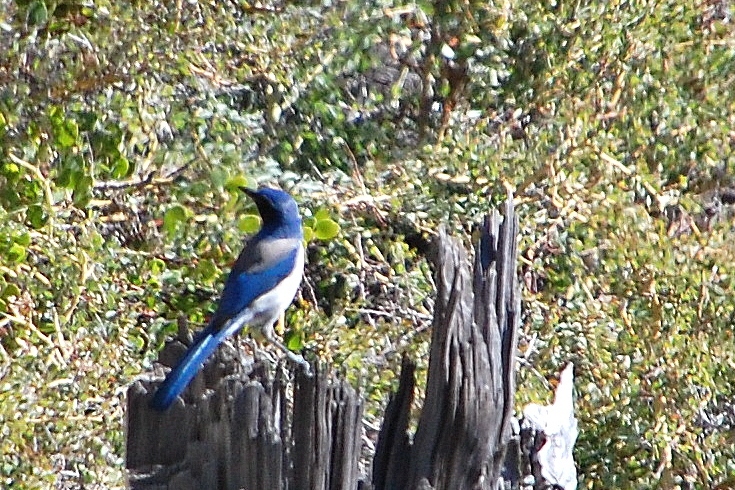
We often associate the color blue with feeling blue, but nature does not see things this way. The blue of water is refreshing, the blue of sky uplifting, and the arrival of blue feathers a sure sign of spring…
It’s easy to lose a sense of our human scale when we are apart from nature, but reminders of our true place in the world are waiting whenever we return to natural life. As a study in this human truth, can you spot the highway, full of streaming cars, in this photo?

 HumanaNatura