Natural bistro
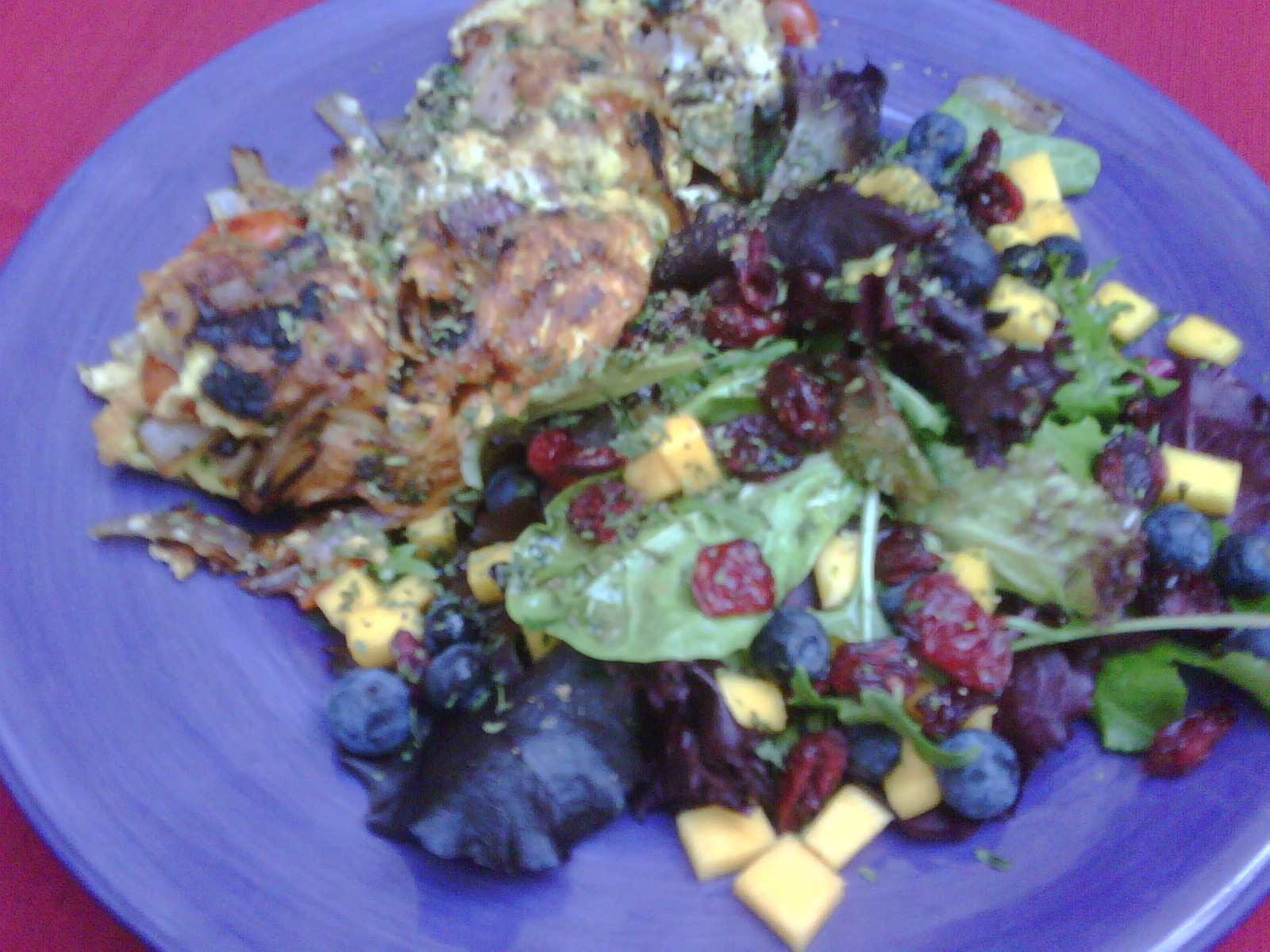
Bistro salads are usually pretty healthy, owing to their small size and simple ingredients…with just a nudge, they can become an optimal approach to eating…this salad meal includes a veggie omelet, mixed greens, diced mango, and a few berries…garnished with parsley, coriander, tarragon, and black pepper…
A sunlight economy
We moved closer this week toward a profound change in the way we all may live – the shift to a non-polluting and fully-sustainable sunlight-based industrial economy. This latest step was made by the the pioneering MIT research team led by Daniel Nocera, who announced creation of a new “artificial leaf” capable of low-cost and sustainable solar production of both energy and clean drinking water. As with related technology under development by the team, this newest variation uses commonly-available and non-hazardous materials to convert sunlight into oxygen and hydrogen. The general approach is expected to eventually outperform all other energy sources, measured by energy cost and total sustainable energy production, once technology refinement and mass-production are realized. Learn more about the team’s newest success at Artificial Leaf and view an extended presentation by Nocera on our future energy options and the prospect of a sunlight-based economy at Personalized Energy.
Ranking communities
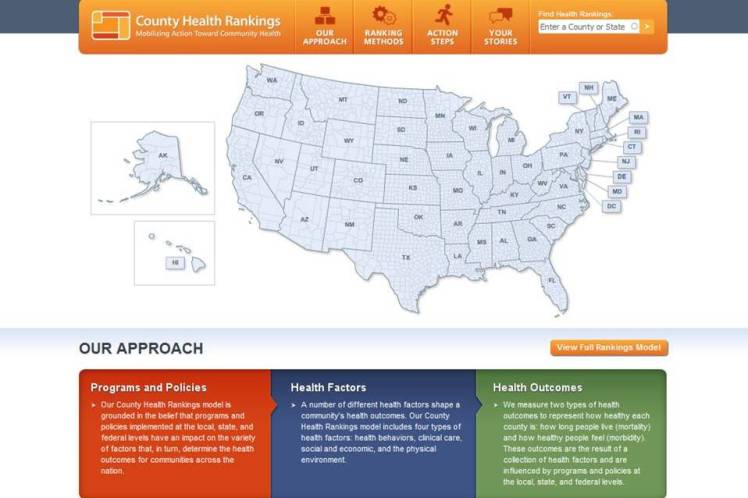
A new report by the Robert Wood Johnson Foundation and the University of Wisconsin’s Population Health Institute ranks the health of 3000 U.S. counties, based on objective measures of longevity and health factors. While the findings confirm earlier research showing that affluence and education level strongly influence public health outcomes, the rankings are not without some positive surprises. Several less affluent counties with active community health programs, for example, scored well above this general trend line, highlighting the importance of health promotion efforts and suggesting clear policy guidance for communities of all income and education levels. Learn more about the new report New Report Ranks U.S. Counties and see the data at County Health Rankings.
New monthly focus
Twice-yearly visioning and planning is recommended as part of HumanaNatura’s Personal Health Program, but it is also important to consider what specific goals we want to complete each month. In this way, we more reliably make progress on our plans and gain valuable experience in translating our wishes into action. With April almost here, now is a great time to spend a few minutes listing what you want to be sure to complete this coming month. Access our planning templates at Natural Living Worksheets and our seven-step planning process at Natural Life Plans.
Waking-life window
A new weight-loss study by Kaiser Permamente found a strong link between healthy sleep and healthy weight levels. These newest findings build on the growing science-based case that our sleep patterns are an important window on our waking life…and can be used to reveal or predict larger patterns of natural health and imbalance. Learn more about the new study at Weight Loss And Sleep.
Steak alternatives
Sugar-obesity link
Findings published this past week from a nearly 30-year, 5000-person longitudinal study by the University of Minnesota suggest a strong correlation between sugar intake and obesity. Interestingly, sugar consumption and obesity concurrently increased over this period, even as overall fat intake in the sample population decreased. While the results are perhaps unsurprising to many, a representative of the US Sugar Association challenged the findings, saying “there is no scientific evidence to support a need to set an intake level for sugar.” Learn more and decide for yourself at Added Sugars and More added Sugars.
Flowing water
Regularizing exercise
A new meta-analysis of 14 previous heart health studies, led by researchers at Tufts University, underscores the importance of regular exercise to ensure heart health. The analysis made new headlines this week for its findings that intense exercise or physical activity, including sex, increased the risk of heart attack and sudden death in people with inactive lifestyles by as much as 350 percent, compared with people who exercise regularly. Read more about the new findings at Regular Exercise.