A Glimpse Into Our Ancient Past

Visit HumanaNatura                                                 Like Us on Facebook

A marvelous and fully modern glimpse into our pre-agricultural past, and the many enduring lessons that this long-evolved pattern of human life holds for understanding our modern health and well-being needs.

This important documentary provides an overview of efforts to 1) catalogue the lifestyle and 2) trace the historical origins, via genetics and linguistics, of the black-skinned, hunter-gatherer Andaman islanders still living on remote islands in the Bay of Bengal (though now just barely).

First Out of Africa – The Totally Isolated Tribe of the Andaman Islands

For people using or exploring the HumanaNatura natural health system, the video provides tangible examples of many of the descriptions and ideas about earlier life contained in the Our Past section of HumanaNatura’s Personal Health Program.

Included in the video are modern-day examples of our original hunter-gatherer or Paleolithic diet, ourl lifestyle and social structure in nature, our intra-band behaviors and norms, and our varying inter-band relations (which were generally not as gregarious as within our bands).

Also included are ideas about our historical Homo sapiens ancestors’ departure from Africa within the last 100,000 years, and discussion of relatively new evidence suggesting our at least episodic interbreeding with pre-existing Homo erectus people living in central and southern Asia (who left Africa beginning more than 1 million years ago).

Importantly, the video also probes the effects of interaction between Paleolithic humans and more technologically and socially advanced people, highlighting a process that has occurred countless times since the Agricultural Revolution – as newer and materially more powerful modes of living encroach upon, displace, and upend earlier human life.

Overall, the video is enormously interesting on its own, but will be of particular interest to anyone studying or seeking palpable examples of earlier natural human life and considering the lessons of earlier life for modern-day life and health. We recommend the video highly!

To learn more about HumanaNatura and our free science-based natural health programs, click-through here to our welcome page link.

Tell others about HumanaNatura…promote new life and health! 

Finding & Creating Health Activists

Visit HumanaNatura                                                 Like Us on Facebook

By Mark Lundegren

Mark Lundegren

Would you like to make your community a better place in which to live and more aligned with HumanaNatura’s ideal of progressive natural health?

If so, let me say that this is an important goal and worthy ambition. But I must also add that you will need help in this work. Progressive health and vitality in a community is a long-term and ranging endeavor, one requiring action on the part of all or many people within any community. It is a task you can begin but cannot achieve on your own.

In many ways, though, starting a community’s movement toward greater health is the hardest part. With time and just a bit of visibility and success, community interest and involvement naturally increases. We often steadily and unexpectedly find the resources we need to both address pressing health issues and then to begin an ongoing and self-reinforcing process of community health promotion.

But getting started, and finding early adopters and supporters, can be daunting at first. Fortunately, lessons from community activism outside the community health field, and from international development efforts in particular, provide a useful model you can use right away to jump-start your community health promotion process.

I came across a simple community mobilization model at a recent seminar, courtesy of Rafter Ferguson of Liberation Ecology, and think it applies well to communities of all shapes and sizes – especially ones in the early stages of utilizing HumanaNatura’s Community Health Program.

Finding Likely Supporters

As summarized in the graphic below, this model for finding likely community supporters asks us to consider three factors: 1) those people who are most local, 2) those who are most impacted or affected (in this case, by health related issues), and 3) people who are most organized already.

Continue reading “Finding & Creating Health Activists”

Permaculture & Human Health

Visit HumanaNatura          Like Us on Facebook

By Mark Lundegren

Mark LundegrenMany of us within HumanaNatura are strong advocates of permaculture and the placing of greater emphasis on ecological sustainability in our lives and global society.

After all, in many areas of modern life – from the foods we eat to the cars we drive and the houses we live in – we have not achieved ecologically sustainable practices. Overall, our general mode of life today threatens the planet (and us) with long-term environmental degradation. Given this, the ideals and growing science of permaculture have great appeal.

Unfortunately, not all practices that occur or are advocated in the name of permaculture today are true to its essential goal of environmental sustainability, which can be thought of alternatively as ensuring ecological health. At the same time, and as I will highlight, other permaculture practices that do foster ecological sustainability can be shown to be less than optimal from the standpoint of promoting human health.

In fact, when we broadly survey current permaculture practices, we can see these two shortcomings quite frequently, at least in part reflecting permaculture’s early and still developing nature as a field of applied science. Importantly, however, these common permaculture shortfalls appear readily correctable – via new effort to achieve deeper understanding and improved application of the inter-related science that spans ecological and human health considerations.

At the same time, these less than optimal “permaculture” practices are revealing. They circularly reflect and perpetuate ecological and human health misunderstanding in our time. They lead to misdirected efforts and resources. And they ultimately weaken or slow the essential modern advancement that is permaculture’s basic proposal of fully sustainable human living arrangements.

For these reasons, I would like to take up and encourage new exploration of contemporary permaculture principles and practices from a natural health perspective, one that spans both ecological and human health research. In the discussion that follows, I will begin by first illustrating important ecological and human health gaps or misconceptions that are now fairly widespread in self-identified permaculture practices.

But more importantly, I will then show how these gaps can be promptly closed through a more holistic and careful use of available human and ecological health science. This critical change can help aspiring and practicing permaculturalists achieve a larger and more accurate sense of our long-evolved human condition, as well as an improved understanding on how our environmental and species health needs can be concurrently and synergistically pursued.

In this essential discussion for anyone interested in human and ecological health issues, I will sample modern eating practices, in and out of present-day self-described permaculture efforts, and explore their underlying relationship to modern food production methods. This approach will allow me to demonstrate how a re-naturalized, more optimal, and fully sustainable model for both modern human eating and modern food production can be achieved via a new and broader synthesis of contemporary health, ecological, and evolutionary science.

Before continuing, however, let me underscore that this companion and complementary exploration of ecological and human health science has implications far beyond the topics of nutrition and food production. In principle, the approach can be applied productively to many other domains of modern life and endeavor – in essence, wherever human and ecological health goals may or must be pursued in tandem.

Continue reading “Permaculture & Human Health”

Personal Or Progressive?

Visit HumanaNatura                                                 Like Us on Facebook

By Mark Lundegren

Mark Lundegren

Health – we all know we need it and most of us take at least some steps to ensure it. But often, our health efforts are less than effective or ideal.

And in truth, our health efforts are never optimal and can always improve, since health is an open-ended natural phenomenon that exists without obvious limits. This is true in principle, and it is in true in our individual lives and groups.

As my title suggests, I’d like to talk about an alternative way of thinking about natural health promotion, one that seeks to bridge or combine approaches that are overly personalized or excessively focused on the science of progressivity.

If you are familiar with the HumanaNatura natural health system, the idea of excessive progressivity might seem like a strange idea, since our overriding focus is on intentionally re-naturalized and progressive modern living.  But just as our health pursuits can be too personalized and not make use of  scientific principles, they can be inadequately personalized too or not sufficiently grounded in our personalities and the enduring power of our personal motivations.

In both cases, by being excessively consumed with either personalization or progressivity, we can miss important opportunities to advance our health and quality of life. We can fail to achieve what I will call, and explain next, health actualization – a higher category of health advancement based on attentive choices that span purely personal and purely progressive considerations.

Understanding Progressivity

Let me start this important and potentially life and health-liberating discussion with a definition, and then turn to a simple model you can use to think more concretely – and more personally – about progressive life and health for yourself and others you influence.

As you may know, when HumanaNatura talks about progressivity or progressive living, we mean simply – and not so simply – an informed and sustained practice of seeking greater levels of health and well-being in our lives, groups and communities, or in our global society more generally. Key themes in describing the process of progressive Natural Living are that it is continuous, lifelong, compounding or pro-cyclical, and revolutionary.

Continue reading “Personal Or Progressive?”

Health Entrepreneurs Wanted

Visit HumanaNatura                                                 Like Us on Facebook

Though HumanaNatura is a not-for-profit organization, this doesn’t mean we can’t appreciate the power of commercial markets and firms to provide services and information efficiently and creatively. In fact, HumanaNatura actively seeks new and existing health entrepreneurs to deliver our comprehensive Personal Health Program in communities around the world. If you are interested in business opportunities in the natural health and well-being field, you owe it to yourself to learn more about HumanaNatura’s Health Alliance Network.

HN Health Alliances

Through our Health Alliance Network, HumanaNatura licenses commercial firms of all sizes to use our comprehensive Personal Health Program on a local or regional basis. Since HumanaNatura was founded to advance our natural health system, rather than produce a profit, licensing of our natural health system is extremely low-cost and normally only entails certifying instructors and supervisors involved in the delivery of HumanaNatura-based services.

Health Alliance Benefits

If you are planning or currently operating a health or wellness center or natural health consulting practice, here are some of the advantages of entering a health alliance with HumanaNatura: Continue reading “Health Entrepreneurs Wanted”

Examining Our Natural Curves

Visit HumanaNatura                                                 Like Us on Facebook

By Mark Lundegren

Mark Lundegren

My title may have led you to think I was going to argue for or against Rubenesque body types, or discuss a fitness insight from my work for HumanaNatura. But I actually want to share a strategy insight and talk about the curves of our lives and groups, rather than those of our limbs and torsos.

Though few of us have considered the idea that our lives and social settings can have a distinct underlying curve or shape, these natural patterns do indeed exist and are discoverable by us. What we might call our life-curves are real and tangible reflections of the way we live and, in particular, how we pattern our actions against our progressive potential. In theory and practice, life-curves prove quite powerful, in the results they create for us,  and as a tool of personal and group strategy and aid to higher quality of life and functioning.

The Core Idea

The core idea of natural curves is that elemental patterns can be shown to underlie all of our lives, even as these patterns remain hidden to us. In essence, our personal life-curve is the overall direction that our life or life trajectory takes over time – again, against our progressive or developmental potential. In practice, understanding and seeing our life-curves is a lot like learning about climate. Like the larger conditions that span and influence the weather we encounter each day. life-curves are subtle but ever-present shapes behind the scenes, but ones that are equally accessible and even equally obvious once grasped.

As a model of a critical dynamic underlying our lives – essentially our degree of natural progressivity or tendency to increase the quality of our functioning or health – life-curves describe organic forces or patterns that reflect and ultimately govern our lives in important ways. Because of this, probing these background patterns proves essential to the work of progressive modern living. And, as you will see, life-curves are shapes that reflect processes we can each sense, assess, and ultimately alter ourselves.

To introduce this insight-rich, immediately actionable, and potentially life-changing concept, I’d like to talk about three life-curves in particular. I would also like to again underscore that this simple but powerful model of life applies to groups too. Just as with individual people, organizations and communities, and even whole societies, can be seen as having a distinct and dominating curve or trajectory – one that expresses and predicts its underlying health and progressive potential.

As background, I should add that the idea our lives and the world around us have a tangible and health-impacting shape comes from my workshops and will be discussed in my first full-length book, due out in the second half of the year. As you will see, each of the three curves I will introduce implies a very different mode of modern living or collective functioning.

Continue reading “Examining Our Natural Curves”

Money And Modern Health

Visit HumanaNatura                                                 Like Us on Facebook

By Mark Lundegren

Behavioral research published this past week in the Journal of The American Medical Association reminds us that money matters in modern life, if we want to advance our personal and community health. Though most of us understand this intuitively, and there is broad research linking quality of life to economic factors, the new study sheds additional light on the link between financial and other modes of modern well-being. In particular, it suggests that even brief economic dislocations can have long-term quality of life impacts for us all.

Adolescent Boys

Early Twentieth Century Children At Work, Instead Of At School

The new study, conducted by researchers at the New York State Medical University, examined almost 9,000 adolescents born in the United States between 1980 and 1984 – a period marked first by economic recession and then subsequent recovery. The research team found a strong correlation with the overall unemployment rate during birth and infancy in this time and later adolescent propensities for a variety of maladaptive and unhealthy behaviors, including drug use, gang affiliation, and arrest.

The research findings do not show or explain causal links but are nevertheless intriguing, in that they demonstrate (and can be used to estimate) the community and societal costs associated with uneven economic conditions and employment security. In our own time of economic dislocation – one that is far deeper and broader than in the study period – the findings remind us we are likely paying enormous immediate and longer-term social costs for past and current economic policies favoring income growth over economic security. At the very least, the new research should compel us all to consider how less stable economics are affecting us and our larger social environment – and how this instability might be better mitigated in the interests of progressive health.

If you would like to learn more about how you and your community can begin to reduce the risk of economic disruptions and avoid the high health and quality of life costs they bring, it may be time to review HumanaNatura’s comprehensive Community Health Program. Our holistic and science-based approach to health-centered community leadership provides the tools to build your community along 12 modern natural health dimensions, including reducing community vulnerability to cyclical boom and bust economics…in favor of sustainable, dependable, and health-enabling economic security.

Mark Lundegren is the founder of HumanaNatura.

Photo courtesy of New Haven Newsboys

Tell others about HumanaNatura…encourage new life and health! 

7 Questions On HN’s 6th Edition

Visit HumanaNatura                                                 Like Us on Facebook

In the weeks since the release of the new sixth edition of HumanaNatura in late July, we’ve had a number of questions on program changes, and have thought of a couple on our own that we think are important to answer.

HumanaNatura’s New Sixth Edition In Action

To help you better understand what has changed (and what has not), and to respond to questions about the new materials, we’ve put together a short Q&A highlighting key sixth edition changes to HumanaNatura’s website and health programs.

The following Q&A was just sent to all HumanaNatura members via our newsletter. Check it out!

Continue reading “7 Questions On HN’s 6th Edition”

Stimulating Happiness

Visit HumanaNatura                                                 Like Us on Facebook

By Mark Lundegren

As I write this, United States central bank head Ben Bernanke has made headlines in the past week for launching his controversial QE3. No, Bernanke’s QE3 is not a new ocean liner, but instead an acronym for “Quantitative Easing Three.” QE3 is a third round of injecting additional money into the U.S. (and ultimately world) economy.

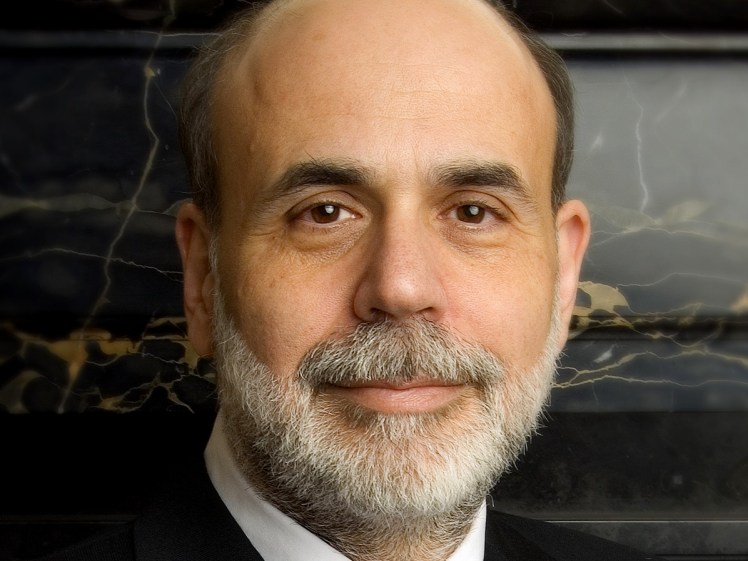
Federal Reserve Chairman Ben Bernanke

By acting to increase the supply of U.S. dollars through QE3, Bernanke and his fellow central bankers hope to make the currency cheaper and stimulate domestic economic and employment growth. Critics contend that QE3 will either have little effect, lead to similar and thus offsetting moves by other countries, or fuel increased inflation – price increases via the chasing of available goods and services by an oversupply of money.

Interestingly, Bernanke made a proposal last month at a global economic conference that garnered almost no headlines, even as what he proposed may be far more important and consequential than QE3 in the long-term. As covered by some reporters in the financial press – see Happiness Bandwagon and More Philosophy Please for a sample – what Bernanke proposed was that economists and others should begin to measure and define national success differently than we usually do, specifically by recasting success in terms of well-being or happiness rather than wealth.

Continue reading “Stimulating Happiness”

HumanaNatura On Holiday!

Visit HumanaNatura                                                 Like Us on Facebook

HumanaNatura’s service team is on holiday for the next month! Long summer vacations are something we recommend – as a reliable means of fun, new experiences, and perspective.

If you struggle to make time for holidays and healthy non-work time in your life, we would encourage you to explore your options to increase this crucial aspect of healthy and happy modern life.

Learn how you can begin to take steps toward a 1000 hour work-year – working six hours a day, four days a week, and forty weeks a year – via Mark Lundegren’s thought-provoking article The Real New Economy.

Wishing you new health…and looking forward to seeing you in September,

HumanaNatura