Exercise Naturally Creates Time!

Visit HumanaNatura                                                 Like Us on Facebook

By Mark Lundegren

We often think that exercise takes time. In practice, however, this common assumption proves self-reinforcing but untrue. As people who exercise regularly know, physical conditioning is essential for vibrant and engaged life. For this reason, exercise actually or naturally makes time in our lives.

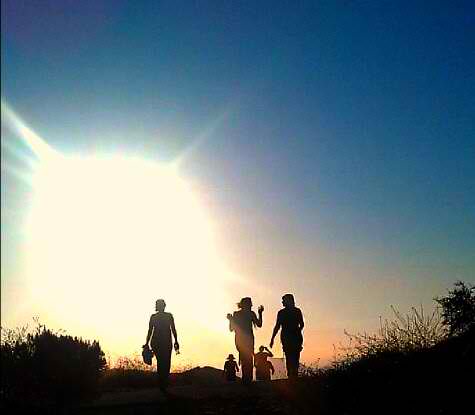
Walking Naturally Gives Us Health in Body, Mind, and Spirit

The persistence of the idea that exercise is time-consuming owes in part to the fact that we often see exercise as activity apart from the rest of our modern lives. Notably, this perspective is born from life that often unnaturally involves long periods of inactivity and sitting each day – in cars, trains, offices, homes, restaurants, and theaters.

Related to this is a modern outlook that fails to see physical activity in general as exercise, as a ready means to ensure natural conditioning – an essential natural health enabler and key HumanaNatura goal. So we sit and think about the modern challenge of exercise, instead of walking and naturally having this exercise as a daily part of our lives.

As a consequence of both outlooks – and the reduced natural health and functioning that inactivity inevitably causes in us – many of us are unnaturally inactive for many hours each day. In this compounding process, our reduced natural activity lowers our capacity for and interest in physical activity, creating an ever-widening gulf between our lives and our potential for vibrant natural health and fitness.

In this now common pattern of life, we fail to see our many opportunities for and the urgent benefits of a more naturally active and energetic life, instead lamenting our seeming lack of time, opportunity, and energy for exercise and naturally active living.
Continue reading “Exercise Naturally Creates Time!”

Healthy Body, Healthy Brain

Visit HumanaNatura                                                 Like Us on Facebook

By Mark Lundegren

We all understand that healthy living leads to healthy bodies, to increased longevity, and to reduced chronic health risks…even as many of us do not adequately, or optimally, act on these essential facts of life.

On the other hand, a great many of us have not yet come to terms with the reality that this same natural relationship between lifestyle and physical health applies to brain health as well – and to all of our brain’s critical functions, including memory, cognition, creativity, and emotion.

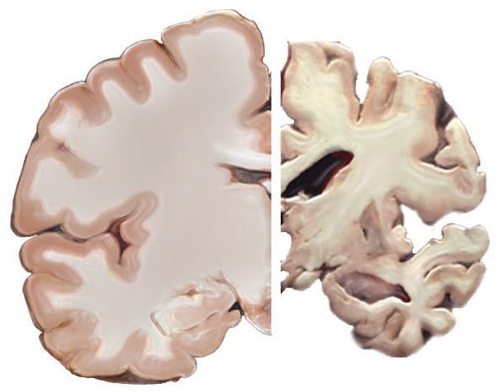
Sections of a Healthy Brain, Left, and One With Advanced Degeneration

Often, we treat our brains – that is, ourselves – as relatively unchanging and largely unaffected by reduced physical health, even as this widespread intuition is measurably untrue.

In fact, reduced physical health is almost always accompanied by lowered cognitive and emotional functioning, circularly restraining our self-awareness and motivation and keeping us at reduced overall states of health. The practical effect of this health-limiting cycle is to prevent us from seeing our life in more vital and expansive terms, and thus from intentionally pursuing new growth and progressive life.

Recent Brain Health Research

A trio of recent research studies highlight the importance of making the crucial link between our lifestyle and metal health, and underscore our need to take deliberate steps to promote a healthy body and brain throughout our modern lives.

Continue reading “Healthy Body, Healthy Brain”

Exercise – Our Fountain of Youth

Visit HumanaNatura                                                 Like Us on Facebook

By Mark Lundegren

It’s hardly provocative to point out that exercise has important health benefits.

We all know this, even as many of us do not exercise enough to achieve essential natural conditioning and fitness. Other than eating naturally and avoiding harmful drugs and physical risks, ensuring adequate daily exercise is perhaps the simplest and most direct means we all have to encourage lifelong fitness and vitality.

What is more provocative to say these days is that exercise is our fountain of youth. This is a statement many of us will find too strong, even as exercise research increasingly supports exactly this conclusion. Just as medieval explorers combed the world looking for the source of our vitality, modern people still generally long to understand and achieve lasting youthfulness and robustness – but notably, in a world that is far more secure and informed, and thus more health-friendly, than in the past.

Now, our centuries-old wish for natural robustness and lasting vitality must confront modern health science and its finding that almost all of us can have a long and youthful life if we want one. What is most required to achieve this, in a world that has been made safer and less harried by infectious diseases, is a simple but sustained personal commitment to our natural health, including care with our overall lifestyle and enough exercise to approximate our health-essential activity patterns from earlier natural life.

Continue reading “Exercise – Our Fountain of Youth”

Cancer Prevention & Treatment

Visit HumanaNatura                                                 Like Us on Facebook

By Mark Lundegren

Cancer has been in the news these last few weeks, and the news has been decidedly more hopeful than in the past.

Based on a series of recent studies and meta-analyses, scientists are now increasingly and more definitively prioritizing our risk factors for many common and aggressive cancers, allowing us all to reduce our chances of getting these diseases by as much as half. And at least as importantly, long-envisioned immunotherapy regimes for treating existing cancers are entering clinical trials and showing early results that are promising if not remarkable.

Let’s begin a recap of recent cancer news by highlighting a new and quite extensive study of factors leading to common cancers that was recently published in the British Journal of Cancer (BJC). It concluded that readily alterable lifestyle choices accounted for over 40% of cancers in the UK, prompting calls there for urgent public action. These high-risk factors include: 1) smoking, 2) being overweight, 3) an unnatural absence of fruits and vegetables from our diet, 4) excessive alcohol consumption, and 5) immoderate sun and UV exposure. These new findings build on prior research showing that inadequate exercise also can be an important direct and indirect (especially by influencing body weight) lifestyle risk factor for cancer.

There’s more. The BJC published another new cancer study, this one based on research conducted by the Karolinska Institute in Sweden. Its findings were consistent with widespread and still growing research linking red meat and processed meats to increased cancers. The new study specifically suggested an almost 20% increased risk of deadly pancreatic cancer for each 50 grams (2 ounces) of processed meat consumed each day.

Continue reading “Cancer Prevention & Treatment”

An Integrated Outlook on Fitness

By Mark Lundegren

Are you one of those people who has it all…intelligence, physical fitness, natural good looks, lasting happiness, a personality that invites others, and maybe musical or another creative talent? If you answered, “not quite,” would you like to be this way?

The truth is not just that we can have or be all these things, but that we naturally are all these things. In an area of findings that can lead to new insights into our life and health potential, these various attributes have been shown in research to be natural aspects or qualities of a complete, integrated, and healthy human being. They have also been shown to increase or diminish together…as our natural health improves or as it is reduced.

As natural beings and highly-evolved social animals, possessing these essential features of successful human life is our expected condition and not an exceptional state – whenever we are naturally and fully expressed as people, balanced, vital, and well. When we are in the “not quite” category, or worse, this is a sign that our overall health and natural vitality have been compromised, underdeveloped, or misunderstood.

Continue reading “An Integrated Outlook on Fitness”

Natural Lessons of Vitamin B12

By Mark Lundegren

Sometimes little things can teach us a lot, if we remain attentive and curious.

A recent New York Times article by Jane Brody, It Could Be Old Age Or It Could Be Low B12, highlights that elderly people can be misdiagnosed with early Alzheimer’s disease or dementia, when they are instead exhibiting a similar pattern of symptoms owing to chronic vitamin B12 deficiency.

While a cause for concern, the important lessons from our potential for a deficit of vitamin B12 extend well beyond the care of ourselves and others in elderhood. Consider these three:

Lesson #1: Perhaps the most important practical lesson of our risk of a Vitamin B12 shortfall is the importance of ensuring a vitamin-rich daily diet and that we are able to make use of the vitamins we eat by ensuring our natural physiological health. Though many of us fail on one or both counts, we actually can do each of these things quite simply through Natural Eating, which ensures a robust vitamin intake and eliminates harmful foods from our diet that compromise our health, and by adequate Natural Exercise, which encourages our tissues and chemistry to make the most of a healthy natural diet.

Continue reading “Natural Lessons of Vitamin B12”

Solstice Walk Into The New Year

Need inspiration to get out and exercise more, or to experience nature more deeply? This great solstice hiking photo from one of our member’s might help. It was taken yesterday in hills just west of Los Angeles, and is a reminder that getting into nature is often harder than being there. Once we return to natural life, the world pulls and inspires us with its ancient beauty, and helps us to find our own beauty and place in the world.

Learn about natural exercise the HumanaNatura way via the Fitness tab above or our popular article Stepping Out. And explore your potential for new and lasting natural fitness through the Natural Exercise section of HumanaNatura’s comprehensive Personal Health Program.

Subscribe to NaturaLife…get healthy ideas & inspiration by  email!

Don’t be SAD About Shorter Days

If you live in the northern hemisphere, especially in the upper latitudes, and are somehow just not feeling your best these days, you may be SAD…suffering from Seasonal Affective Disorder. SAD afflicts millions of people at about this time each year. It is driven primarily by the shorter days and our reduced exposure to hormone-regulating, and serotonin and Vitamin D-generating, sunlight. Symptoms of SAD range from lethargy to irritability and from social withdrawal to sugar-cravings.

Like other forms of depression, SAD has a natural regressive quality, in that reduced feelings of personal well-being from reduced sunlight tend to make us less active and socially-oriented, circularly and negatively keeping us from exercise, the outdoors, and others – three of our most important natural sources of positive emotions and vibrant life. SAD can disrupt our diet as well, as we seek sugary foods to boost our mood in place of dwindling serotonin levels, leading to more volatile emotions and stress-elevating weight-gain.

While some instances of SAD require medical intervention, many of us can release its seasonal hold on us and break its regressive cycle of disaffection through simple natural health actions. Key SAD mitigating actions include: 1) regular exposure to midday winter sun on our face, arms, and legs (taking care never to burn our skin), 2) daily outdoor exercise, ideally that simultaneously provides midday sun exposure, and 3) daily social activities, again preferably ones that offer time outdoors and added sun exposure.

You can learn more about SAD at Seasonal Affective Disorder and review HumanaNatura’s popular article Revisiting The Sun for guidance and information on beneficial daily sun exposure, now and throughout the year.

Subscribe to NaturaLife…get healthy ideas & inspiration by  email!

Power of e-coaching

It’s not the first study to suggest that electronic health coaching works, but new research coordinated by Johns Hopkins University adds to an important and growing body of evidence suggesting that electronic health messages and online  health promotion programs can greatly improve individual health and quality of life outcomes…on par with in-person interactions, but at a fraction of the cost.

In the new research, the performance of high-touch, electronic-touch, and no-touch weight-loss programs were compared across more than 400 obese men and women over a two-year period. The researchers found that the high-touch and electronic-touch programs were about equally effective at reducing weight over the period, with the no-touch approach (intended as a control group) trailing significantly behind. The new research is consistent with similar findings in other health areas – see for example Smoking Textation – underscoring the power of e-coaching for greater health.

The new study and related research point to the power of electronic media and online tools to positively alter our health orientation and behavior generally, and even to counter widespread modern messaging that encourages health-reducing attitudes and choices. We therefore encourage you to infuse your personal electronic environment with positive and health-affirming messages, perhaps beginning by receiving regular health-promoting ideas and inspiration from HumanaNatura by subscribing to NaturaLife.

You can learn more about the new research at Remote Weight Loss Works and sign up to receive HumanaNatura’s electronic health newsletter at Join Us. You can also access and explore all of HumanaNatura’s member-supported online health programs and tools for free at HumanaNatura, Personal Health Program, and Community Health Program.

Photo courtesy of Mouse.

Subscribe to NaturaLife…get health-promoting ideas & inspiration by  email!

On holiday

HumanaNatura is on holiday for the remainder of November. Regular breaks from our routines are a chance for fun, unplanned experiences, and new perspectives. If you struggle to make time for breaks and healthy non-work time in your life, learn how you can move to a 1000 hour work-year – working six hours a day, four days a week, and forty weeks a year – via Mark Lundegren’s popular article The Real New Economy. Wishing you new health, and see you in December!  HumanaNatura

Please share this post…and the science and rhythm of healthy life!